
Wednesday MidDay Medley
Produced and Hosted by Mark Manning
90.1 FM KKFI – Kansas City Community Radio
TEN to NOON Wednesdays – Streaming at KKFI.org
Wednesday, June 5, 2024
The Music of My Queer Life
(Mark Manning’s Birthday Special)

On this day, June 5, I was born, in Geneva, (Nebraska). For this unique and special Wednesday MidDay Medley live radio broadcast, I will share tracks from some of my favorite recordings representing different seasons of my life. The playlist starts when i was 7 years old, in second grade, and discovered my Mom’s old stereo and record collection in our basement. I will share “performance art” and secret pre-lunch confessions of a queer music nerd, who couldn’t wait to move away from the small town where he lived. Life might have been unpredictable, being on the edge of a high wire act, but the music was always there like an invisible net. It was the music that gave meaning, the lyrics that offered a password, and a road map, where none others had existed before. I will spin representative tracks from: The Beatles, The Carpenters, Al Green, The Ramones, David Bowie, Curtis Mayfield, The Velvet Underground, Talking Heads, The Smiths, Patti Smith, LaBelle, Joni Mitchell, Prince, Iris DeMent, The B-52’s, Mavis Staples, The Magnetic Fields, and The Clash.
At 11:00, we’ll talk with Peregrine Honig and Izzy Vivas of the West 18th Street Fashion Show happening Saturday, June 8, at 7:00pm this year’s theme is Summer in Slumberland.
- “Main Title Instrumental – It’s Showtime Folks”
from: Orig. Motion Picture Soundtrack All That Jazz / Casablanca / December 20, 1979
[WMM’s Adopted Theme Song] - Various Artists – “The Twilight Zone”
from: All-Time Top 100 TV Themes / TVT / August 23, 2005 - Various Artists – “The Dick Van Dyke Show”
from: All-Time Top 100 TV Themes / TVT / August 23, 2005 - Various Artists – “The Mary Tyler Moore Show”
from: All-Time Top 100 TV Themes / TVT / August 23, 2005
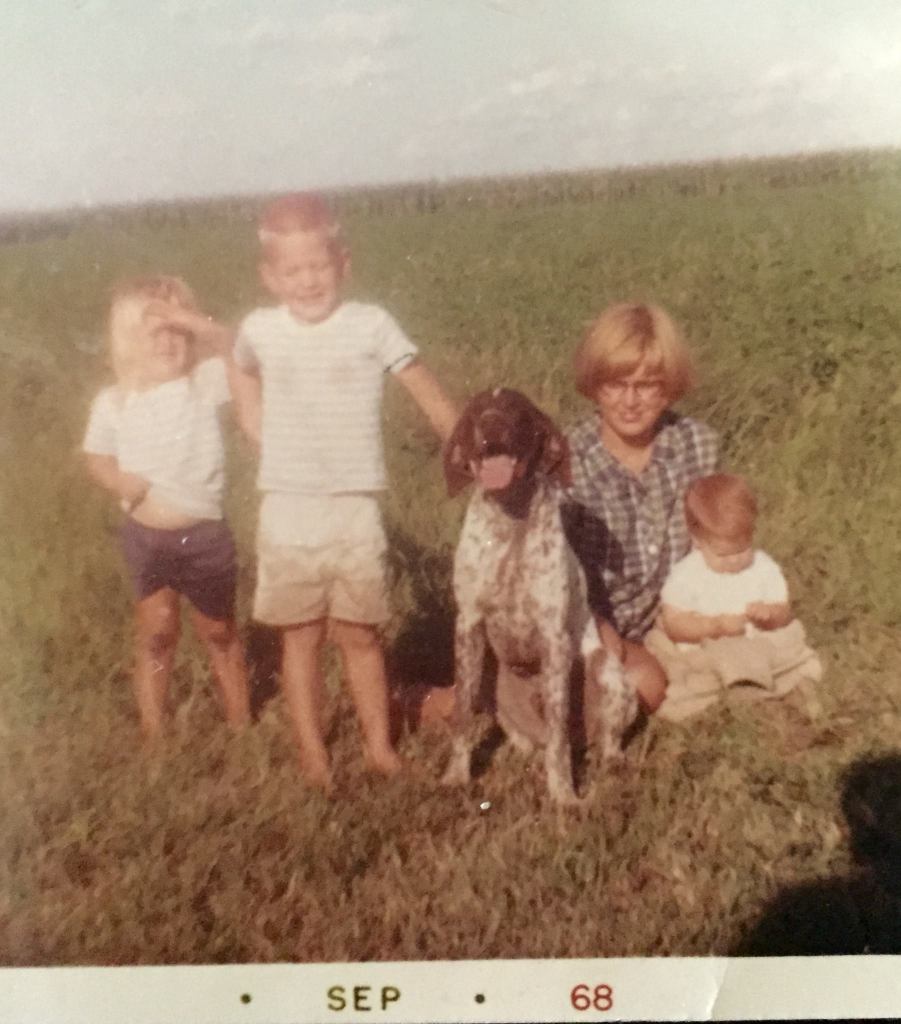
10:03
I’m Mark Manning. 61 years ago, I was born in Geneva, (Nebraska) Today I’ll play my favorite recordings, from different times of my life, starting in 2nd grade when I was seven years old, in our unfinished basement we had an old TV that got one channel, CBS, out of Lincoln, Nebraska. Across the room was an old 1960’s wooden Stereo cabinet. Beside the cabinet was a box with several of my Mom’s albums. I pulled out “Meet The Beatles” put the needle on the groove, and this was this first spin of my life.
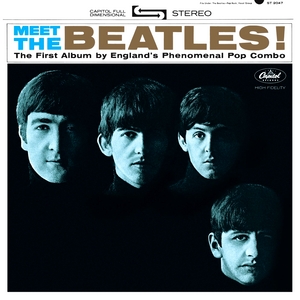
- The Beatles – “All My Loving” (Mono)
from: Meet The Beatles / Capitol-EMI / Nov 23,1963
[Meet the Beatles! is a studio album by the English rock band the Beatles, released as their second album in the United States. It was the group’s first American album to be issued by Capitol Records, on 20 January 1964 in both mono and stereo formats. It topped the popular album chart on 15 February 1964 and remained at number one for eleven weeks before being replaced by The Beatles’ Second Album. The cover featured Robert Freeman’s iconic portrait of the Beatles used in the United Kingdom for With the Beatles, with a blue tint added to the original stark black-and-white photograph. // After EMI’s subsidiary Capitol Records constantly rejected requests by both Brian Epstein and George Martin to release Beatles records in the United States, EMI label head Sir Joseph Lockwood sent a deputy to Los Angeles in November 1963 ordering Capitol Records to commence promoting and releasing Beatles records in the United States. Despite the “first album” claim on the Meet the Beatles! cover, ten days prior to its release, Vee-Jay Records of Chicago beat Capitol to the punch with the release on 10 January 1964 of the Beatles’ American debut album Introducing… The Beatles, which had been delayed for release for various reasons since the previous summer. Perhaps as a result of the Vee-Jay release, Liberty Music Shops advertised in the New York Times of 12 January 1964 that Meet the Beatles! was available for purchase, an ad not authorized by Capitol. // In 2004, the album was released for the first time on compact disc in both stereo and mono as part of The Capitol Albums, Volume 1 box set, containing the original US stereo and mono mixes. In 2014, Meet the Beatles! was reissued on CD, individually and included in the Beatles boxed set The U.S. Albums. Although following the running order for Meet the Beatles!, the mixes featured in this reissue are the UK mono and stereo mixes. // By November 1963, the Beatles had already recorded over 35 songs for EMI’s UK Parlophone label, while Capitol Records in the US planned to release an album and a single, and more at a later date. The US rights to the Beatles’ first 14 tracks were held by Vee Jay Records along with a few others. “She Loves You” had been issued in America on the Swan label and also sold poorly. In Britain, Parlophone was already releasing its second Beatles album With the Beatles and had issued several singles which were not included on any UK albums with the exception of the first two (“Please Please Me”/”Ask Me Why” and “Love Me Do”/”PS I Love You”). While the Beatles’ first two British albums each contained 14 tracks, in the American market albums were typically limited to 12 tracks and it was expected for albums to include the current hit single. // The first three tracks on the album include the December 1963 Capitol single “I Want to Hold Your Hand” along with the record’s B-sides both in the United States, “I Saw Her Standing There,” and in the UK with “This Boy” from the original November 1963 release. Neither “I Want to Hold Your Hand” nor “This Boy” had appeared on album at the time in the UK, while “I Saw Her Standing There” had been the lead-off track to the band’s debut album. The other nine tracks on Meet the Beatles! are duplicated from its nearest UK counterpart album With the Beatles. Those were original Beatles songs and not cover versions of songs done by other artists with the exception of “Till There Was You”. The remaining five tracks from With the Beatles were songs originally recorded by other artists. Capitol determined that for their first album they would only include original and fresh material. There was fear that the remakes would turn Americans off of the Beatles. The other five songs would appear on Capitol’s next American LP, The Beatles’ Second Album, released in April 1964. The songs “I Want to Hold Your Hand” and “This Boy” are in a duo-phonic [fake] stereo, as Capitol had not been provided proper stereo mixes.]
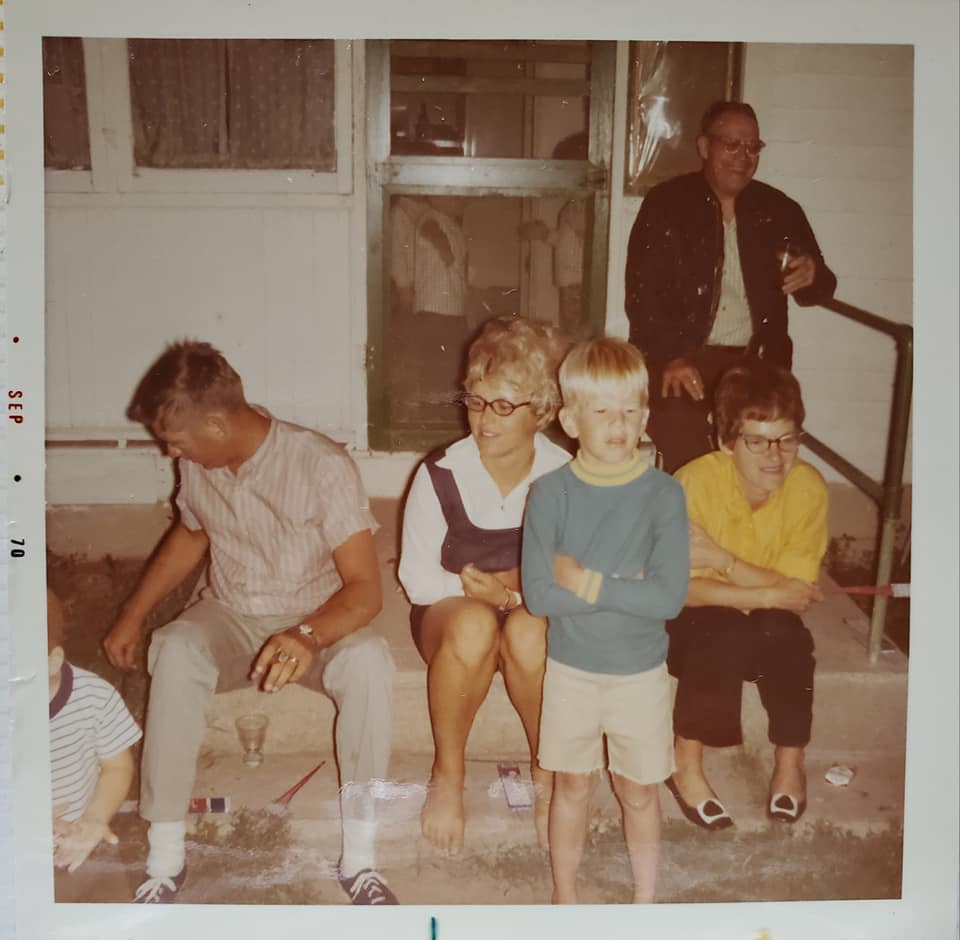
10:06 – “1970’s Cocktail Party” written by Mark Manning
I was seven years old and in second grade.
I had discovered in the basement, next to my mother’s old stereo, several “Long Playing” record albums, Meet The Beatles, The Fifth Dimension, Burt Bacharach, Engelbert Humperdinck, Al Martino, Mac Davis, Cher, and The Carpenters.
I had been forbidden to play Engelbert Humperdinck’s “Please Release Me.” My mother heard me playing it one day and she came running out of the laundry room and said that my father hated that song. The Beatles album was very scratchy sounding. I was obviously the oldest.
Even though we only had one channel on our television in the basement, I had seen The Carpenters performing some of their songs. Karen Carpenter’s clothing reminded me of my mother’s, white crocheted poncho, over a long sleeved, tight white polyester turtleneck, and white corduroy hip huggers. Their album covers seem to tell a story of a really cool family that played musical instruments and sang catchy songs. My favorite was “Close To You” which was also on the Burt Bacharach record, but Karen sang it so much better than Burt. I played that song over and over and over.
Our second grade talent show was coming up. I was determined to sing, “Close To You.” In the talent show, my girlfriend Ann Withee played the piano. She was nervous, and her stubby little fingers were shaking over the keys. Ann’s best friend, Jill McNaught, our PE teacher’s daughter, also performed an incredible gymnastic routine, doing splits, kicks, cartwheels, backflips, and somersaults. I sang “Close To You,” exactly as I had learned it on my mother’s stereo. First place was split, in a three-way tie, between Jill, Ann, and myself. The reward was that we were asked to perform an encore, this time for the third graders. Oh my god, they were so much older, and so much more cynical.
After winning the talent show, my mother would force me to sing “Close To You” to the neighbors, my dad, and many family members. That summer, my older cousins from California were visiting Nebraska. They were more interested in “Meet The Beatles” than The Carpenters record.
Again my mother pushed me to perform my little “Close To You” act for my cousins. She built me up in an introduction that was psychotic and obviously bound to have me pushed off the pedestal. While I sang, my cousins started laughing. They were a tougher audience than the third graders. They asked me why I was mispronouncing all the lyrics. “What? I’m not mispronouncing anything! This is exactly how Karen Carpenter sings this song.” I had memorized the song phonetically, from the stereo, but apparently something didn’t translate from my mother’s old stereo, the Columbia House, Carpenters LP, Karen’s diction, and my second grade hearing and cognitive abilities. I was singing, “Why do birds suddenly afee.” I didn’t know “afee” wasn’t a word. I heard “afee.” I sang “afee.” Oh well, it was back to rehearsals in the basement. One thing was for sure, Bacharach was the man. For the third grade talent show I sang, “Raindrops Keep Falling on My Head” with a hand crafted microphone made from a can on a stick.
It was 1971. It was a crazy time in America. My mother was obsessed with her ranch style house that the construction company my father worked for had built. Past our backyard was a cornfield. Every year a new row of houses was built, until soon you could hardly see that cornfield anymore. Out of the kitchen window, past the gas grill and row of bushes, rows and rows of cornfields were replaced by rows and rows of split level houses, in three styles, intermingled, repeating, reflecting, and echoing.
Our house was always buzzing. My ears were always hearing everything. Bed time was eight o’clock. In our house, with its prefabricated quality, you could hear almost everything through those walls, if you listened carefully. I remember hearing one afternoon, that my aunt was pregnant, “with another man’s baby.”
One Friday night, my mother and father were hosting a ’70s Cocktail Party. I could smell all the cigarette smoke sneaking under the crack, between my bedroom door and multi colored striped carpet. I listened as they finished their games of pitch, and my mother burnt eggs and bacon to feed the drunken guests before they made their way home.
Almost all of the cocktail party guests had exited, except Jerry and his wife. Jerry was in the concrete business like my father, and often competed with my father for bids on jobs. That’s not all they competed for. I remember sneaking out into the hallway leading to the kitchen, to see Jerry sitting at our dining room table. His body was waving back and forth. He seemed unbalanced. His eyes seemed to have trouble focusing. He had a very interesting smile across his smooth tanned face. I thought he was handsome. Whatever he had been drinking he definitely seemed unguarded. Jerry said to my father. “You know Tom, I haven’t had a chance to dance with your wife. The night is almost over, and I haven’t had the opportunity to dance with your wife.” He was charming too.
Jerry’s wife seemed to disappear from my view, or from the picture in my mind. I heard a body moving and I quickly slipped back into my room. My father, also very very drunk, went into his bedroom to take off his pants. As I listened in my room everything became terribly quiet. I couldn’t hear anything and my 8-year old mind ran through all of the possibilities of what could be going on out there, in the rest of our house, outside my fake wood bedroom door.
Then it suddenly hit me. I realized something horrible was about to happen. I slipped out of my room and saw my father in his white cotton briefs, creeping down the hallway, into the kitchen, and then down the squeaky stairs to the basement. I followed.
A lot of the party had taken place down there, in the basement, around my father’s hand crafted dark brown Formica topped bar, surrounded by wood paneled walls, displaying his many rifles on gun racks.
I moved slowly, a step or two behind my drunk father. He didn’t see me. He seemed nervous and excited. He was breathing heavy and smoking a cigarette. Moving down the steps, I heard it. With each step down the music became louder. It was, The Carpenters…My Carpenters. They were singing “Side A.” The side that starts with “We’ve Only Just Begun” and ends with “Close To You” and some wacky Richard arrangements in between.
From around my father’s brief covered ass I saw Jerry “slow dancing” with my mother. They were really close together, pressing their bodies together, they were feeling each other. Richard sang “oooh…oooh.” Karen sang “ahhhh, ah ah ah ah.” Their hands were together, near their faces, that were close together. Jerry’s other hand was somewhere else. His eyes were closed, so were my mother’s. She was smiling and happy. I remember how content she seemed in that moment. She was in love.
Then my mom opened her eyes, at first slowly, and then quickly, as they became very wide. Jerry and my mother quickly disengaged. My father noticed me watching and grabbed me by the arm and pulled me out from behind him. My father growled at my mother, “Look at what you are doing! And in front of your own son!” Jerry’s wife suddenly appeared, as my parents began to yell and fight. My father backed my mother up against the brick wall. Jerry’s wife kept saying, “Honey, It’s time to go.”
Jerry kept saying, “I can’t let him hurt her. Tom, don’t you hurt her. Patty, are you okay?” My father disappeared with my mother into a room in the basement. Jerry’s wife pulled her drunk husband up the stairs and to the drive way where she pushed him in their car and drove him off. There was a lot of yelling and screaming and crashing and banging. My father came storming out of the room and then I saw my mother emerge. She was crying. Her mascara was running. Her head was in her hands. Her nose was bleeding.
She sat on the sofa crying as my little sisters came downstairs and sat beside her. They were bawling like little lambs for their mother. My father came back downstairs. He was pacing back and forth in drunken anger confusion.
The record had ended and the needle was going round and round the spinning A & M label. The soundtrack changed. I felt so old. I was eight years old, and The Carpenters music never felt the same to me, ever, ever again.
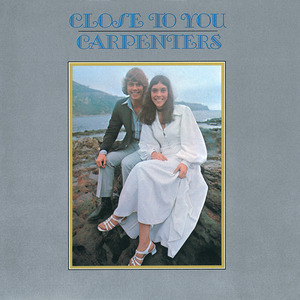
- The Carpenters – “(They Long To Be) Close To You”
from: Close To You / A&M / August 19, 1971
“(They Long to Be) Close to You” is a song written by Burt Bacharach and Hal David with sections of the early version written by Cathy Steeves. The best-known version is that recorded by American duo The Carpenters for their second studio album Close to You (1970) and produced by Jack Daugherty. Released on May 14, 1970, the single topped both the US Billboard Hot 100 and Adult Contemporary charts. It also reached the top of the Canadian and Australian charts and peaked at number six on the charts of both the UK and Ireland. The record was certified gold by the Recording Industry Association of America (RIAA) in August 1970. // The song was first recorded by Richard Chamberlain and released as a single in 1963 as “They Long to Be Close to You”. However, while the single’s other side, “Blue Guitar”, became a hit, “They Long to Be Close to You” did not. The tune was also recorded as a demo by Dionne Warwick in 1963, was re-recorded with a Burt Bacharach arrangement for her album Make Way for Dionne Warwick (1964), and was released as the B-side of her 1965 single “Here I Am”. Dusty Springfield recorded the song in August 1964, but her version was not released commercially until it appeared on her album Where Am I Going? (1967). Bacharach released his own version in 1971. But the version recorded by Carpenters with instrumental backing by L.A. studio musicians from the Wrecking Crew, which became a hit in 1970, was the most successful. // Karen and Richard Carpenter recorded the most successful version of the song. // In 1970, “(They Long to Be) Close to You” was released by the Carpenters on their album Close to You (1970) and became their breakthrough hit. The song stayed at number one on the Billboard Hot 100 for four weeks and eleven weeks in the Top 10. “(They Long to Be) Close to You” was named Billboard’s Song of the Summer for 1970. // Bacharach and David gave Herb Alpert the song after he scored a number one hit in 1968 with “This Guy’s in Love with You”, which the duo had also written. Alpert recorded the song, but he was displeased with the recording and did not release it. After the Carpenters achieved their first chart success with “Ticket to Ride” in 1969, Alpert convinced them to record their version of the song, believing it was well-suited for them. // Carpenter and Alpert collaborated on the song, and the finished product was a 4-minute, 36-second long song. When A&M Records decided to remove the extended coda and release it as a 3-minute, 40-second long single in May 1970, it became A&M’s biggest hit since Alpert’s “This Guy’s in Love with You” from 1968. Billboard ranked it as the number two song for 1970. // “(They Long to Be) Close to You” earned the Carpenters a Grammy Award for Best Contemporary Performance by a Duo, Group or Chorus in 1971. It became the first of three Grammy Awards they would win during their careers. The song was certified gold by the Recording Industry Association of America (RIAA) on August 12, 1970. Reaching number six on the UK Singles Chart in 1970, in a UK television special on ITV in 2016 it was voted fourth in “The Nation’s Favourite Carpenters Song”. // Richard had originally written the flugelhorn solo part for Herb Alpert but when he was unavailable at the time of recording, Chuck Findley was hired in his stead. Richard later commented: “Chuck didn’t play it that way at first, but I worked with him and he nailed it. A lot of people thought it was Herb – Bacharach thought so, too. But it’s the way Findley is playing it.” // The arrangement was completely different from the version Bacharach cut with Richard Chamberlain, with one exception. When Richard Carpenter asked Bacharach for permission (as a courtesy) to redo the song, Bacharach requested that he keep the two “quintuplets” (five note groupings” (piano ornaments) at the end of the first bridge. Bacharach recalled his initial reaction on hearing the finished product: “Man, this is just great! I completely blew it with Richard Chamberlain but now someone else has come along and made a record so much better than mine.” // The song plays a key part throughout the animated television show The Simpsons, being used prominently during emotional moments between Homer and Marge Simpson over the course of the series. It is first used in the second season episode “The Way We Was”, a flashback episode detailing how the couple met; Homer is first shown listening to the song in the car, and it later plays when he sees Marge for the first time in high school detention, and throughout the rest of the episode. It is also the tune of the doorbell that won’t stop in the episode Maximum Homerdrive. It later features in The Simpsons Movie (2007), as Homer tearfully watches a videotape left behind by Marge in Alaska containing the couple’s first dance to the song, and subsequently collapses onto a broken heart-shaped iceberg in anguish. // Karen Carpenter on lead and backing vocals; Richard Carpenter on backing vocals, piano, Wurlitzer electronic piano, harpsichord, orchestration; Joe Osborn on bass; Hal Blaine on drums, Chuck Findley on trumpet, Bob Messenger on flute.]
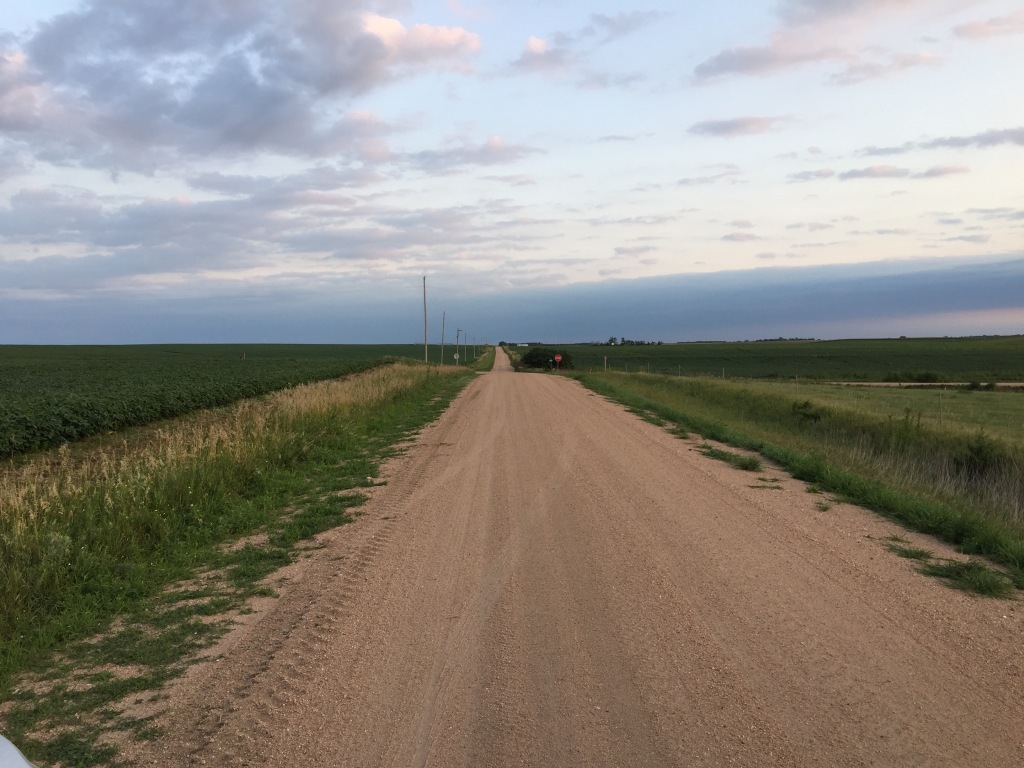
Mark: I grew up in a small town in Nebraska. The idea of “diversity’ in this town was: are you Irish or Swedish? The radio was very white. Soul music and R&B wasn’t played on the radio. When I was 11 my parents got a divorce and we moved to the “other side of town.” My mom got a job working at the Women’s Prison. Since mom was a new employee, she had to work all of the holidays, but she was allowed to bring her kids to work on those days, so I spent Easter, Mother’s Day, 4th of July, at the prison. It was there that I heard Al Green – “Let’s Stay Together” for the first time. The women were playing albums on portable stereo turntables. The best music in the town… was at the prison.
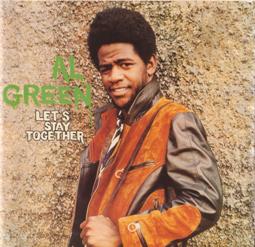
- Al Green – “Lets Stay Together”
from: Lets Stay Together / Hi Records / Jan. 31, 1972
[“Let’s Stay Together” is a song by American singer Al Green from his 1972 album of the same name. It was produced and recorded by Willie Mitchell, and mixed by Mitchell and Terry Manning. Released as a single in 1971, “Let’s Stay Together” reached number 1 on the Billboard Hot 100, and remained on the chart for 16 weeks and also topped Billboard’s R&B chart for nine weeks. Billboard ranked it as the number 11 song of 1972. It was ranked the 60th greatest song of all time by Rolling Stone magazine on their 2004 list of the 500 Greatest Songs of All Time, and has been covered by numerous other performers, most notably Tina Turner. // It was selected by the Library of Congress as a 2010 addition to the National Recording Registry, which selects recordings annually that are “culturally, historically, or aesthetically significant”. The song went on to claim the number 1 position on the Billboard Year-End chart as an R&B song for 1972. In 1999, the 1971 recording on Hi Records by Al Green was inducted into the Grammy Hall of Fame. // Albert Leornes Greene (born April 13, 1946), known professionally as Al Green, is an American singer, songwriter, pastor and record producer best known for recording a series of soul hit singles in the early 1970s, including “Take Me to the River”, “Tired of Being Alone”, “I’m Still in Love with You”, “Love and Happiness”, and his signature song, “Let’s Stay Together”. After his girlfriend died by suicide, Green became an ordained pastor and turned to gospel music. He later returned to secular music. // Green was inducted into the Rock and Roll Hall of Fame in 1995. He was referred to on the museum’s site as being “one of the most gifted purveyors of soul music”. He has also been referred to as “The Last of the Great Soul Singers”. Green is the winner of 11 Grammy Awards, including the Grammy Lifetime Achievement Award. He has also received the BMI Icon award and is a Kennedy Center Honors recipient. He was included in the Rolling Stone list of the 100 Greatest Artists of All Time, ranking at No. 65, as well as its list of the 200 Greatest Singers of All Time, at No. 10.]
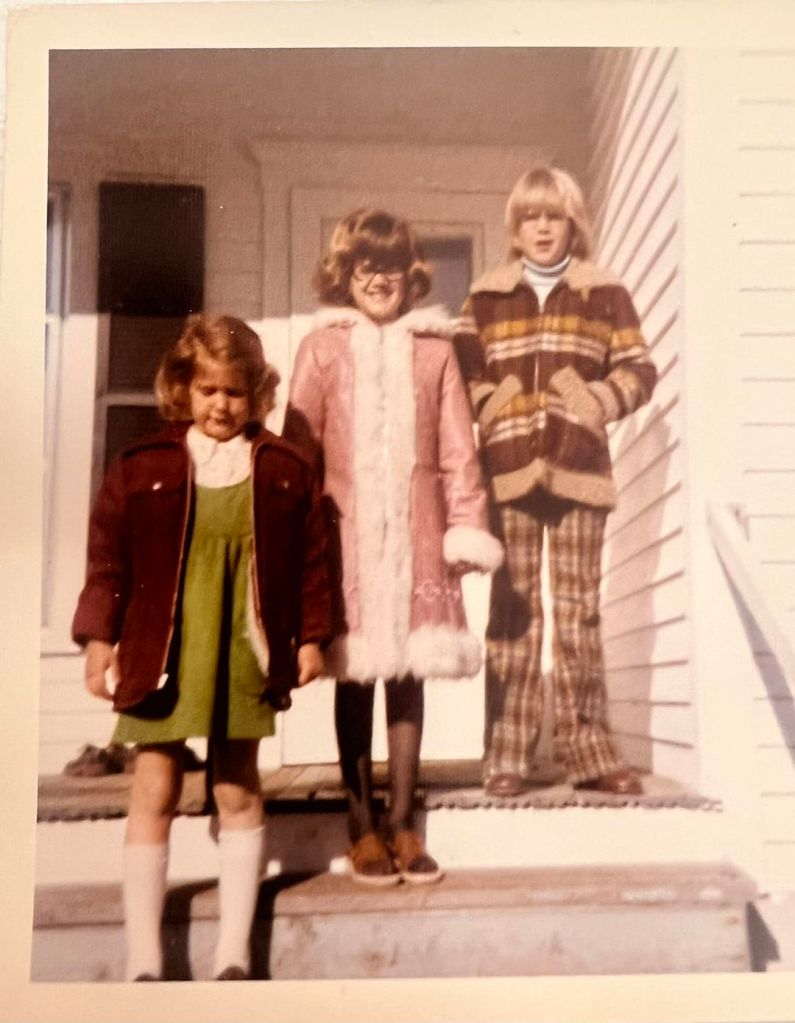
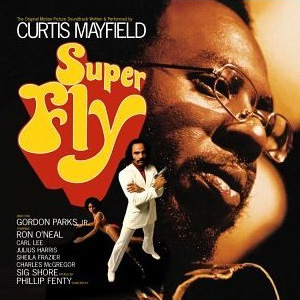
Mark: In my tween years my mother’s record collection was changing, her second husband Al drove a van, with a CB Radio, and listened to 8-track tapes. My mom was in the RCA Music Club where they would automatically send you the “new release,” if you didn’t send back the card. That’s how my mom ended up with the soundtrack to “Superfly” from Curtis Mayfield on 8-track. The movie never played our town. But the soundtrack tells the story, and we hear in the bridge, the amazing Curtis singing, “Trying to get over” “Trying to get over,” it’s the theme we hear in so many of Curtis Mayfield’s incredible recordings.
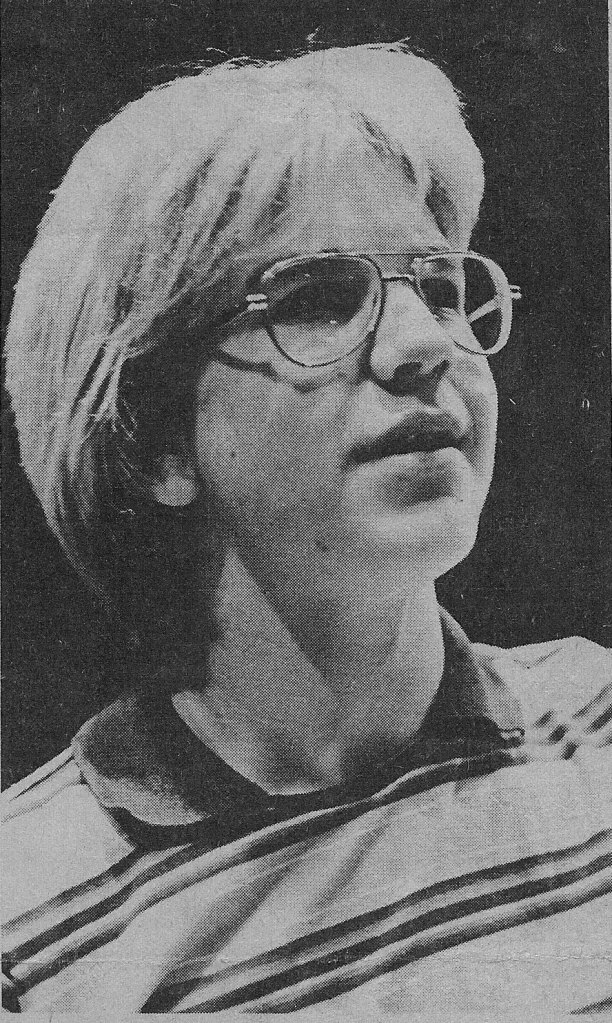
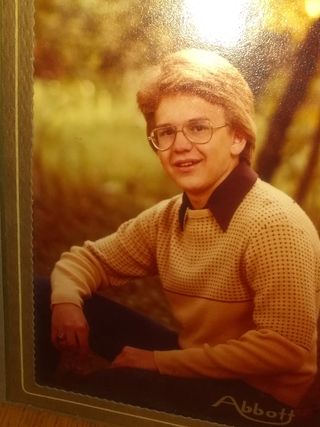
Mark: Thanks for tuning into WMM. I’m Mark Manning. 61 years ago, on this date, I was born in Geneva, (Nebraska) Today I’m playing from some of my favorite recordings, from different times of my life. In 1980, in high school journalism class, working on the year-book staff, we listened to this debut record, of a new band from Athens, Georgia. We listened on a small portable stereo, checked out from the media department, much like the ones that the women in prison were playing. The record’s label said “play loud,” so we did.
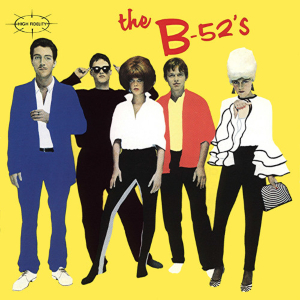
- The B-52’s – “52 Girls”
from: The B-52’s / Warner Brothers / July 6, 1979
[Kate Pierson on vocals, organ, keyboard bass, additional guitar; Fred Schneider on vocals, cowbell, walkie-talkie, toy piano (track 3), keyboard bass (track 7); Keith Strickland on drums, percussion, Claire sounds; Cindy Wilson on vocals, bongos, tambourine, additional guitar; Ricky Wilson on guitars, smoke alarm. // The B-52’s is the debut album by American New wave band the B-52’s. The kitschy lyrics and mood, and the hook-laden harmonies helped establish a fanbase for the band, who went on to release several chart-topping singles. The album cover was designed by Tony Wright (credited as Sue Ab Surd). /// The B-52’s peaked at number 59 on the Billboard 200, and “Rock Lobster” reached number 56 on the Billboard Hot 100. In 2003, the television network VH1 named The B-52’s the 99th greatest album of all time. Shortly before his death, John Lennon said he enjoyed the album. In his 1995 book, The Alternative Music Almanac, Alan Cross placed the album ninth on the list of the “10 Classic Alternative Albums”. In 2020, The B-52’s was ranked number 198 on Rolling Stone magazine’s list of the 500 greatest albums of all time. // Critical reception for The B-52’s was generally favorable; critics praised the album’s kitschy lyrics and party atmosphere. In his “Consumer Guide” column for The Village Voice, music critic Robert Christgau remarked on his fondness “for the pop junk they recycle—with love and panache,” while also noting that he was “more delighted with their rhythms, which show off their Georgia roots by adapting the innovations of early funk (a decade late, just like the Stones and Chicago blues) to an endlessly danceable forcebeat format.” // In a retrospective review, Stephen Thomas Erlewine of AllMusic wrote: “Unabashed kitsch mavens at a time when their peers were either vulgar or stylish, the Athens quintet celebrated all the silliest aspects of pre-Beatles pop culture – bad hairdos, sci-fi nightmares, dance crazes, pastels, and anything else that sprung into their minds – to a skewed fusion of pop, surf, avant-garde, amateurish punk, and white funk.” Rolling Stone writer Pat Blashill concluded that “On The B-52’s, the best little dance band from Athens proved that rock & roll still matters if it’s about sex and hair and moving your body. Even if you have to shake-bake shake-bake it like a Shy Tuna.” Slant Magazine’s Sal Cinquemani stated that “(l)ike any over-the-top act, the B-52’s wears thin, but the band successfully positioned themselves as pop-culture icons—not unlike the musical antiquities they emulated.” The B-52’s was included in the book 1001 Albums You Must Hear Before You Die. In 2003, Rolling Stone ranked The B-52’s number 152 on its list of the 500 greatest albums of all time, maintaining the ranking in a 2012 update of the list and dropping it to number 198 in a 2020 update.]
Mark: The 1970s came to an amazing ending. The decade of Love, and new found sexual freedom was about to be trampled and burned by Ronald Reagan and the Moral Majority. Hippies were getting their hair cut short and going to work for Wall Street. It was time for a new government that would truly uphold the values of the rich and greedy, it was time to tax the poor, start a racist war on drugs, build bigger prisons and cut funding for public schools. While sports loving baseball fans were burning all the disco albums a new music was forming, and new invasion of British bands was about to be unleashed and an new term of music was created. Seymour Stein of Sire records signed a bunch of bands he “discovered” at the famed New York dive bar, CBGBs. “Punk” wouldn’t sell, so he renamed the music “New Wave”, especially for his new band, and their almost perfect debut album 77, that came out in 1977 but it took some of us until 1981 to discover it. Their music has been therapy to me, both physically and psychologically. I love all of their recordings, but 77 is special. They were fresh young art students fearlessly being a band.
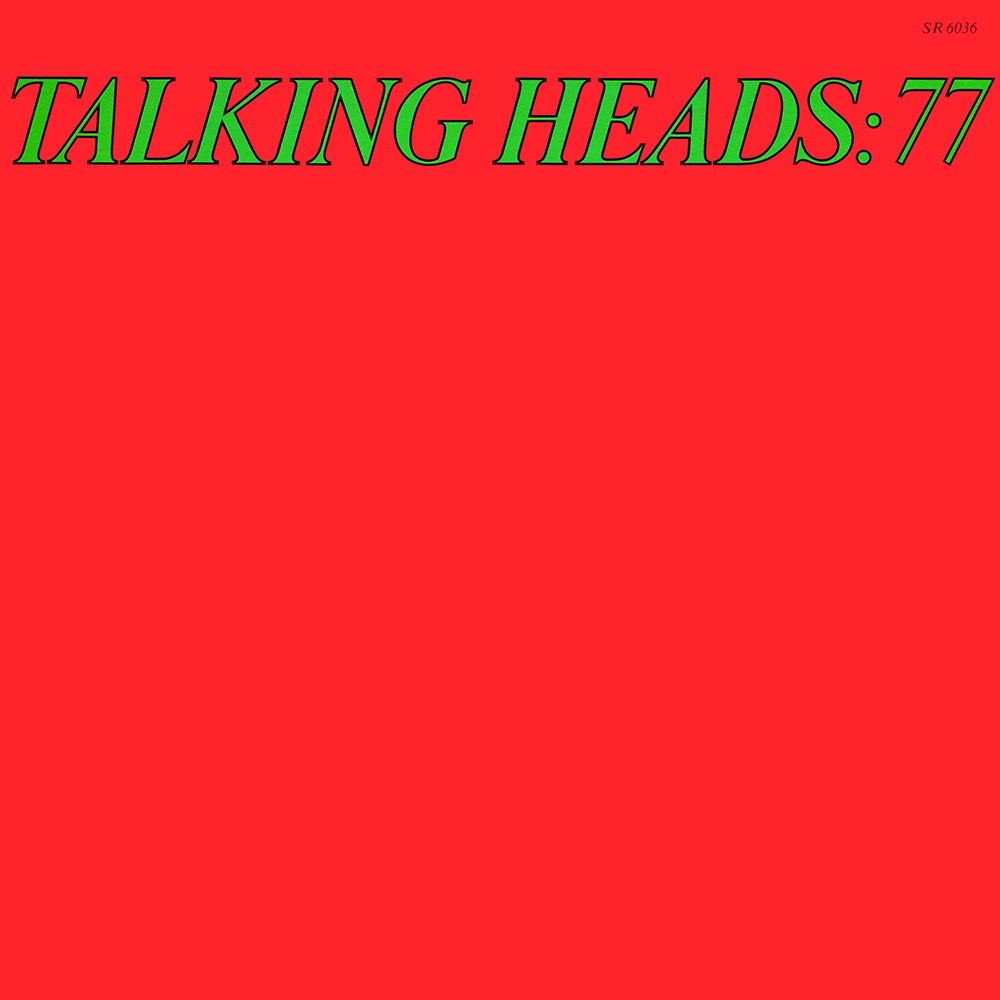
- Talking Heads – “Uh-Oh, Love Comes To Town”
from: 77 / Sire / September 16, 1977
[Talking Heads: 77 is the debut studio album by American rock band Talking Heads. It was recorded in April 1977 at New York’s Sundragon Studios and released on September 16 of that year by Sire Records. The single “Psycho Killer” reached number 92 on the Billboard Hot 100. // From the group’s earliest days as a trio in 1975, Talking Heads were approached by several record labels for a potential album deal. The first person to approach the band was Mark Spector for Columbia Records, who saw Talking Heads perform at CBGB and invited them to record a demo album. Next would come Mathew Kaufman for Beserkley Records. Kaufman brought the trio to K&K Studios in Great Neck, Long Island, to record a three-song, 16-track demo tape containing “Artists Only”, “Psycho Killer” and “First Week, Last Week”. Kaufman was pleased with the results, but the band felt that they would need to improve drastically before re-entering a recording studio. The group also sent the Columbia demo to Arista Records, but when drummer Chris Frantz called Bob Feilden about it a few weeks later, he claimed the tape was lost. // In November 1975, Seymour Stein, cofounder of Sire Records, had heard Talking Heads open for the Ramones. He liked the song “Love → Building on Fire”, and the next day, offered a record deal, but the group was still unsure about their studio abilities, and wanted a second guitarist as well as a keyboard player to help improve their sound. They agreed to let him know when they felt more confident. // A month later, Lou Reed, who had seen a few Talking Heads shows at CBGB, invited the trio to his New York apartment, where he began to critique the group’s act, telling them to slow down “Tentative Decisions”, which had originally been fast and bass-heavy. Reed also suggested to David Byrne that he never wear short sleeves on stage, in order to hide his hairy arms. Over breakfast at a local restaurant, Reed expressed a desire to produce the group’s first album and wanted to introduce them to his manager, Jonny Podell. That same day Podell called the trio to meet at his office, where he immediately offered them a recording contract. // To assist with the contracting, the group sought out assistance from lawyer Peter Parcher, a friend of Frantz’s father. The next day, the trio visited Parcher’s office, where Parcher asked his partner Alan Shulman to look over the contract. Shulman told the group not to sign the deal, or else Reed and Podell would own full rights to the album and collect all profit. Talking Heads declined the deal, but maintained a respectful relationship with Reed. // Around August 1976, Chris Frantz was given the number of Jerry Harrison by former Modern Lovers bass player Ernie Brooks. Brooks assured Frantz that Harrison was not only a great keyboard player, but was a great guitarist too, two things the band were seeking out. When Frantz called Harrison, he was still feeling burnt out from the demise of the original Modern Lovers and had just enrolled at a Harvard Graduate School, and was unsure about joining a new band. But after discovering that several labels were interested in signing the group, he agreed to hear them play live. Frantz booked a concert local to Harrison in Cambridge, Massachusetts. When the group began to perform, they found Harrison nowhere in sight, but eventually saw him mid-set, seriously observing the band, and appearing displeased. After the show, Frantz asked Harrison what he had thought. Harrison did not answer until the next day, saying he was not impressed by the show, but was intrigued. He said he would like to jam in New York but stipulated that he would not officially join until they had secured a recording deal. // During late September the group began to consider Sire Records again, and asked advice from Danny Fields, the Ramones’ manager. Fields praised Sire despite them having the normal flaws of a record label. On November 1 the trio met with Seymour Stein again at Shulman’s office, and signed a recording deal with Sire, with an advance allowing the trio to make music their full-time career. // Sessions started at Sundragon Recording Studios in late 1976, where the group recorded the track “New Feeling” and the single, “Love → Building on Fire”. Jerry Harrison was not present at these sessions, as he had not yet been informed that the group had received a record deal. These sessions were produced by Tony Bongiovi and Tom Erdelyi. After hearing of the recording session, Harrison was eager to join, and in January 1977, the trio went to his apartment in Ipswich to teach him their songs and play a few shows in the area. // In April, sessions for the album proper began in earnest at Sundragon Studios, with the group finally a foursome. Tony Bongiovi and Lance Quinn acted as co-producers on these sessions, with Ed Stasium as engineer. Frantz claims that Stasium did most of the work on the album, while Bongiovi took phone calls, read magazines, or talked about airplanes. Bongiovi was dissatisfied with the group’s performances, often asking for seven or eight takes of a song, even after the best take had already been recorded. The group felt that Bongiovi was condescending, and that he was trying to make them sound like a different band. He was also repeatedly rude to bassist Tina Weymouth.[citation needed] Stasium and Quinn were full of encouragement for the group. // The first song to have vocals recorded was “Psycho Killer”. Allegedly, during recording of this track, Bongiovi went into the studio kitchen and gave Byrne a knife, telling him to get into character when singing. Byrne simply responded with “No, that’s not going to work” and the band took a break. During the break Byrne confessed that he felt uncomfortable singing with Bongiovi watching, and asked Stasium to remove him. Stasium suggested evasion, recording when Bongiovi was not around, before he arrived, or after he left. Bongiovi allegedly never noticed they were doing this, being more concerned with the building of Power Station Studios. // The group wanted the album to “Convey a modern message about the importance of taking charge of your own life”, whilst still being fun to listen to. // Within two weeks the basic tracks were down, but still needed overdubs. Sessions were halted when Ken Kushnick, Sire’s European representative, offered them a chance to tour Europe with the Ramones in order to promote their “Love → Building on Fire” single. // While on tour the group continued to develop their sound, and on May 14, performed at The Rock Garden in Covent Garden, London, where John Cale, Brian Eno and Chris Thomas saw them. Linda Stein, the Ramones’ co-manager, brought Cale, Eno and Thomas backstage after the concert where they all shook hands. Thomas allegedly heard Cale say to Eno “They’re mine, you bugger!” All members of Talking Heads already knew Cale fairly well, as he had produced Jerry Harrison in 1972 for The Modern Lovers (1976), and was a regular at CBGBs throughout the original trio’s growth. // After the meeting they all went to The Speak Club to drink and discuss. Thomas declined the opportunity to replace Bongiovi as producer for the remaining album sessions.[15] When the group returned to the US on June 7, they booked a four-day recording session at ODO Studios in New York to record vocals and overdubs, as well as to mix the album. The album was finished. // The album was released by Sire Records in the UK and US and Philips Records throughout continental Europe. // In 2005, it was remastered and re-released by Warner Music Group on their Warner Bros./Sire Records/Rhino Records labels in DualDisc format with five bonus tracks on the CD side (see track listing below). The DVD-Audio side includes both stereo and 5.1 surround high resolution (96 kHz/24bit) mixes, as well as a Dolby Digital version and videos of the band performing “Pulled Up” and “I Feel It in My Heart”. In Europe, it was released as a CD+DVDA two-disc set, rather than a single DualDisc. The reissue was produced by Andy Zax with Talking Heads.]
Mark: The Summer after my Sophomore year in high School, I was given a crash course in Sex Drugs and Rock and Roll. I remember the second time I tried marijuana. My first thought was, “they are all liars.” How could something that felt this good be so very bad? Like my secret about being gay, I knew I had to keep this a big secret, because it was definitely illegal, in 1979, in York, Nebraska, where you could get pulled over for driving drunk, but for certain you would go to jail for possession of the evil weed.
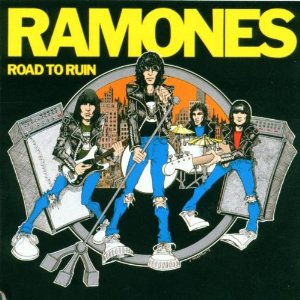
- The Ramones – “I Wanna Be Sedated”
from: Road To Ruin / Sire / September 22, 1978
[Originally released on the band’s fourth studio album, Road to Ruin (1978), in September 1978. The B-side of the UK single “She’s the One” was released on September 21, 1978. The song was later released as a single in the Netherlands in 1979, and in the U.S. in 1980 by RSO Records from the Times Square soundtrack album. It has since remained one of the band’s best known songs. // “I Wanna Be Sedated” was written by Joey Ramone. In an interview about the song, Joey explains the chorus: “It’s a road song. I wrote it in 1977, through the 78′. Well, Danny Fields was our first manager and he would work us to death. We would be on the road 360 days a year, and we went over to England, and we were there at Christmas time, and in Christmas time, London shuts down. There’s nothing to do, nowhere to go. Here we were in London for the first time in our lives, and me and Dee Dee Ramone were sharing a room in the hotel, and we were watching The Guns of Navarone. So there was nothing to do, I mean, here we are in London finally, and this is what we are doing, watching American movies in the hotel room.” // “I Wanna Be Sedated” was # 145 on the Rolling Stone’s 500 Greatest Songs of All Time. Marky Ramone is the drummer on this track. // In 1999, National Public Radio included the song in the “NPR 100”, in which NPR’s music editors sought to compile the one hundred most important American musical works of the 20th century. // Kelefa Sanneh said of the song, “I loved it because it seemed like the beginning of a tradition, pointing away from all the conventional thing a rock ‘n’ roll band might do, and pointing toward anything and everything else.” // According to Alice Cooper, Joey Ramone acknowledged the similarity to Cooper’s earlier 1972 song “Elected,” explaining that the Ramones listened to a lot of Alice Cooper.]
Mark: Prince released his 4th album, CONTROVERSY on October 14, 1981. This album came out during my freshman year in college, and I was in awe. CONTROVERSY followed Prince’s 1980 release, DIRTY MIND (one of my favorites). Both of these daring, and amazing, and genius albums helped kick open the closet doors, of young little Queer kids in “small town” Nebraska, like me. Prince was so very bold and courageous in his lyrics, “I just can’t believe, All the things people say, controversy. Am I black or white? Am I straight or gay? Controversy.” His music was always so good. His early albums were so important to me, making me a life long fan. Prince was universal. He was so damn good, and ultimately, he just didn’t give a damn, about all of those homophobic racists. Prince did so much, to help liberate us lovers, from the poisonous, Republican, “family values” bed death, of bloated and drunk sexist and hypocritical patriarchy gone so wrong.
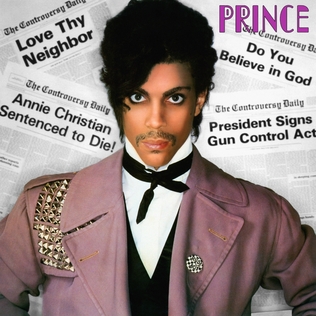
- Prince – “Controversy (Single Version)”
from: Controversy / Warner Brothers / October 14, 1981
Controversy is the fourth studio album by the American singer-songwriter and musician Prince, released on October 14, 1981, by Warner Bros. Records. It was produced by Prince, written (with the exception of one track) by him, and he also performed most of the instruments on its recording. // Controversy reached number three on the Billboard R&B Albums chart and was certified Platinum by the Recording Industry Association of America (RIAA). It was voted the eighth best album of the year in the 1981 Pazz & Jop, an annual critics poll run by The Village Voice. // This was the first of his albums to associate Prince with the color purple as well as the first to use sensational spelling in his song titles. // Controversy opens with the title track, which raises questions that were being asked about Prince at the time, including his race and sexuality. The song “flirts with blasphemy” by including a chant of The Lord’s Prayer. “Do Me, Baby” is an “extended bump-n-grind” ballad with explicitly sexual lyrics, and “Ronnie, Talk to Russia” is a politically charged plea to President Ronald Reagan. “Private Joy” is a bouncy bubblegum pop-funk tune, “showing off Prince’s lighter side”, followed by “Annie Christian”, which lists historical events such as the murder of African-American children in Atlanta and the death of John Lennon. The album’s final song, “Jack U Off”, is a synthesized rockabilly-style track. // In a contemporary review for Rolling Stone, music critic Stephen Holden wrote that “Prince’s first three records were so erotically self-absorbed that they suggested the reveries of a licentious young libertine. On Controversy, that libertine proclaims unfettered sexuality as the fundamental condition of a new, more loving society than the bellicose, overtechnologized America of Ronald Reagan.” He went on to say, “Despite all the contradictions and hyperbole in Prince’s playboy philosophy, I still find his message refreshingly relevant.” // Robert Christgau was less enthusiastic in a generally favorable review for The Village Voice, in which he wrote that its “socially conscious songs are catchy enough, but they spring from the mind of a rather confused young fellow, and while his politics get better when he sticks to his favorite subject, which is s-e-x, nothing here is as far-out and on-the-money as ‘Head’ or ‘Sister’ or the magnificent ‘When You Were Mine.'” // According to Blender’s Keith Harris, Controversy is “Prince’s first attempt to get you to love him for his mind, not just his body”, as it “refines the propulsive funk of previous albums and adds treatises on religion, work, nuclear war and Abscam.” Stephen Thomas Erlewine of AllMusic remarked that it “continues in the same vein of new wave-tinged funk on Dirty Mind, emphasizing Prince’s fascination with synthesizers and synthesizing disparate pop music genres”. // Controversy was voted the eighth best album of the year in the 1981 Pazz & Jop, an annual critics’ poll run by The Village Voice.]
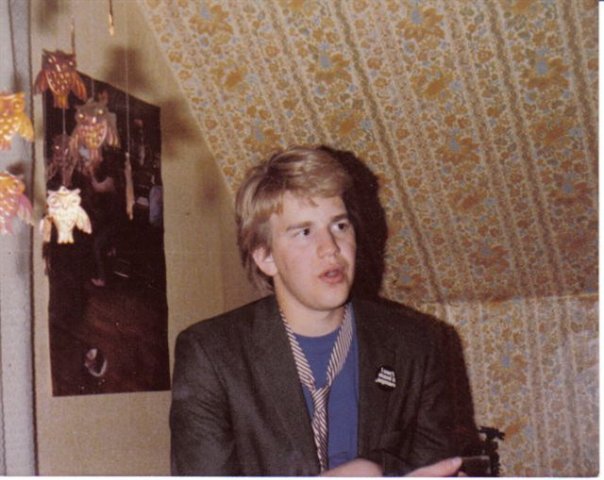
Mark: One summer morning, in 1982, in her apartment, in Crete, (Nebraska) my friend BJ, woke me up, with the song, “Young Americans,” and it changed my life. I know I had heard Bowie before, but on that day, I really heard Bowie. It was the summer that I “came out,” and I went in search of Bowie. I found, Scary Monsters and Super Creeps, and Lodger, and Heroes, and Low, and then going backwards, I made it my mission to gather together every Bowie I could find. Bowie was my estranged, space alien, androgynous angel, actually helping me find myself, giving me courage in my “coming out.” I learned that reinvention could prevent insanity. In my Bowie search, I discovered “Hunky Dory,” recorded in 1971, just after his trip to NYC to promote The Man Who Sold The World and meet Andy Warhol, and the Factory, and the place where The Velvet Underground were formed.
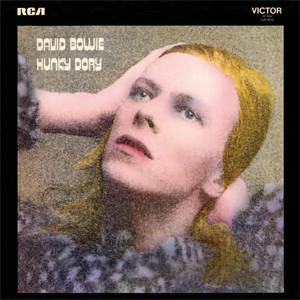
- David Bowie – “Andy Warhol”
from: Hunky Dory / RCA / December 17, 1971
[“Kooks” is a song written by David Bowie, which appears on his 1971 album Hunky Dory. Bowie wrote this song to his newborn son Duncan Jones. The song was a pastiche of early 1970s Neil Young because Bowie was listening to a Neil Young record at home on 30 May 1971 when he got the news of the arrival of his son. British indie band The Kooks named themselves after the song. Hunky Dory is the fourth studio album by the English musician David Bowie, released on December 17, 1971 by RCA Records. It was his first release through RCA, which would be his label for the next decade. Hunky Dory has been described by AllMusic’s Stephen Thomas Erlewine as having “a kaleidoscopic array of pop styles, tied together only by Bowie’s sense of vision: a sweeping, cinematic mélange of high and low art, ambiguous sexuality, kitsch, and class”. The album has received critical acclaim since its release, and is regarded as one of Bowie’s best works. Time chose it as part of their “100 best albums of all time” list in January 2010, with journalist Josh Tyrangiel praising Bowie’s “earthbound ambition to be a boho poet with prodigal style”. The style of the album cover, designed by George Underwood, was influenced by a Marlene Dietrich photo book that Bowie took with him to the photo shoot. With new bass player Trevor Bolder replacing Tony Visconti, Hunky Dory was the first production featuring all the members of the band that would become known the following year as Ziggy Stardust’s Spiders From Mars. Also debuting with Bowie, in Visconti’s place as producer, was another key contributor to the Ziggy phase, Ken Scott. The album’s sleeve would bear the credit “Produced by Ken Scott (assisted by the actor)”. The “actor” was Bowie himself, whose “pet conceit”, in the words of NME critics Roy Carr and Charles Shaar Murray, was “to think of himself as an actor”.]
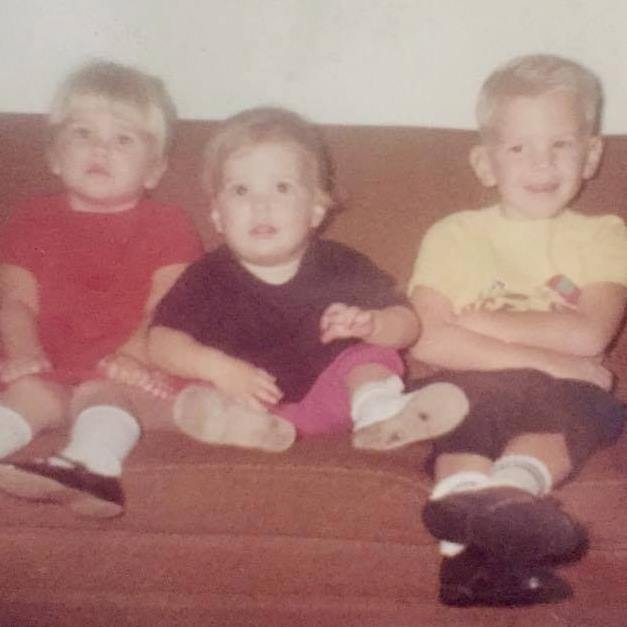
Mark: I knew I was gay when I was 5, but I kept it a secret. My first year in college I fell in love with a girl, but after 9 months I ended our relationship. I felt I was lying. That summer I started to “come out,” at least to myself, and then, in my second year in college, I sort of fell in love with my friend B.J.’s lesbian girlfriend Dani. She had moved into our dorm after a few dates with BJ. One night after a trip to KC, Dani and I ran across campus to Baba Rama’s room at Smith Hall. He had friends visiting, but we put on the cassette, “Combat Rock” by The Clash, and the three of us just started dancing. A straight guy, a lesbian girl, and a gay guy. I was 19, and trying to figure everything out. It was confusing. Thankfully The Clash provided the perfect soundtrack.
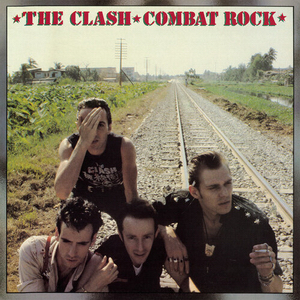
- The Clash – “Should I Stay Or Should I Go”
from: Combat Rock / Sony / May 14, 1982
[Combat Rock is the fifth studio album by the English rock band the Clash, released on May 14, 1982 through CBS Records. In the United Kingdom, the album charted at number 2, spending 23 weeks in the UK charts and peaked at number 7 in the United States, spending 61 weeks on the chart. The album was propelled by drummer Topper Headon’s “Rock the Casbah” which became a staple on the newly launched MTV. Combat Rock continued the influence of funk and reggae like previous Clash albums, but also featured a more radio-friendly sound which alienated Clash fans. While the recording process went smoothly, the producing process of the album was tiring and full of infighting between Mick Jones and Joe Strummer. Headon’s heroin addiction grew worse and he slowly became distant from the band while Strummer and bassist Paul Simonon reinstated Bernie Rhodes as manager, a move unwelcomed by Jones. The band had disagreed on the creative process of the album and called in Glyn Johns to produce the more radio-friendly sound of Combat Rock. Lyrically, Combat Rock focuses on the Vietnam War, postcolonialism, the decline of American society, and authoritarianism. // Combat Rock is the group’s best-selling album, being certified double platinum in the United States and reaching number 2 in the U.K. Reception to the album believed the band had reached its peak maturity with Combat Rock, as the album’s sound was less anarchic but still as political as previous albums. It contains two of the Clash’s signature songs, the singles “Rock the Casbah” and “Should I Stay or Should I Go”. “Rock the Casbah” became highly successful in the United States and proved to be the band’s anticipated U.S breakthrough. “Should I Stay or Should I Go” was not as successful until being re-released in 1991 and topping the charts in their native United Kingdom. Combat Rock is the last Clash album featuring the classic lineup of the Clash. Topper Headon (due to his heroin addiction) was fired days before the release of Combat Rock and Mick Jones was fired after the end of the Combat Rock tour in 1983. Combat Rock would be succeeded by the Clash’s last album, Cut the Crap, recorded and released without Mick Jones or Topper Headon in 1985. // Following the triple-album Sandinista! (1980), singer/guitarist Joe Strummer felt the group was “drifting” creatively. Bassist Paul Simonon agreed with Strummer’s dissatisfaction towards the “boring” professionalism of the Clash’s then-managers Blackhill Enterprises. Strummer and Simonon convinced their bandmates to reinstate the band’s original manager Bernie Rhodes in February 1981, in an attempt to restore the “chaos” and “anarchic energy” of the Clash’s early days. This decision was not welcomed by guitarist Mick Jones, who was becoming progressively estranged from his bandmates. // During this period, drummer Topper Headon escalated his intake of heroin and cocaine. His occasional drug usage had now become a habit that was costing him £100 per day and undermining his health. This drug addiction would be the factor that would later push his bandmates to fire him from the Clash, following the release of Combat Rock. // The album had the working title Rat Patrol from Fort Bragg during the recording and mixing stages. After early recording sessions in London, the group relocated to New York for recording sessions at Electric Lady Studios in November and December 1981. Electric Lady was where the band had recorded its previous album Sandinista! In 1980. // While recording the album in New York, Mick Jones lived with his then-girlfriend Ellen Foley. Joe Strummer, Paul Simonon and Topper Headon stayed at the Iroquois Hotel on West 44th Street, a building famed for being the home of actor James Dean for two years during the early 1950s. // After finishing the New York recording sessions in December 1981, the band returned to London for most of January 1982. Between January and March, the Clash embarked on a six-week tour of Japan, Australia, New Zealand, Hong Kong and Thailand. During this tour, the album’s cover photograph was shot by Pennie Smith in Thailand in March 1982. // Following the gruelling Far East tour, the Clash returned to London in March 1982 to listen to the music that they had recorded in New York three months earlier. They had recorded 18 songs, enough material to possibly release as double-album. Having previously released the double-LP London Calling (1979) and the triple-LP Sandinista! (1980), the group considered whether they should again release a multi-LP collection. // The band debated how many songs their new album should contain, and how long the songs’ mixes should be. Mick Jones argued in favour of a double-album with lengthier, dancier mixes. The other band members argued in favour of a single album with shorter song mixes. This internal wrangling created tension within the band, particularly with Jones, who had mixed the first version. // Manager Bernie Rhodes suggested that producer/engineer Glyn Johns be hired to remix the album. This editing took place in Johns’ garden studio in Warnford, Hampshire (not at Wessex Studios, as is stated by some sources). // Johns, accompanied by Strummer and Jones edited Combat Rock down from a 77-minute double album down to a 46-minute single LP. This was achieved by trimming the length of individual songs, such as by removing instrumental intros and codas from songs like “Rock the Casbah” and “Overpowered by Funk”. Additionally, the trio decided to omit several songs entirely, dropping the final track count to 12. During these remixing sessions, Strummer and Jones also re-recorded their vocals for the songs “Should I Stay or Should I Go” and “Know Your Rights” and remixed the songs with A recurring motif of the album is the impact and aftermath of the Vietnam War. “Straight to Hell” describes the children fathered by American soldiers to Vietnamese mothers and then abandoned, while “Sean Flynn” describes the capture of photojournalist Sean Flynn, who was the son of actor Errol Flynn. Sean Flynn disappeared (and was presumably killed) in 1970 after being captured by the Vietcong in Cambodia. // Biographer Pat Gilbert describes many songs from Combat Rock as having a “trippy, foreboding feel”, saturated in a “colonial melancholia and sadness” reflecting the Vietnam WarThe band was inspired by Francis Ford Coppola’s 1979 film about the Vietnam War, Apocalypse Now, and had previously released the song “Charlie Don’t Surf” on Sandinista!, which referenced the film. Strummer later stated that he became “obsessed” with the film. // Other Combat Rock songs, if not directly about the Vietnam War and U.S. foreign policy, depict American society in moral decline.”Inoculated City” satires the Nuremberg defense plea by soldiers on trial who’ve committed war crimes. The original version of this song included an unauthorized audio clip from a TV commercial for 2000 Flushes, a toilet bowl cleaner. The maker of this product threatened a lawsuit, forcing the group to edit the track, though the longer version was restored on later copies. “Red Angel Dragnet” was inspired by the January 1982 shooting death of Frank Melvin, a New York member of the Guardian Angels.[The song quotes Martin Scorsese’s 1976 movie Taxi Driver, with Clash associate Kosmo Vinyl recording several lines of dialogue imitating the voice of main character Travis Bickle. Bickle sports a mohawk in the latter part of Taxi Driver, this was a hairstyle adopted by Joe Strummer during the Combat Rock concert tour. // The song “Ghetto Defendant” features Beat poet Allen Ginsberg, who performed the song on stage with the band during the New York shows on their tour in support of the album. Ginsberg had researched punk music, and included phrases like “do the worm” and “slam dance” in his lyrics. At the end of the song he can be heard reciting the Heart Sutra, a popular Buddhist mantra. // The song “Know Your Rights” starts off with: “This is a public service announcement…with guitar!” The musical style of the song was described as being one of the “more punk” songs on the album, reflecting the open and clear lyrics of the song. The lyrics represent the fraudulent rights for the lower and less respected class, with a nefarious civil servant naming three rights, with each right having an exception to benefit the rich or being skewed against the lower class. // Music for “Rock the Casbah” was written by the band’s drummer Topper Headon, based on a piano part that he had been toying with.[ Finding himself in the studio without his three bandmates, Headon progressively taped the drum, piano and bass parts, recording the bulk of the song’s musical instrumentation himself. The other Clash members were impressed with Headon’s recording, stating that they felt the musical track was essentially complete. However, Strummer was not satisfied with the page of suggested lyrics that Headon gave him. Before hearing Headon’s music, Strummer had already come up with the phrases “rock the casbah” and “you’ll have to let that raga drop” as lyrical ideas that he was considering for future songs. After hearing Headon’s music, Strummer went into the studio’s toilets and wrote lyrics to match the song’s melody. // Following along the same note as Sandinista!, Combat Rock’s catalogue number “FMLN2” is the abbreviation for the El Salvador political party Frente Farabundo Martí para la Liberación Nacional or FMLN. // Lead single “Know Your Rights” was released on April 23, 1982, and reached number 43 on the U.K. singles chart.Combat Rock was released on May 14, 1982 and reached number 2 on the U.K. album charts, kept off the top spot by Paul McCartney’s Tug of War. In the United States, Combat Rock reached number 7 on the album charts, selling in excess of one million copies. Combat Rock was the band’s most successful album in the United States. However, in the U.K, Combat Rock was tied with the 1978 album Give ‘Em Enough Rope for the highest charting album for the band in their native U.K. // “Rock the Casbah”, which was composed by drummer Topper Headon, reached number 8 on the U.S. singles chart. The single was accompanied by a distinctive video directed by Don Letts that aired frequently on the then-fledgling television channel MTV. Headon, despite composing the song, was not in the music video after being replaced by Terry Chimes for his raging heroin addiction.
Mark: Baba Rama, was two years older than me in college, he was always luring me into new situations, and possible danger. He had a reputation. He introduced me to Patti Smith’s album “Wave” the same night he bought thai stick from several international students. From that day forward, I would always love Patti Smith. All of her recordings are pieces of art. Her authentic rock and roll voice has passed from underground poet to best selling author. Her debut album was produced by John Cale, and I think this song is perfect.
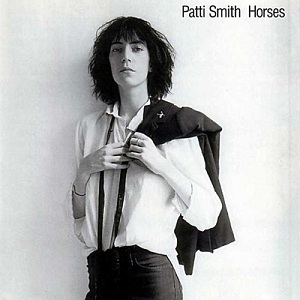
- Patti Smith – “Free Money”
from: Horses / Arista Records / November, 1975
[Horses is the debut studio album by American musician Patti Smith. It was released by Arista Records on November 10, 1975. A fixture of the mid-1970s underground rock music scene in New York City, Smith signed to Arista in 1975 and recorded Horses with her band at Electric Lady Studios in August and September of that year. She enlisted former Velvet Underground member John Cale to produce the album. // The music on Horses was informed by the minimalist aesthetic of the punk rock genre, then in its formative years. Smith and her band composed the album’s songs using simple chord progressions, while also breaking from punk tradition in their propensity for improvisation and embrace of ideas from avant-garde and other musical styles. Smith’s lyrics on Horses were alternately rooted in her own personal experiences, particularly with her family, and in more fantastical imagery. The album also features adaptations of the rock standards “Gloria” and “Land of a Thousand Dances”. // At the time of its release, Horses experienced modest commercial success and placed in the top 50 of the American Billboard 200 albums chart, while being widely acclaimed by music critics. Recognized as a seminal recording in the history of punk and later rock movements, Horses has frequently appeared in professional lists of the greatest albums of all time. In 2009, it was selected by the Library of Congress for preservation into the National Recording Registry as a “culturally, historically, or aesthetically significant” work. // Through frequent live performances over the previous year, by 1975 Patti Smith and her band had established themselves as a popular act within the New York City underground rock music scene. Further increasing their popularity was their highly attended two-month residency at the New York City club CBGB with the band Television early that year. The hype surrounding the residency brought Smith to the attention of music industry executive Clive Davis, who was scouting for talent to sign to his recently launched label Arista Records. After being impressed by one of her live performances at CBGB, Davis offered Smith a seven-album recording deal with Arista, and she signed to the label in April 1975. // Smith’s vision for her debut album was, in her words, “to make a record that would make a certain type of person not feel alone. People who were like me, different … I wasn’t targeting the whole world. I wasn’t trying to make a hit record.” The title Horses reflected Smith’s desire for a rejuvenation of rock music, which she found had grown “calm” in reaction to the social turmoil of the 1960s and the deaths of numerous prominent rock musicians. She elaborated: “Psychologically, somewhere in our hearts, we were all screwed up because those people died … We all had to pull ourselves together. To me, that’s why our record’s called Horses. We had to pull the reins on ourselves to recharge ourselves … We’ve gotten ourselves back together. It’s time to let the horses loose again. We’re ready to start moving again.” // Arista arranged for Smith to begin recording Horses in August 1975. Smith initially suggested that the album should be produced by Tom Dowd. Plans were made to book studio time with Dowd at Criteria in Miami, but these were complicated by his relationship with rival label Atlantic Records. Smith had a change of heart, and instead set out to enlist Welsh musician John Cale, formerly of the Velvet Underground, to produce Horses, for she was impressed by the raw sound of his solo albums, such as 1974’s Fear. Cale, who had previously seen Smith perform live and was acquainted with her bassist Ivan Král, accepted. // Horses was recorded at Electric Lady Studios in New York City, with Smith retaining the same backing band with whom she performed live—Jay Dee Daugherty on drums, Lenny Kaye on guitar, Ivan Král on bass guitar, and Richard Sohl on keyboards. Cale recalled that the band initially “sounded awful” and played out of tune due to their use of damaged instruments, forcing him to procure the band new instruments before work on the album began. The differences between the work ethics of Cale, who was an experienced recording artist, and of Smith, who at this point was primarily a live performer, became apparent early on in recording, and were a source of tension between the two artists, who frequently argued in the studio. // A notecard with handwriting // Guest musicians on Horses were Allen Lanier of Blue Öyster Cult and Tom Verlaine of Television. Cale had wished to augment the band’s playing on certain songs with strings, but Smith vehemently opposed this idea. Lanier, who was Smith’s boyfriend at the time, did not get along with Cale, nor—particularly so—with Verlaine. This tension culminated with Lanier and Verlaine getting into a physical altercation during the final recording session, held on September 18. // By the end of recording, and for some years immediately following the album’s release, Smith was quick to downplay Cale’s contributions and suggested that she and her band had ignored his suggestions entirely. In a 1976 interview with Rolling Stone, Smith described her experience: “My picking John was about as arbitrary as picking Rimbaud. I saw the cover of Illuminations with Rimbaud’s face, y’know, he looked so cool, just like Bob Dylan. So Rimbaud became my favorite poet. I looked at the cover of Fear and I said, ‘Now there’s a set of cheekbones.’ In my mind I picked him because his records sounded good. But I hired the wrong guy. All I was really looking for was a technical person. Instead, I got a total maniac artist. I went to pick out an expensive watercolor painting and instead I got a mirror. It was really like A Season in Hell, for both of us. But inspiration doesn’t always have to be someone sending me half a dozen American Beauty roses. There’s a lotta inspiration going on between the murderer and the victim. And he had me so nuts I wound up doing this nine-minute cut that transcended anything I ever did before. // Cale said in 1996 that Smith initially struck him as “someone with an incredibly volatile mouth who could handle any situation”, and that as producer on Horses he wanted to capture the energy of her live performances, noting that there “was a lot of power in Patti’s use of language, in the way images collided with one another.” He described their working relationship during recording as “confrontational and a lot like an immutable force meeting an immovable object.” Smith would later attribute much of the tension between herself and Cale to her inexperience with formal studio recording, recalling that she was “very, very suspicious, very guarded and hard to work with” and “made it difficult for him to do some of the things he had to do.” She expressed gratitude for Cale’s persistence in working with her and her band, and found that his production on Horses made the most out of their “adolescent and honest flaws”.]
11:03 – Station ID
Mark: Thanks for tuning into WMM. I’m Mark Manning. We will continue with our special Birthday show featuring some of my favorite recordings, from different times of my life.
But first we take a break to welcome special guest Peregrine Honig and Izzy Vivas of The West 18th Street Fashion Show happening Saturday, June 8, at 7:00pm this year’s theme is Summer in Slumberland.
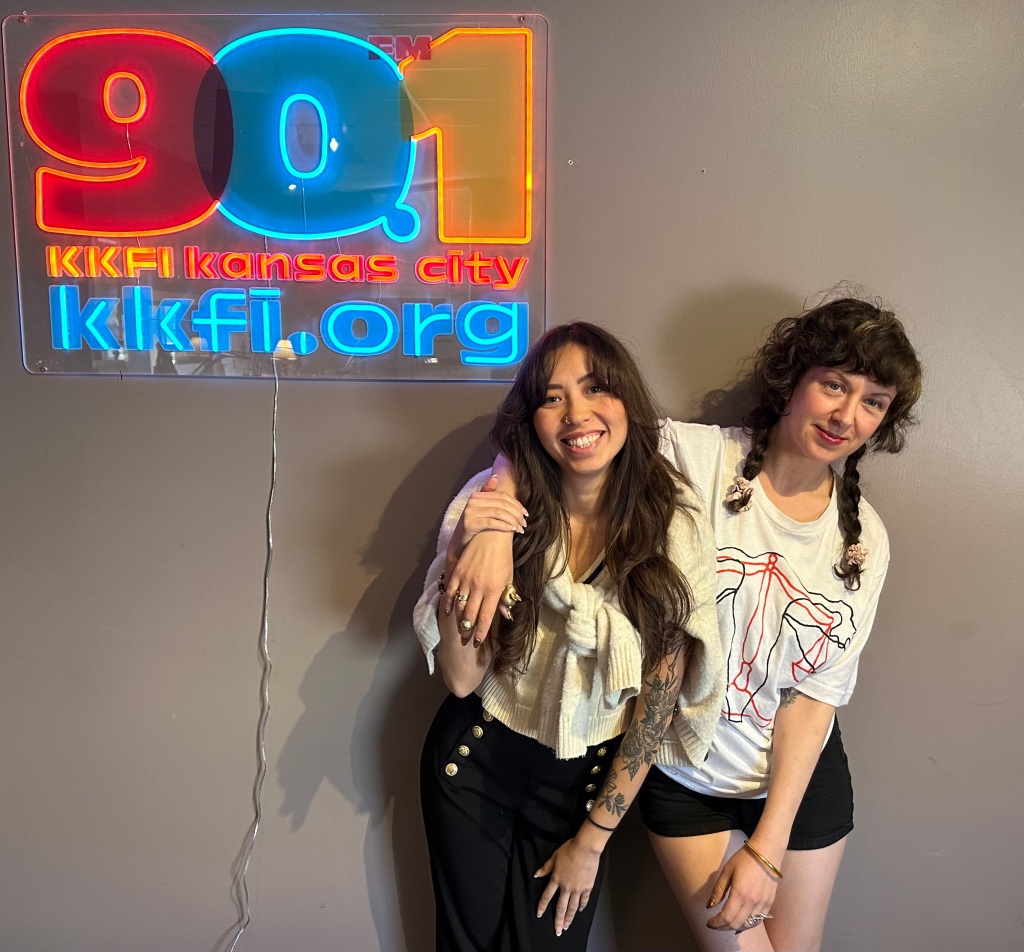
11:03 – Interview with Peregrine Honig & Izzy Vivas
Peregrine Honig was born in San Francisco, and moved to Kansas City, at 17 to attend the Kansas City Art Institute. At age 22, Honig was the youngest living artist to have work acquired by the Whitney Museum of Art’s permanent collection. Peregrine appeared on season one of Bravo television’s artist reality show, Work of Art: The Next Great Artist, which aired in the summer of 2010. She owns a lingerie and swimwear boutique, Birdies, which opened in 2003, in the Crossroads. From 2017 to 2024 Peregrine managing the Greenwood Social Hall where she has presented concerts from Calvin Arsenia, Krystle Warren, Bach Aria Soloists. Peregrine is also a founder of The West 18th Street Fashion Show
Izzy Vivas, brings a wealth of experience to her role Artistic Director of the West 18th Street Fashion Show. With a Bachelor of Fine Arts (BFA), Bachelor of Arts (BA), and Social Practice Minor, from the Kansas City Art Institute.Izzy has honed her skills in curating immersive art experiences and pushing creative boundaries. Izzy also serves as the Art Director at the Zhou B Art Center. She has worked at the Nelson Atkins Museum of Art, Doo Good KC, and is a visionary behind the West 18th Street Fashion Show, Izzy leads the creative direction of this iconic event, uniting designers, artists, and performers to showcase cutting-edge designs and celebrate Kansas City’s cultural richness. Izzy’s expertise lies in her ability to merge art and fashion seamlessly, provoking thought and inspiring change through her innovative storytelling and visionary leadership.
Artist Peregrine Honig and Izzy Vivas join us to discuss The West 18th Street Fashion Show happening this Saturday, June 8, at 7:30pm at 116 W 18th Street, KCMO. This year’s theme is Summer in Slumberland. More info at: https://west18thstreetfashionshow.com
Peregrine Honig and Izzy Vivas thanks for being with us on Wednesday MidDay Medley
The West 18th Street Fashion Show paves a path for designers to debut their work to a national audience. The show has won 14 international awards including The Harlem Film Festival and collections from our show have been featured in Italian Vogue, Women’s Wear Daily and The New York Times. A perennial “Best Of” in The Kansas City Star, The Pitch, Kansas City Spaces, and KC Studio, The West 18th Street Fashion Show takes a village and has built decades of opportunity for regional artists to attend and be included in Paris and New York Fashion Week, win scholarships and be selected for educational and grant awards. The West 18th Street fashion is committed to sustaining the arts community by providing opportunities and resources for emerging and established creatives
The West 18th Street Fashion Show – June 8th at Dusk! – Location: 116 W 18th Street
Front Row Seating: $100 (VIP Ticket Includes Front Row Seating
Admission into our Patron Party at the Baur
Free Admission into our Slumber-After-Party at No Vacancy)
General Admission Seating: $40 (Second and Third Row Seating
+$20 After-Slumber-Party Add on!
Standing Room: Free

As Artistic Director (January 2023- Present) Izzy Vivas oversees all aspects of a large scale show by managing various sectors of production such as Musical Production, Staging, Marketing, Sales, and Budgets. Building community relationships with sponsors and brand ambassadors. Conceptualizes the show’s theme to build cultural relevance by creating engaging and interactive forms of visual and musical entertainment.
As Creative Director (June 2020- December 2022) Izzyu Assisted in conceptualizing themes for upcoming shows by collaborating with the Artistic Director for copy to be published and distributed —Assists with the show’s branding, artistic vision and distribution of media. Honors heritage of fashion show by conducting an archive and developing a digital presence for 23 years of history. Developing sales strategies for Ticket Sales by working with Marketing and P.R. team.
As Coordinating Producer (January 2017 – June 2020 Izzy oversaw the construction of “swag bags”, keeping inventory of merchandise, handling ticketing, managing the overall scheduling, proctoring audiences, setting up media area / VIP area, curating a select list of vendors for the day of show
Izzy served as Liaison between the film / production crew and the designers / models, regulating a film schedule. Handling contracts, Non-Disclosure Agreements, Liquor / Food Handling licenses, editing film applications, assistance with post production paperwork, generating a mailing list Collaborating with the Public Relations Committee to generate content for social media while aiding in the needs for Media Events / Orientation
The West 18th Fashion Show was started in 2020. The show involves a huge staff of artists, designers, musicians, photographers, models
This year’s theme is Summer in Slumberland
Peregrine Honig was born in San Francisco, CA, attended The Ruth Asawa School of the Arts, receiving her Bachelor of Fine Arts from The Kansas City Art Institute in 2020. Honig’s work is included in the permanent collections of the Albright Knox, Buffalo, NY; Fogg Art Museum, Harvard University, Cambridge, Mass.; the Milwaukee Art Museum; the National Museum of Women in the Arts, Washington D.C.; the Whitney Museum of American Art, New York; and Yale University Art Gallery, New Haven, Connecticut.
Honig has had solo exhibitions at Dwight Hackett Projects in Santa Fe, Geschiedle Gallery in Chicago, Haw Contemporary and shows with the Blue Gallery in Kansas City. Her work has been included in numerous group exhibitions, including The Dianne and Sandy Besser Collection ( San Francisco de Young Museum of Art ); The Random and the Ordered: New Prints (International Print Center, New York); Comic Release: Negotiating Identity for A New Generation (Regina Gouger Miller Gallery, Carnegie Mellon University, Pittsburgh); and The Perception of Appearance: A Decade of Contemporary American Figure Drawing (Frye Art Museum, Seattle).
Peregrine is a recipient of the Art Omi International Artists’ Residency, the Guanlan China Printmaking Residency, Projecto Argentina, the Charlotte Street Fund, The Seeley Foundation, Inspiration Grant and was honored with The 2019 Urban Hero Award. She has been produced and published by Landfall Press since 1998. Honig has been been The Artistic Director of The West Eighteenth Street Fashion Show since 2000 and co owner of Birdies since 2003. She directed and curated Fahrenheit Gallery from 1997 to 2007 and founded Greenwood Social Hall in 2017, a curated concert space that hosts international shows and regional artists. Info at http://www.peregrinehonig.com
Peregrine Honig and Izzy Vivas thanks for being with us on WMM
The West 18th Street Fashion Show happening this Saturday, June 8, at 7:30pm at 116 W 18th Street, KCMO. This year’s theme is Summer in Slumberland. Info at: west18thstreetfashionshow.com
11:16
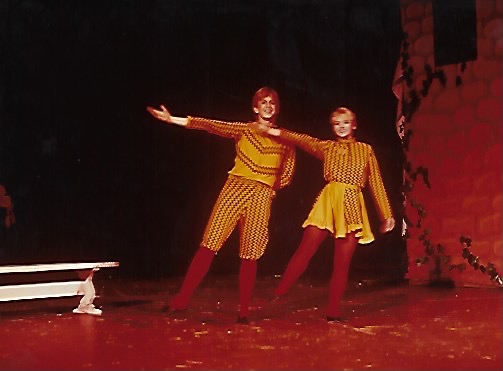
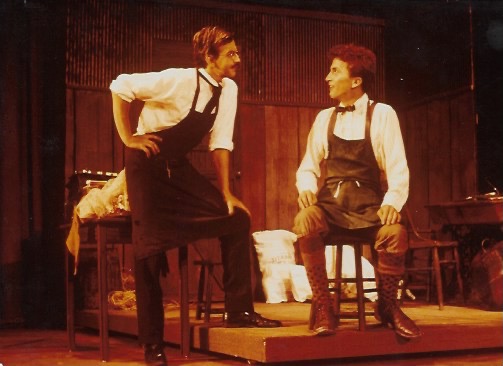
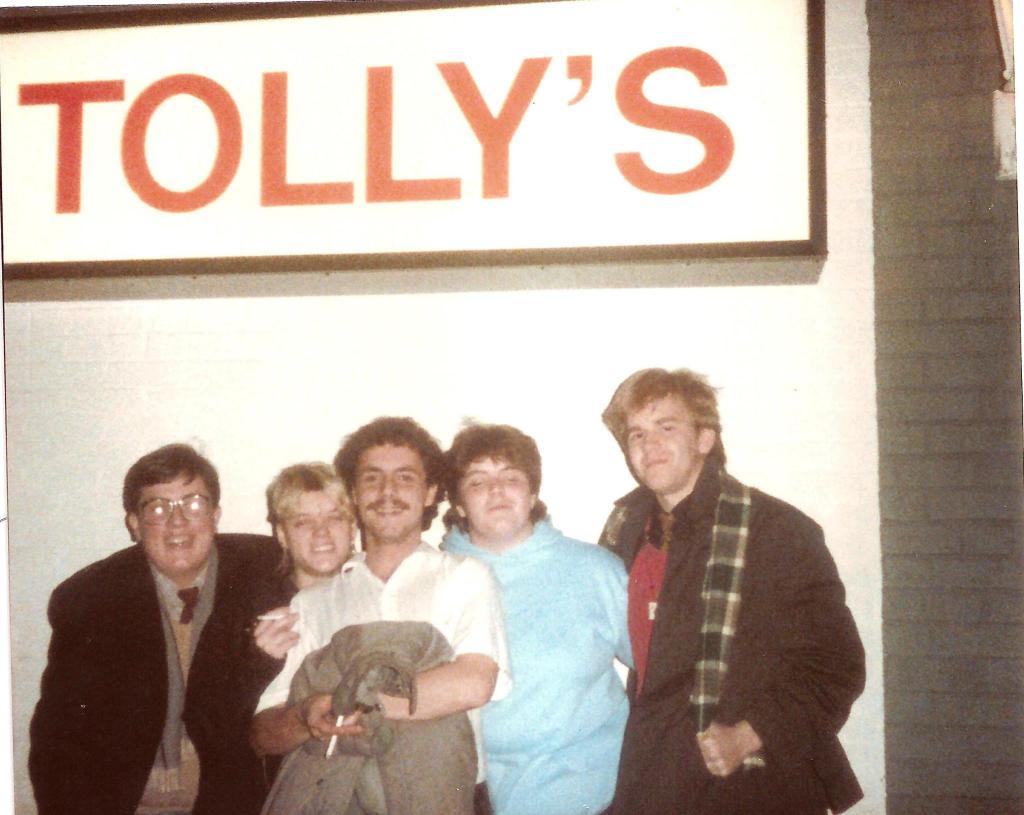
Mark: Thanks for tuning into WMM. I’m Mark Manning. We now continue with our special Birthday Show featuring favorite recordings, from different times of my life. 1984, was my own personal “Year of Hell.” I was 22. It was my Senior year in college. I was taking 23 credits in my 1st semester and 21 credits in my 2nd semester. It was the same year my theatre director decided to “put the moves on me.” Most days during my first semester I remember his constant attention, his desire to be with me physically. I remember receiving personal invitations to his apartment for meetings. I remember pushing his body off of mine in his office. I went from denial to rebellion, in a 9-month ark, and left me empty, and estranged, and throwing my Doane Theatre Award across the lobby into a brick wall. The Smiths helped me feel less alone. Morrissey was the voice of The Smiths with a poetic rebellion of the ruling class. Johnny Marr was the heart of The Smiths, sending out chords of love in celebration of every great guitarist he had learned from and emulated. The Smiths were my soundtrack.
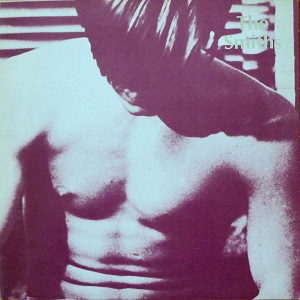
- The Smiths – “This Charming Man”
from: The Smiths / Sire / February 20, 1984
[The Smiths is the debut studio album by English rock band the Smiths, released on 20 February 1984 by Rough Trade Records. After the original production by Troy Tate was felt to be inadequate, John Porter re-recorded the album in London, Manchester and Stockport during breaks in the band’s UK tour during September 1983. // The album was well received by critics and listeners, and reached number two on the UK Albums Chart, staying on the chart for 33 weeks. It established the Smiths as a prominent band in the 1980s music scene in the United Kingdom. The album also became an international success, peaking at number 45 in the European Albums Chart, remaining in the chart for 21 weeks. After its exit of the European chart, it then re-entered in the Hot 100 Albums from September for another run of three weeks. // After signing with independent record label Rough Trade, the Smiths began preparations to record their first album in mid 1983. Due to the suggestion of Rough Trade head Geoff Travis, the band selected Troy Tate (former guitarist of the Teardrop Explodes) as producer for sessions at Elephant studios in Wapping, London. During the following month the group recorded fourteen songs. // Guitarist Johnny Marr would later write in his autobiography that he “liked Troy…Troy’s vision was to capture the way the band sounded live. He thought it was important that the record represented the way we were in the clubs and was an authentic document. He worked pretty tirelessly to get passion from a performance and was very nurturing with me…” However, the sessions would also prove to be arduous due to an ongoing heatwave in London. The Smiths were recording in a hot basement studio at Elephant, and according to Marr, not only was the heat uncomfortable but it made it difficult to keep their instruments in tune. // While recording a BBC session for Dave Jensen in August 1983, The Smiths met producer John Porter, who was working in one of the studios. Travis, harbouring reservations about the group’s session with Troy Tate, gave Porter a cassette of the sessions beforehand in the hopes that he could remix them. Porter told Travis that the sessions were “out of tune and out of time”. Feeling the Tate sessions were unsalvageable, Porter offered to re-record the album himself. Despite praising the work with Tate, only a week prior, to the press by stating “we’ve done everything exactly right and it’ll show”, Smiths singer Morrissey accepted (as did Travis), while Marr hesitantly agreed. Marr would later claim in his autobiography that when the band heard the finished work done under Tate, Morrissey didn’t like the album and the others weren’t entirely happy with the results either. “I could hear myself that the mixes sounded underproduced and were not the finished article that we needed as our introduction to the world,” Marr wrote. “Why it was deemed necessary to scrap the album entirely rather than just mix it again I didn’t know, but I wasn’t going to make too much of it…it was a document of how the band really were at that point though…”. // The Smiths began work with Porter in September 1983. Due to tour commitments, the group had to make the record in a piecemeal fashion. Marr later recalled that “working with John immediately got us results…he and I formed a musical and personal relationship that was inspiring…he nurtured not just me but all the band”. Recording started at London’s Matrix Studios, with the majority of the work undertaken during a week’s stay at Pluto, just outside Manchester. A final overdub session was performed at Eden Studios in London that November. After listening to a finished mix of the album the following month, Morrissey told Porter and Travis that the album “wasn’t good enough”. However, the singer said that due to the album’s cost of £6,000, “[they said] it has to be released, there’s no going back”. // The Smiths were an English rock band formed in Manchester in 1982, composed of Morrissey (vocals), Johnny Marr (guitar), Andy Rourke (bass) and Mike Joyce (drums). Morrissey and Marr formed the songwriting partnership. The Smiths are regarded as one of the most important acts to emerge from 1980s British independent music. // The Smiths signed to the independent label Rough Trade Records in 1983 and released their first album, The Smiths, in 1984. Their focus on a guitar, bass and drum sound, fusing 1960s rock and post-punk, was a rejection of the synth-pop sound predominant at the time. Several Smiths singles reached the top 20 of the UK Singles Chart, and all their studio albums reached the top five of the UK Albums Chart, including the number-one album Meat Is Murder (1985). From that time, they bolstered their sound with the use of keyboards while retaining the guitar as the lead instrument. They achieved mainstream success in Europe with The Queen Is Dead (1986) and Strangeways, Here We Come (1987), which both entered the top 20 of the European Albums Chart. In 1986, the band briefly became a five-piece with the addition of guitarist Craig Gannon. // Internal tensions led to the Smiths’ breakup in 1987, followed by public lawsuits over royalties. The members each said that the band would never reunite and refused all offers to do so. All of the four original principal members of the band had Irish parentage. This Irish heritage had a significant impact on their music and views.]
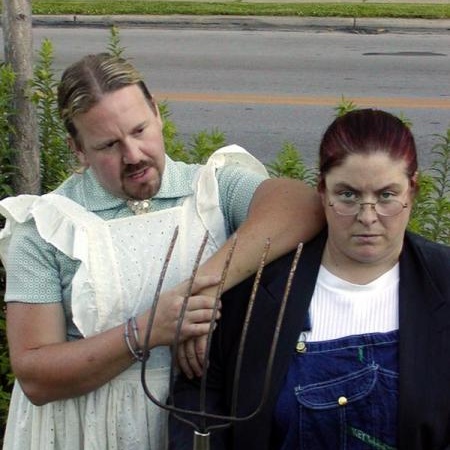
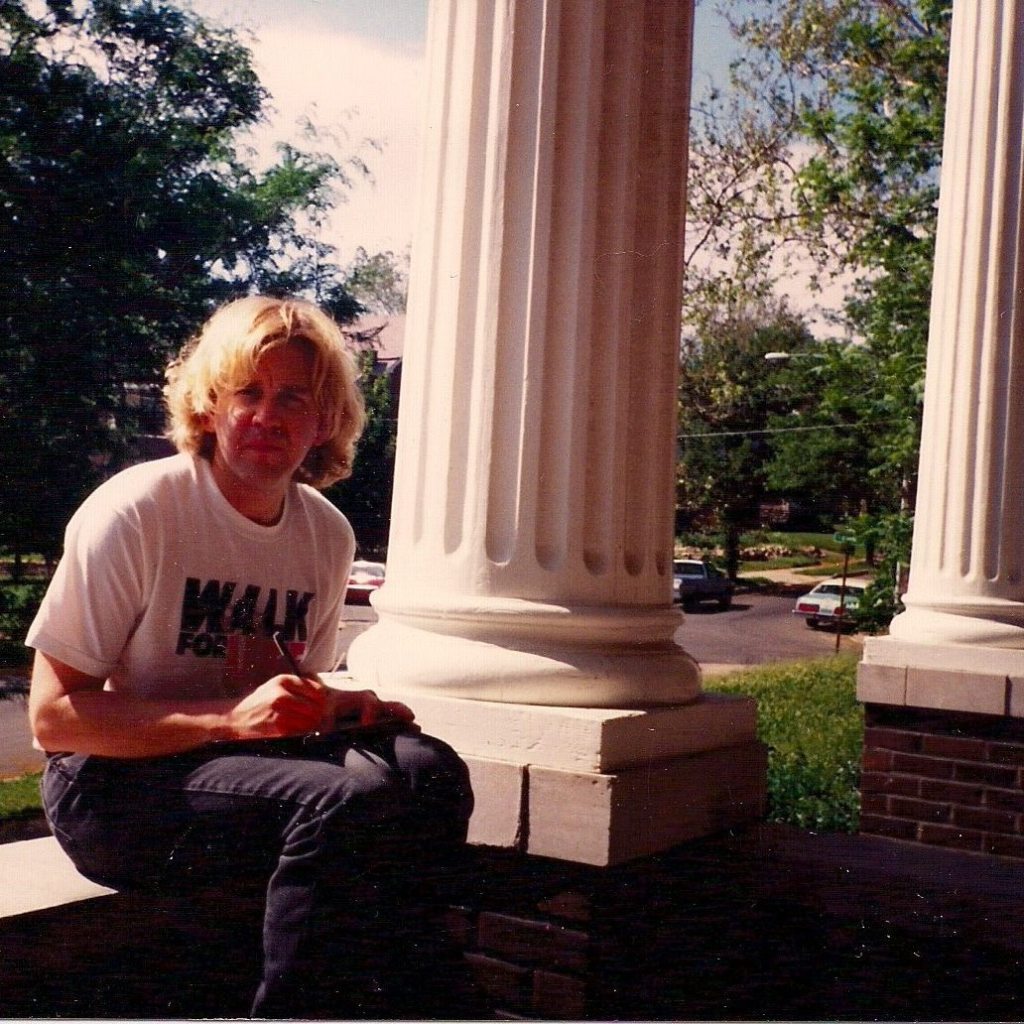
Mark: In the mid 1990s my friend Sandra was Manager of The Midland Theater. As a perk she arranged for my friends, to have front row seats, for multiple Patti LaBelle concerts. These shows were very special. The audience was so incredibly mixed, half of the audience was black people dressed like they were going to church the other half were gay dressed like they were going to a nightclub. Multiple brand names of cologne and perfume filled the air. The music and the love of Patti brought us all together. Patti performed all of her usual tricks, giving her eye lashes to someone in the front row; rolling across the stage from one side to the other; kicking her shoes off high into the air; crying; witnessing on stage. // And of course singing, filling the room, with her voice, dropping the mic to the stage floor, to prove she could still be heard even if the electricity went out. Patti represents the history of modern pop music, from her days in The Bluebelles, and The Bluebelles fantastic transformation into LaBelle, a band that reinterpreted many rock classics, and also wrote the majority of their own songs. This song was written by LaBelle member Nona Hendrix and with Sarah Dash and Patti Labelle. each of the three women share vocals and verses.
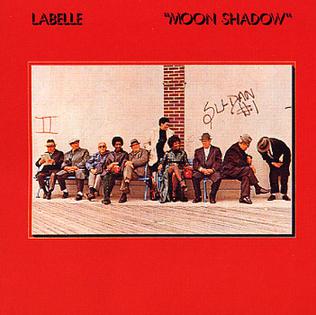
- Labelle – “I Believe I Finally Made it Home”
from: Something Silver / Warner Archives / Feb. 11, 1997 [orig, from Moon Shadow, 1972]
[Moon Shadow is the second album by American singing trio Labelle. This release was their second and last album for Warner Bros. Records. The album is notable for their soulful rendition of The Who’s “Won’t Get Fooled Again”, the socially conscious “I Believe That I’ve Finally Made It Home” (a song which members Patti LaBelle, Nona Hendryx and Sarah Dash share lead vocals) and the nine-minute title track in which Patti introduces all the musicians as they do their live solos. This is the first album where member Nona Hendryx begins taking over most of the songwriting. // Labelle was an American funk rock band that originated out of the Blue Belles, a girl group who were a popular vocal group of the 1960s and 1970s. The original group was formed after the disbanding of two rival girl groups in the area around Philadelphia, in Pennsylvania, and Trenton, in New Jersey: the Ordettes and the Del-Capris, forming as a new version of the former group, then later changing their name to the Blue Belles (and further Bluebelles). The founding members were Patti LaBelle (born Patricia Louise Holt), Cindy Birdsong, Nona Hendryx, and Sarah Dash. // As the Bluebelles, and later Patti LaBelle and the Bluebelles, the group found success with ballads in the doo-wop genre: “Down the Aisle (The Wedding Song)”, “You’ll Never Walk Alone”, and “Over the Rainbow”. After Birdsong departed to join The Supremes in 1967, the band, following the advice of Vicki Wickham, changed its look, musical direction, and style to re-form as the progressive soul group Labelle in 1971. Their recordings of that period became cult favorites for dealing with subjects not typically addressed by female black groups. Finally, after adapting glam rock and wearing outlandish space-age and glam costumes, the band found success with the proto-disco smash hit “Lady Marmalade” in 1974, leading to the album Nightbirds achieving gold success. They were the first contemporary pop group and first black pop band to perform at the Metropolitan Opera House. They were also the first black vocal group to appear on the cover of Rolling Stone magazine. // Each of the band members later went on to begin solo careers after the end of a tour in 1976, going on to have significant solo success. Nona Hendryx followed an idiosyncratic muse into a solo career that often bordered on the avant-garde; but reaching a new audience with the respected 2017 release “Shine”, by Soul Clap, which was a widely played in clubs in the UK, US clubs and Ibiza while being picked and released by the famous record label Defected RecordsSarah Dash became a celebrated session singer; and Patti LaBelle enjoyed a very successful Grammy-winning career, with several top-20 R&B hits between 1982 and 1997, a number-one pop hit with “On My Own”, and lifetime-achievement awards from the Apollo Theatre, World Music Awards, and BET Awards. // The group reunited for their first new album in 32 years, Back to Now in 2008. They performed together regularly until the death of Dash on September 20, 2021, at the age of 76. // In 1959, a fifteen-year-old teenager, Patricia “Patsy” Holte won her first talent contest in a Philadelphia high school. Following this, she sought to form her own singing group the following year called the Ordettes. Holte formed the group with singers Jean Brown, Yvonne Hogen and Johnnie Dawson. The group gained a local following. Dawson was eventually replaced by Sundray Tucker. By 1961, Jean Brown and Yvonne Hogan had ditched the group to get married and Patti and Sundray carried on as soloists. // Later in 1961, Patti and Sundray’s manager Bernard Montague contacted two singers from the Trenton, New Jersey singing group the Del-Capris, Nona Hendryx and Sarah Dash. Eventually Hendryx and Dash became official replacements for Brown and Hogan as the Ordettes. The group soon began working with musician Morris Bailey. Bailey and Montague’s schedule led to Tucker leaving the group after which another singer, Cindy Birdsong, from Camden New Jersey, joined the group. The grouping of Holte, Dash, Hendryx and Birdsong toured the Chitlin’ Circuit, gaining a following in the eastern U.S. // In 1962, Chicago-based group The Starlets had traveled to Philadelphia to do sessions for producer Bobby Martin and record label owner Harold Robinson, president of Newtown Records. One of the sessions included a cover of the standard, “I Sold My Heart to the Junkman”. At the time of the song’s release, the group had a hit with the song “Better Tell Him No” and were unable to promote the song due to them being signed to another label. The song was credited under the name “The Blue Belles”. The Ordettes auditioned by singing the song. Before hearing the group, Robinson turned them down due to being unimpressed with Patti’s looks but upon hearing her singing, he changed his mind and signed the group to Newtown. // When “I Sold My Heart” became popular, Robinson sent the Ordettes to promote it under the assumed name of the Blue Belles. After a televised performance at American Bandstand featuring the Ordettes, the Starlets’ manager sued Harold Robinson and Bobby Martin. Around the same time, Robinson was also sued for having another group use the name “Blue Belles”. Following the aftermath of the ordeals, Robinson gave Patti Holte a new name, “Patti LaBelle”, and the group’s name was rechristened as Patti LaBelle and The Blue Belles. // Following several releases such as “Academy Award” and “Tear After Tear”, the group recorded their first national hit under their new name in 1963 with the release of the ballad, “Down the Aisle (The Wedding Song)”, first released under Newtown, before it received national distribution from King Records. As a result, the record reached the top 40 on both the pop and R&B charts, formally launching the group to national stardom. Frequent performances at the Apollo Theater helped to give the group the nickname “Sweethearts of the Apollo”. Newtown released two albums on the group before Harold Robinson sold Newtown in 1963. Cameo-Parkway soon signed them and re-released the Newtown single, “You’ll Never Walk Alone”, at the end of the year. The record became another top-40 hit for the group in 1964 and became one of Patti LaBelle’s first signature performances. They later recorded another charted hit with “Danny Boy”. In 1965, the group opened for the Rolling Stones during a lengthy American tour. Shortly afterwards, Atlantic Records signed the act to the label, in hopes of bringing the group mainstream success. Their first Atlantic single, “All or Nothing”, briefly made a dent on the pop charts in 1966. They had a notable entry as background singers of Wilson Pickett’s first major hit, “634-5789 (Soulsville, U.S.A.)”. In 1966, Atlantic released the group’s first studio album, Over the Rainbow, which included “All or Nothing” and the title track, later to be a standard for Patti. Around this time, the group also began touring Europe, mainly in the UK, where they performed on the show, Ready, Steady, Go. During club performances, the group was backed up musically by a pub band called Bluesology, whose pianist was a teenager named Reg Dwight, later known as Elton John. Following the UK tour, the group kept in touch with one of the show’s producers, Vicki Wickham. In early 1967, the group had another charted single with the song “Take Me for a Little While” and released their second Atlantic album, Dreamer. Around this time, Aretha Franklin had signed with Atlantic Records, leading Atlantic to focus its efforts on her rather than on the Blue Belles. That same year, Cindy Birdsong abruptly left the group to join The Supremes, replacing original member Florence Ballard.[6] After completing a tour where Sundray Tucker briefly rejoined the group to fill in for Birdsong, the remaining members carried on as a trio. // As grittier soul and heavy rock dominated much of Atlantic’s time, the group was let go from their contract in 1970. Bernard Montague, who was managing groups such as The Delfonics, also left them, leaving them seeking new managers. After nearly signing a contract with Herb Hamlett and Frankie Crocker, they eventually picked Vicki Wickham to work with them. Wickham later credited Dusty Springfield with convincing her to hire the group to perform on Ready, Steady, Go in London. // Wickham advised the group to move to London and change their entire image and sound, much to the chagrin of Patti LaBelle, who feared the group would alienate their older fans with a new laid back “earthier” look. Wickham also advised them to change their name to simply “Labelle”. Ditching the wigs and dresses, Labelle settled on Afros and jeans. They debuted this new look while backing The Who during a stop in New York. Following this, Labelle signed a contract with Track Records, The Who’s label, which received distribution from Warner Bros. Records. In 1971, the group released their first album, simply titled Labelle, quickly following it up with the 1972 album Moon Shadow. The albums featured the group bringing in gospel soul renditions of rock hits such as “Wild Horses” and “Won’t Get Fooled Again”. While not commercially successful, the albums were critically acclaimed and established the act as a progressive soul unit, recording more daring material such as “Morning Much Better” and “Touch Me All Over”. // In 1971, Labelle were invited to record backing vocals to a covers album being recorded by Laura Nyro. The resulting album, Gonna Take a Miracle, led to the group reaching the charts for the first time[6] and establishing a rapport with Nyro, who later invited them to perform with her at Carnegie Hall. In 1973, they recorded an album for RCA Records titled Pressure Cookin’, featuring a wildly interpretive covers medley of the songs “Something in the Air” and “The Revolution Will Not Be Televised”. It was around this time that Labelle changed up their act again. Under the advice of Larry LeGaspi, the group began performing in space suits, feathers, and studded costumes. // In 1974, Wickham had the group signed to Epic Records where they recorded their breakthrough album, Nightbirds, in New Orleans with producer Allen Toussaint. While Hendryx eventually wrote the majority of the album, Epic released the Kenny Nolan and Bob Crewe composition “Lady Marmalade” as a single in August 1974. The song’s rock-soul mixture helped the song to sell to listeners and by March 1975, the song had become the group’s first number-one single, reaching the top of both the Billboard Hot 100 and the R&B singles chart.It also became an international hit. The album also included the follow-up hit “What Can I Do for You?”. // Nightbirds eventually sold more than one million copies and was certified gold. During the album’s promotion, the group became the first rock group to perform at the Metropolitan Opera House. Wickham billed the October 6, 1974 performance “Wear Something Silver”, to adapt to Labelle’s own silver-colored space outfits, worn by Patti LaBelle. Building on their success, in the spring of 1975, Labelle became the first African-American vocal group to make the cover of Rolling Stone. Later in 1975, the group released a critically acclaimed follow-up, Phoenix.[6] That same year, the group contributed background vocals to several songs on Elton John’s hit album, Rock of the Westies. In 1976, they released their third album for Epic, Chameleon, which included the tracks “Get You Somebody New”, “Isn’t It a Shame” and “Who’s Watching the Watcher”. // Despite critical acclaim for their follow-ups to the Nightbirds album, Phoenix and Chameleon failed to repeat the success of Nightbirds as the group struggled to have another hit. By 1976, tensions had developed within the group, with the act’s three members splintered on its sound and direction. Patti LaBelle had wanted the group to record more soul, Nona Hendryx wanted the group to go further into funk rock, and Sarah Dash wanted to record songs in a more disco direction. // During a show in Baltimore on December 3, 1976, Hendryx wandered off the stage and into the audience at the beginning of “(Can I Speak To You Before You Go To) Hollywood”. Labelle’s stage manager was able to steer Hendryx backstage, but Hendryx locked herself in her dressing room and beat her head against the wall until it began to bleed severely. She was removed from the theater in restraints. // After the incident, LaBelle advised the group to disband, fearing for the other members’ well-being and that the mounting tension could also put an end to their friendship. Hendryx and Dash agreed and the trio formally announced their split at the end of 1976 after fourteen years together. // Following her departure from the Blue Belles, Cindy Birdsong enjoyed success as member of The Supremes, singing on hits such as “Up the Ladder to the Roof”, “Stoned Love”, “Nathan Jones” and “Floy Joy”. Birdsong left the group in 1972 to start a family, returned in 1973, then left again in 1976, and thereafter only recorded sporadically as a solo artist in the 80s, briefly joining The Former Ladies of the Supremes alongside former Supremes members Jean Terrell and Scherrie Payne. // The Labelle song “(Can I Speak to You Before You Go To) Hollywood”, from Pressure Cookin’, was allegedly written by Hendryx as a response to Birdsong’s departure, featuring each member of the group singing verses. Sarah Dash found some solo success after signing with Don Kirshner’s label, with the disco single “Sinner Man”. Dash eventually sang backup for the Rolling Stones and sang for Keith Richards’ spinoff group X-pensive Winos. The more experimental Nona Hendryx has recorded in various genres including hard rock, hip-hop, house and new age, and charting with the singles, “Keep It Confidential” and “Why Should I Cry?” Patti LaBelle became an international solo superstar following Labelle’s breakup, recording crossover hits such as “New Attitude”, “Stir It Up” and “On My Own”, resulting in Grammy wins and a star on the Hollywood Walk of Fame. // In 1991, Patti LaBelle reunited with Nona Hendryx and Sarah Dash on the track, “Release Yourself”, from LaBelle’s Grammy-winning album, Burnin. The trio reunited onstage at the Apollo Theater in 1991 to perform the song on LaBelle’s second concert performance video while promoting the release of Burnin’. In addition to “Release Yourself”, Hendryx and LaBelle composed the gospel-flavored ballad “When You’ve Been Blessed (Feels Like Heaven)”. In 1995, the trio reunited again for the dance single, “Turn it Out”, for the soundtrack to the film, To Wong Foo, Thanks for Everything! Julie Newmar. The song became their first charted hit in nineteen years peaking at number-one on the Billboard dance singles chart. Four years later, the original Blue Belles (including Cindy Birdsong) reunited to receive an award from the R&B Foundation for Lifetime Achievement. In 2006, the trio of LaBelle, Dash and Hendrix briefly came together to record a Hendryx-written track called “Dear Rosa” for the soundtrack to a film called Preaching to the Choir. In 2008, Labelle announced their reunion and released their first studio album in 32 years, the critically acclaimed Back to Now. // That year, the trio went back on tour together which carried through the spring of 2009. In an interview with the Toronto Star, Patti LaBelle explained why she, Dash and Hendryx waited over 32 years to record a full-length album: “You don’t want to half-step something this important….it was about finding the right time and place. We were never ones to do anything on anyone else’s time anyway; we were always unconventional. I still have my glitter boots to prove it.” // The group performed a triumphant show at the Apollo Theatre in New York City on December 19, 2008. They continued to perform with each other sporadically; Dash sang with Patti LaBelle at a LaBelle concert two days before her death on September 20, 2021. // Years after their breakup in 1976, Labelle’s influence has been reflected by groups such as En Vogue, Destiny’s Child and The Pussycat Dolls, who recorded the Labelle hit, “Far As We Felt Like Goin'” from the Phoenix album. Their biggest hit, “Lady Marmalade” continues to be covered, with its successful covers being renditions by All Saints and the Grammy-winning number-one hit collaboration between singers Christina Aguilera, Pink and Mýa and rapper Lil’ Kim in 2001 (recorded for the Moulin Rouge! soundtrack.) The song was also covered by Madchester-era indie group The Happy Mondays, who spliced it with “Kinky Afro”. The group’s 1960s hit, “You’ll Never Walk Alone”, was covered by Sam Harris (who also covered their rendition of “Over the Rainbow”), and sampled by Kanye West in an early version of his song, “Homecoming” (which sampled the group’s “walk on” intro) while their 1970s hit, “Isn’t It a Shame” was sampled by Nelly on his song, “My Place”. Their 1973 song, “Goin’ On a Holiday”, was also sampled in several hip-hop songs (sampling the group’s vocal bridge, “goin’, goin’, goin’, goin’…on…”). // The group has been called pioneers of the disco movement for the proto-disco singles “Lady Marmalade” and “Messin’ With My Mind”. In turn, “Lady Marmalade” has been also called one of the first mainstream disco hits (Jones and Kantonen, 1999). In 2003, “Lady Marmalade” was inducted to the Grammy Hall of Fame. In 2009, their songs “It Took a Long Time” and “System” were featured in Lee Daniels’ film Precious.
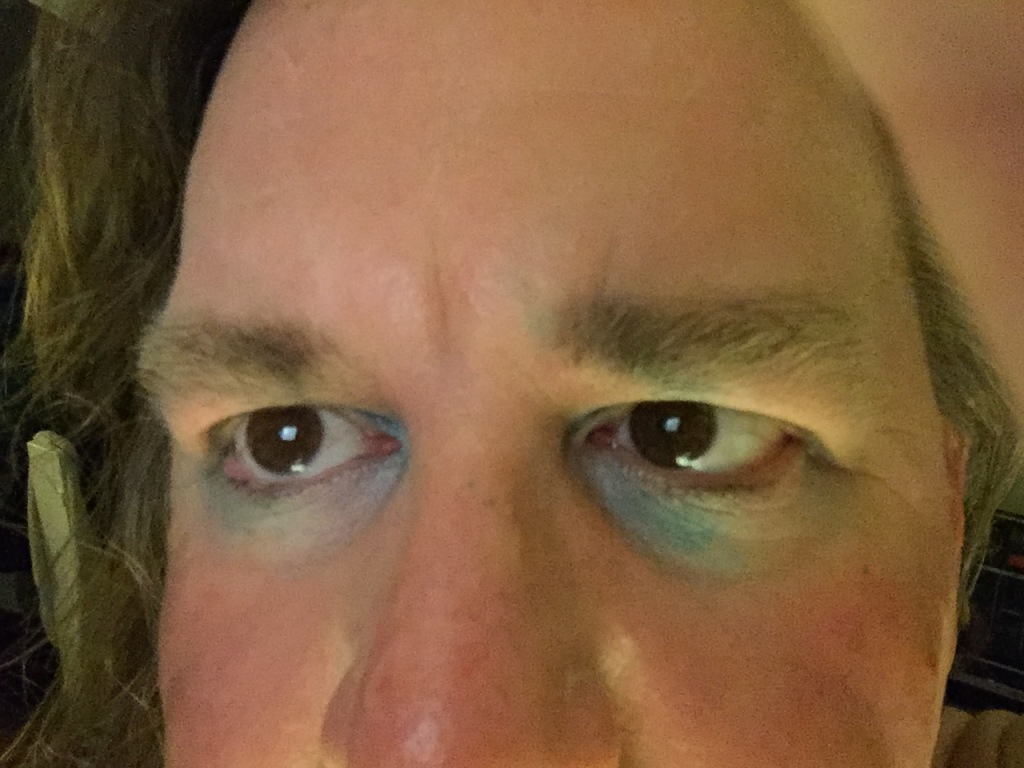
Mark: Thanks for tuning into WMM. I’m Mark Manning. 61 years ago, on this date, I was born, so today I’m playing from some of my favorite recordings, from different times of my life. // This is the title song from one of my favorite albums of all time. If you broke up with your lover, you may never hold them again, this record speaks to that part of your heart. In 1988 we were buying all of our favorite albums again, on CD, and hearing Joni digitally through the speakers, it felt like she was singing directly to me. I got to see her live, when she toured with Dylan in 1998. I had front row, center seats, at The United Center in Chicago. I cried through the entire concert as Joni played guitar, with her Jazz Combo, smoking a cigarette, bringing all of her songs alive on stage, it was sacred, like this song…
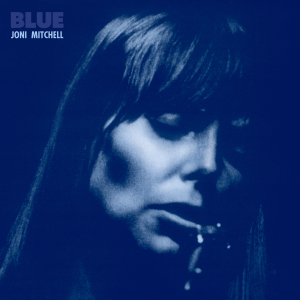
- Joni Mitchell – “Blue”
from: Blue / Warner / June 22, 1971
[Blue is the fourth studio album by Canadian singer-songwriter Joni Mitchell, released on June 22, 1971, by Reprise Records. Written and produced entirely by Mitchell, it was recorded in 1971 at A&M Studios in Hollywood, California. Created just after her breakup with Graham Nash and during an intense relationship with James Taylor, Blue explores various facets of relationships from love on “A Case of You” to insecurity on “This Flight Tonight”. The songs feature simple accompaniments on piano, guitar and Appalachian dulcimer. The album peaked at number 3 on the UK Albums Chart, number 9 on the Canadian RPM Albums Chart and number 15 on the Billboard 200. // Retrospectively, Blue has been widely regarded by music critics as one of the greatest albums of all time; the cohesion of Mitchell’s songwriting, compositions and vocals are frequent areas of praise. In January 2000, The New York Times chose Blue as one of the 25 albums that represented “turning points and pinnacles in 20th-century popular music”. In 2020, Blue was rated the third greatest album of all time in Rolling Stone’s list of the “500 Greatest Albums of All Time”, the highest entry by a female artist. It was also voted number 24 in the third edition of Colin Larkin’s All Time Top 1000 Albums (2000). In July 2017, Blue was chosen by NPR as the greatest album of all time made by a woman. // Despite the success of her first three albums and songs like “Woodstock”, January 1970 saw Mitchell make a decision to break from performing. In early spring 1970, she set off on a vacation around Europe. While on the island of Crete and staying in Matala, she wrote some of the songs that appear on Blue. This journey was the backdrop for the songs “Carey” and “California”—”Carey” was inspired by her relationship with an American named Cary Raditz, who was the “redneck on a Grecian Isle” in “California”. Some of the songs on Blue were inspired by Mitchell’s 1968–1970 relationship with Graham Nash. Their relationship was already troubled when she left for Europe, and it was while she was on Formentera that she sent Nash the telegram that let him know that their relationship was over. The songs “My Old Man” and “River” are thought to be inspired by their relationship. // Another pivotal experience in Mitchell’s life that drove the emergence of the album was her relationship with James Taylor. She had begun an intense relationship with Taylor by the summer of 1970, visiting him on the set of the movie Two-Lane Blacktop, the aura of which is referred to in “This Flight Tonight”. The songs “Blue” and “All I Want” have specific references to her relationship with Taylor, such as a sweater that she knitted for him at the time and his heroin addiction. During the making of Blue in January 1971, they were still very much in love and involved. By March, Taylor’s fame had exploded, causing friction. She was reportedly devastated when he broke off the relationship. // The album was almost released in a somewhat different form. In March 1971, completed masters for the album were ready for production. Originally, there were three old songs that had not found their way onto any of her previous albums. At the last minute, Mitchell decided to remove two of the three so that she could add the new songs “All I Want” and “The Last Time I Saw Richard”. “Little Green”, composed in 1967, was the only old song that remained. The two songs removed were: “Urge for Going” – her first song to achieve commercial success when recorded by country singer George Hamilton IV. It was later released as the B-side of “You Turn Me On, I’m a Radio” and again on her 1996 compilation album, Hits. “Hunter (The Good Samaritan)”, which was released in 2021 on her EP Blue 50 (Demos & Outtakes). In 1979 Mitchell reflected, “The Blue album, there’s hardly a dishonest note in the vocals. At that period of my life, I had no personal defenses. I felt like a cellophane wrapper on a pack of cigarettes. I felt like I had absolutely no secrets from the world and I couldn’t pretend in my life to be strong. Or to be happy. But the advantage of it in the music was that there were no defenses there either.” // Mitchell continued to use alternate tunings on her guitar to allow easier access to augmented chords and notes in unexpected combinations. Due to the stark and bare revelations in the album, when it was first played for Kris Kristofferson he is reported to have commented, “Joni! Keep something to yourself!” // Today, Blue is generally regarded by music critics as one of the greatest albums of all time, with Mitchell’s songwriting and compositions being frequent areas of praise. In January 2000, The New York Times chose Blue as one of the 25 albums that represented “turning points and pinnacles in 20th-century popular music”. // Jason Ankeny of AllMusic describes Blue as “the quintessential confessional singer/songwriter album”. Praising the songs as “raw nerves, tales of love and loss etched with stunning complexity”, Ankeny concludes writing “Unrivaled in its intensity”. The writers of Pitchfork gave the album a perfect 10-out-of-10 rating, calling it “possibly the most gutting break-up album ever made”. // Blue was included in the 2018 edition of Robert Dimery’s book 1001 Albums You Must Hear Before You Die and ranked #18 on Apple Music’s 100 Best Albums list in 2024.]
11:30 – Underwriting
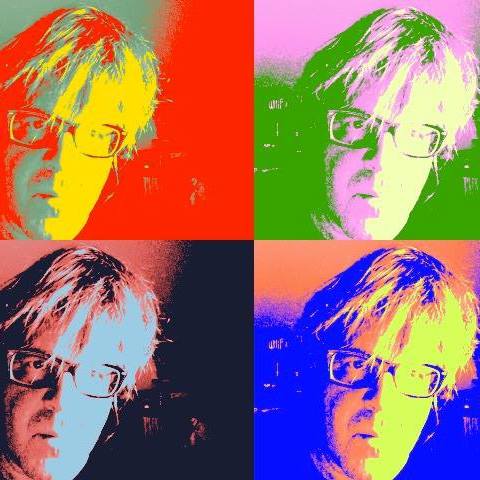
Mark: Thanks for tuning into WMM. I’m Mark Manning. 61 years ago, on this date, I was born, so today I’m playing from some of my favorite recordings, from different times of my life. // My friend BJ’s girlfriend in the mid 1990s was in a CD subscription service and was sent the 5 CD, Box Set “Peel Slowly and See,” featuring all of The Velvet Underground’s studio recordings. Before BJ’s girlfriend could send it back, BJ snagged it, and gave it to Caleb and I as a gift. The music filled our house on West 39th Street. Where our first floor was used as an art gallery, a rehearsal space, a place for Scorpio parties, Jen’s Seder. The Velvet Underground were the house band for Andy Warhol’s Factory. When I imagine The Factory, in my mind I hear this amazing song.
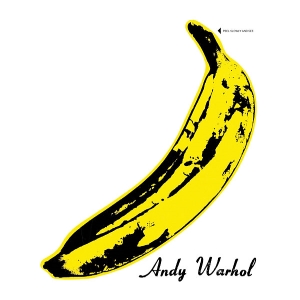
- The Velvet Underground – “Venus In Furs”
from: The Velvet Underground & Nico / Verve / March 12, 1967
[The Velvet Underground & Nico is the debut album by The Velvet Underground, with the first professional line-up of the Velvet Underground: Lou Reed, John Cale, Sterling Morrison and Maureen Tucker. German singer Nico was also featured, having occasionally performed lead vocals for the band. This resulted of the instigation of their mentor and manager, Andy Warhol, and his collaborator, Paul Morrissey. Nico sang lead on three of the album’s tracks—”Femme Fatale”, “All Tomorrow’s Parties” and “I’ll Be Your Mirror”—and back-up on “Sunday Morning”. In 1966, as the album was being recorded, this was also the line-up for their live performances as a part of Warhol’s Exploding Plastic Inevitable. Though the record was a commercial failure upon release and was almost entirely ignored by contemporary critics, The Velvet Underground & Nico is now widely recognized as one of the greatest and most influential albums in the history of popular music. In 1982, musician Brian Eno famously stated that while the album initially only sold approximately 30,000 copies, “everyone who bought one of those 30,000 copies started a band.” In 2003, it ranked 13th on Rolling Stone magazine’s list of the 500 Greatest Albums of All Time. It was added to the 2006 National Recording Registry by the Library of Congress. Many subgenres of rock music and forms of alternative music were significantly informed by the album.]

Mark: In the late 1990s I found myself working at The Midland Theatre, my friend Julie Broski brought “The Charm of the Highway Strip” into the office to play, and I was hooked. I quickly began searching for all of the recordings of The Magnetic Fields. Then the band released the acclaimed, “69 Loves Songs.” Recently, Lisa and I were talking about how we love these recordings and how our favorite song changes from time to time. This is my current favorite, of “69 Love Songs,” from one of my favorite bands: The Magnetic Fields.
- The Magnetic Fields – “Papa Was A Rodeo”
from: 69 Love Songs / Merge Records / June 8, 1999
[69 Love Songs is the sixth studio album by American indie pop band the Magnetic Fields, released on September 7, 1999, by Merge Records. As its title indicates, 69 Love Songs is a three-volume concept album composed of 69 love songs, all written by Magnetic Fields frontman Stephin Merritt. // The album was originally conceived as a music revue. Stephin Merritt was sitting in a gay piano bar in Manhattan, listening to the pianist’s interpretations of Stephen Sondheim songs, when he decided he ought to get into theatre music because he felt he had an aptitude for it. “I decided I’d write one hundred love songs as a way of introducing myself to the world. Then I realized how long that would be. So I settled on sixty-nine. I’d have a theatrical revue with four drag queens. And whoever the audience liked best at the end of the night would get paid.” He also found inspiration in Charles Ives’ 114 Songs, about which he had read earlier in the day: “songs of all kinds, and what a monument it was, and I thought, well, I could do something like that.” // Band member Claudia Gonson has claimed that Merritt wrote most of the songs hanging around in bars in New York City. // On seven occasions (five in the United States and two in London over four consecutive nights) the Magnetic Fields performed all 69 love songs, in order, over two nights. Several of the lavish orchestrations are more simply arranged when performed live, due to limited performers and/or equipment. // Merritt has said “69 Love Songs is not remotely an album about love. It’s an album about love songs, which are very far away from anything to do with love.” The album features songs in many different genres, including country, synth pop, free jazz, and mournful love ballads. All the songs deal with love in one form or another, but often in an ironic or off-beat fashion, such as the track “Yeah! Oh, Yeah!” which tells the story of a husband murdering his wife. The songs of 69 Love Songs features lyrics exploring heterosexual, homosexual, and bisexual relationships. // The album was initially released in the United States by Merge on September 7, 1999, as a box set with Merritt interview booklet with Daniel Handler, and as three separate individual volumes—catalogue numbers MRG166 (Vol. 1), MRG167 (Vol. 2), MRG168 (Vol. 3), and MRG169 (box set). On May 29, 2000, the album was released by Circus (CIR CD003) in Europe and Australia without the booklet insert. It was reissued in the United Kingdom through Domino as REWIGCD18. // On April 20, 2010, Merge released a limited edition 6×10″ vinyl version limited to 1000 copies. // 69 Love Songs received widespread acclaim from music critics. At Metacritic, which assigns a normalized rating out of 100 to reviews from mainstream critics, the album received an average score of 88, indicating “universal acclaim”. Betty Clarke of The Guardian hailed it as “an album of such tenderness, humour and bloody-minded diversity, it’ll have you throwing away your preconceptions and wondering how you ever survived a broken heart without it.” Douglas Wolk of Spin called the album Stephin Merritt’s “masterwork” and stated that “pop hasn’t seen a lyricist of Merritt’s kind and caliber since Cole Porter”, praising his unique takes on standard love song clichés. Nick Mirov of Pitchfork wrote that Merritt “has proven himself as an exceptional songwriter, making quantum leaps in quality as well as quantity on 69 Love Songs.” Robert Christgau, writing in The Village Voice, stated that despite his personal dislike of cynicism and reluctance to “link it to creative exuberance”, the album’s “cavalcade of witty ditties—one-dimensional by design, intellectual when it feels like it, addicted to cheap rhymes, cheaper tunes, and token arrangements, sung by nonentities whose vocal disabilities keep their fondness for pop theoretical—upends my preconceptions the way high art’s sposed to.” // 69 Love Songs was voted second place in The Village Voice’s annual Pazz & Jop critics’ poll for 1999, behind Moby’s Play. The poll’s creator Robert Christgau ranked it as the best album of the year on his “Dean’s List”. In 2012, it was ranked at number 465 in Rolling Stone’s list of the 500 Greatest Albums of All Time. It was ranked at number 406 in the 2020 edition of the list. The following year, NME placed it at number 213 on their own list of all-time greatest albums. The album was also included in the book 1001 Albums You Must Hear Before You Die.]
Mark: I was able to sit in the front row of the Kauffman Center to witness the living legend, Mavis Staples. She came up through gospel music, and then secular R&B, when Pops decided to broaden their audience. When you hear The Staple Singers you feel their struggle for equality through beautiful melody. Mavis has brought her voice & spirit to collaborations with The Band, Prince, Dylan. Her collaboration with Ry Cooder, “Down In Mississippi” was a musical masterpiece, of first-hand, civil rights history, in song. She followed that up with a collaboration with Jeff Tweedy, who wrote this perfect song, for Mavis to sing.
- Mavis Staples – “You Are Not Alone”
from: You Are Not Alone / Anti / Sept. 10, 2010
[Produced & written by Jeff Tweedy of Wilco][You Are Not Alone is the eighth studio album by American gospel and soul singer Mavis Staples, released September 14, 2010 on ANTI- Records. It won the Grammy Award for Best Americana Album at the 53rd annual Grammy Awards. // Mavis Staples (born July 10, 1939) is an American rhythm and blues and gospel singer and civil rights activist. She rose to fame as a member of her family’s band The Staple Singers, of which she is the last surviving member. During her time in the group, she recorded the hit singles “I’ll Take You There” and “Let’s Do It Again”. In 1969, Staples released her self-titled debut solo album. // Staples continued to release solo albums throughout the following decades and collaborated with artists such as Aretha Franklin, Prince, Arcade Fire, Nona Hendryx, Ry Cooder, and David Byrne. Her eighth studio album You Are Not Alone (2010), earned critical acclaim, and became her first album as a soloist to reach number one on a Billboard chart, peaking atop the Top Gospel Albums chart. It also earned Staples her first Grammy Award win. Following this, she released the albums One True Vine (2013), Livin’ on a High Note (2016), If All I Was Was Black (2017), and We Get By (2019); she is also featured on the single “Nina Cried Power” by Hozier. // Staples is the recipient of the Grammy Lifetime Achievement Award, and has won three Grammy Awards, including one for Album of the Year as a featured artist on We Are by Jon Batiste.[6] Named one of the ‘100 Greatest Singers of all Time’ by Rolling Stone in 2008; Staples was inducted into the Rock and Roll Hall of Fame in 1999, and in the Gospel Music Hall of Fame in 2018, as a member of The Staple Singers. Additionally, she was made a Kennedy Center Honoree in 2016. The following year, she was inducted into the Blues Hall of Fame as a soloist. In 2019, she received the inaugural Rock Hall Honors Award from the Rock and Roll Hall of Fame, as a soloist. // Staples was born in Chicago, Illinois, on July 10, 1939. She began her career with her family group in 1950. Initially singing locally at churches and appearing on a weekly radio show, the Staples scored a hit in 1956 with “Uncloudy Day” for the Vee-Jay label. When Mavis graduated from what is now Paul Robeson High School in 1957, The Staple Singers took their music on the road. Led by family patriarch Roebuck “Pops” Staples on guitar and including the voices of Mavis and her siblings Cleotha, Yvonne, and Pervis, the Staples were called “God’s Greatest Hitmakers”. // With Mavis’ voice and Pops’ songs, singing, and guitar playing, the Staples evolved from enormously popular gospel singers (with recordings on United and Riverside as well as Vee-Jay) to become the most spectacular and influential spirituality-based group in America. By the mid-1960s The Staple Singers, inspired by Pops’ close friendship with Martin Luther King Jr., became the spiritual and musical voices of the civil rights movement. They covered contemporary pop hits with positive messages, including Bob Dylan’s “A Hard Rain’s a-Gonna Fall” and a version of Stephen Stills’ “For What It’s Worth”. // During a December 20, 2008, appearance on National Public Radio’s news show Wait Wait… Don’t Tell Me!, when Staples was asked about her past personal relationship with Dylan, she admitted that they “were good friends, yes indeed” and that he had asked her father for her hand in marriage. // The Staples sang “message” songs like “Long Walk to D.C.” and “When Will We Be Paid?,” bringing their moving and articulate music to a huge number of young people. The group signed to Stax Records in 1968, joining their gospel harmonies and deep faith with musical accompaniment from members of Booker T. and the MGs. The Staple Singers hit the Top 40 eight times between 1971 and 1975, including two No. 1 singles, “I’ll Take You There”, produced by Al Bell and recorded and mixed by Terry Manning, “Let’s Do It Again,” and a No. 2 single “Who Took the Merry Out of Christmas?” // Mavis made her first solo foray while at Epic Records with The Staple Singers, releasing a lone single “Crying in the Chapel” to little fanfare in the late 1960s. The single was finally re-released on the 1994 Sony Music collection Lost Soul. Her first solo album would not come until a 1969 self-titled release for the Stax label. After another Stax release, Only for the Lonely, in 1970, she released a soundtrack album, A Piece of the Action, on Curtis Mayfield’s Curtom label. A 1984 album (also self-titled) preceded two albums under the direction of rock star Prince; 1989’s Time Waits for No One, followed by 1993’s The Voice, which People magazine named one of the Top Ten Albums of 1993. Her 1996 release, Spirituals & Gospels: A Tribute to Mahalia Jackson, was recorded with keyboardist Lucky Peterson. The recording honors Mahalia Jackson, a close family friend and a significant influence on Mavis Staples’s life. // Staples singing during the 2006 NEA National Heritage Fellows concert. // Staples made a major national return with the release of the album Have a Little Faith on Chicago’s Alligator Records, produced by Jim Tullio, in 2004. The album featured spiritual music, some of it semi-acoustic. // In 2004, Staples contributed to a Verve release by legendary jazz-rock guitarist, John Scofield. The album, entitled That’s What I Say, was a tribute to the great Ray Charles and led to a live tour featuring Staples, John Scofield, pianist Gary Versace, drummer Steve Hass, and bassist Rueben Rodriguez. A new album for Anti- Records entitled We’ll Never Turn Back was released on April 24, 2007. The Ry Cooder-produced concept album focuses on gospel songs of the civil rights movement and also included two new original songs by Cooder. // Her voice has been sampled by some of the biggest selling artists, including Salt ‘N’ Pepa, Ice Cube, Ludacris, and Hozier. Staples has recorded with a wide variety of musicians, from her friend, Bob Dylan (with whom she was nominated for a 2004 Grammy Award in the “Best Pop Collaboration With Vocals” category for their duet on “Gonna Change My Way of Thinking”, from the album Gotta Serve Somebody: The Gospel Songs of Bob Dylan) to The Band, Ray Charles, Prince, Nona Hendryx, George Jones, Natalie Merchant, Ann Peebles, and Delbert McClinton. She has provided vocals on current albums by Los Lobos and Dr. John, and she appears on tribute albums to such artists as Johnny Paycheck, Stephen Foster and Bob Dylan. // In 2003, Staples performed in Memphis at the Orpheum Theater alongside a cadre of her fellow former Stax Records stars during “Soul Comes Home,” a concert held in conjunction with the grand opening of the Stax Museum of American Soul Music at the original site of Stax Records, and appears on the CD and DVD that were recorded and filmed during the event. In 2004, she returned as guest artist for the Stax Music Academy’s SNAP! Summer Music Camp and performed again at the Orpheum with 225 of the academy’s students. In June 2007, she again returned to the venue to perform at the Stax 50th Anniversary Concert to Benefit the Stax Museum of American Soul Music, produced by Concord Records, who now owns and has revived the Stax Records label. // In 2009, Staples, along with Patty Griffin and The Tri-City Singers, released a version of the song “Waiting For My Child To Come Home” on the compilation album Oh Happy Day: An All-Star Music Celebration. // On October 30, 2010, Staples performed at the Rally to Restore Sanity and/or Fear alongside singer Jeff Tweedy. In 2011 she was joined on-stage at the Outside Lands Music And Arts Festival by Arcade Fire singer Win Butler. The two performed a version of “The Weight” by The Band. // Staples also performed at the 33rd Kennedy Center Honors, singing in a tribute to honoree Paul McCartney. // Staples headlined on June 10, 2012, at Chicago’s Annual Blues Festival in Grant Park. // On June 27, 2015, Staples performed on the Park Stage of Glastonbury Somerset UK. On October 31, 2015, Staples performed with Joan Osborne in Washington, D.C. at The George Washington // University’s Lisner Auditorium as part of their Solid Soul Tour. // In February 2016, Staples’s album Livin’ on a High Note was released. Produced by M. Ward, the album features songs written specifically for Staples by Nick Cave, Justin Vernon, tUnE-yArds, Neko Case, Aloe Blacc, and others. Discussing the album Staples said: “I’ve been singing my freedom songs and I wanted to stretch out and sing some songs that were new. I told the writers I was looking for some joyful songs. I want to leave something to lift people up; I’m so busy making people cry, not from sadness, but I’m always telling a part of history that brought us down and I’m trying to bring us back up. These songwriters gave me a challenge. They gave me that feeling of, ‘Hey, I can hang! I can still do this!’ There’s a variety, and it makes me feel refreshed and brand new. Just like Benjamin Booker wrote on the opening track, ‘I got friends and I got love around me, I got people, the people who love me.’ I’m living on a high note, I’m above the clouds. I’m just so grateful. I must be the happiest old girl in the world. Yes, indeed.” // In January 2017, Staples was featured as a guest vocalist on “I Give You Power”, a single from Arcade Fire benefiting the American Civil Liberties Union. In February 2017, Staples appeared on NPR’s Wait, Wait … Don’t Tell Me! in the “Not My Job” segment, answering questions about the rock band The Shaggs. In April 2017, “Let Me Out”, a single from the fifth studio album by Gorillaz, Humanz, was released, featuring Staples and rapper Pusha T. // Staples’s sixteenth album If All I Was Was Black was released on November 17, 2017. The record was again produced by Jeff Tweedy and contains all original songs cowritten by Mavis and Tweedy. Following the release, Staples toured with Bob Dylan. She also appeared on the 2017/18 Hootenanny. In 2018, she sang on Hozier’s single “Nina Cried Power”. // In May 2019, Staples celebrated her 80th birthday with a concert at the Apollo Theater, 63 years after first appearing at the theater as a teenager with her family band, the Staple Singers, in 1956. The show, which featured special guest artists, including David Byrne and Norah Jones, is one of a series of collaborative concerts she staged in May to commemorate her 80th birthday. She also performed at the 2019 Glastonbury Festival. // In 2022, Staples released Carry Me Home, a collaboration with Levon Helm, recorded at Helm’s Midnight Ramble in 2011.]
Mark: I met Iris DeMent when I was working at Kinkos at 39th & Rainbow in 1992. Iris came in to copy her press clippings, she was in the process of releasing her debut album. I wasn’t familiar with her music until I saw her on Late Night with Conan O’Brien in 1994, where she performed her song “My Life.” I was blown away. I had video taped the show and I remember replaying that song for anyone that came to visit. I ran into Iris at Classic Cup in Westport. I was sort of star stuck, but she approached me and asked, “How do I Know You?” Our friendship continued because we shared a mutual friend named Anne Winter, who arranged for Iris play a Big Bang Buffet in 1999. Iris also did a benefit for Friends of Community Radio in 2002, and KKFI in 2004. I love Iris! This is one of her first songs.
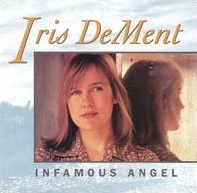
- Iris DeMent – “Let The Mystery Be”
from: Infamous Angel / Warner Brothers / 1992 / 1993
[Debut studio album of singer-songwriter Iris DeMent. It was released by Warner Bros. Records in 1992. In 1995, her song “Our Town” was played in the closing moments of the last episode for the CBS TV series Northern Exposure.. “Let the Mystery Be” became the theme song for the 2nd season of The Leftovers. // Iris DeMent’s first three releases, all on Warner Brothers records, were critically acclaimed. She received two Grammy nominations during this time, in the “Folk Music” category. Meanwhile country radio completely overlooked her original songs, and her amazing voice, that has been compared to Loretta Lynn and Tammy Wynette. For Iris’ 1992 debut album, Infamous Angel, John Prine wrote the liner notes: “One night after receiving a copy of “Let the Mystery Be,” I was listening to the tape while frying a dozen or so pork chops in a skillet. Well Iris DeMent starts singing about “Mama’s Opry,” and being the sentimental fellow I am, I got a lump in my throat and a tear fell from my eyes into the hot oil. Well the oil popped out and burnt my arm as if the pork chops were trying to say, “Shut up, or I’ll really give you something to cry about.” Of course, pork chops can’t talk. But Iris DeMent’s songs can. They talk about isolated memories of life, love and living. And Iris has a voice I like a whole lot, like one you’ve heard before— but not really. So listen to this music, this Iris DeMent. It’s good for you. And if pork chops could talk, they’d probably learn how to sing one of her songs. Then we’d all have something to cry about.” – John Prine, Songwriter, musician & president Oh Boy! Records]
Mark: We end with one of our most played artists on WMM who has been a guest on our show nearly 20 times. Krystle Warren plays The Percheron on the rooftop of the Crossroads Hotel, Thursday, July 13, at 8:00pm and Boulevard on Saturday, June 15 at 8:45pm on the Elevate Stage at Crown Center.
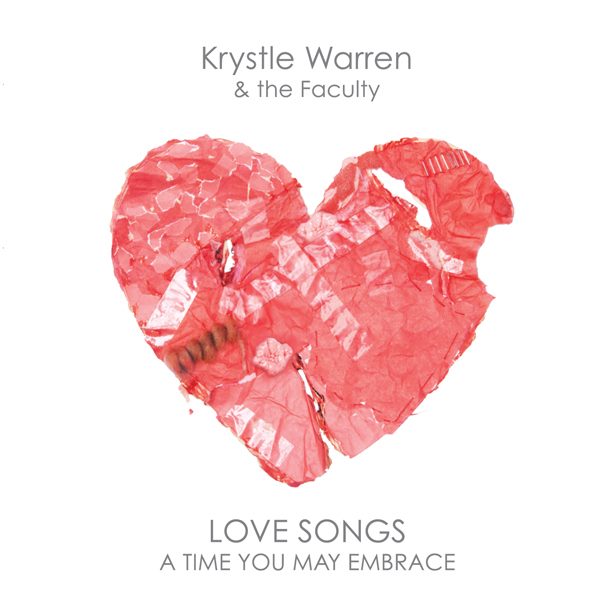
- Krystle Warren & The Faculty – “Forever is a Long Time”
from: Love Songs- A Time to Refrain from Embracing (Love Songs: A Time You May Embrace) / Parlour Door Music / April 9, 2012 UK]
[Originally from KC, Krystle learned to play the guitar by listening to Rubber Soul & Revolver from The Beatles. Krystle graduated from Paseo Arts Academy in 2001 and began her musical career in collaborating with area jazz and pop musicians. After living in San Francisco and NYC, Krystle was signed to a French label, Because Music, and moved to Paris to release “Circles” in 2009. Krystle played French and British television programs, including Later with Jools Holland, garnering critical acclaim and traveling all over the world with Rufus Wainwright, Nick Cave, Norah Jones, and Joan As Police Woman. Krystle created, Parlour Door Music, to release “Love Songs: A Time You May Embrace” a recording from a 13-day session in Brooklyn, where she recorded 24 songs live with 28 musicians including her band, The Faculty, alongside choirs, horn and string sections. Owen/Cox Dance Group created a live dance performance of singer/songwriter Krystle Warren’s acclaimed double album, “Love Songs” Saturday, October 19 – 20, 2019, at The Polsky Theatre at Carlsen Center at Johnson County Community College, 12345 College Blvd, OPKS. // Krystle Warren began her musical career in KC in 2001 collaborating with area jazz and pop musicians. After living in San Francisco and NYC, Krystle was signed to a French label – Because Music, and moved to Paris to release “Circles” in 2009. Krystle played “Later with Jools Holland,” garnering critical acclaim and traveling all over the world with Rufus Wainwright, Nick Cave, Norah Jones, and Joan As Police Woman. Krystle created, Parlour Door Music to release her double album: “Love Songs,” from a 13-day session in Brooklyn, where she recorded 24 songs live with 28 musicians including her band, The Faculty. Krystle released, Three The Hard Way co-producing by Ben Kane (D’Angelo). was #1 on WMM’s 117 Best Recordings of 2017.]
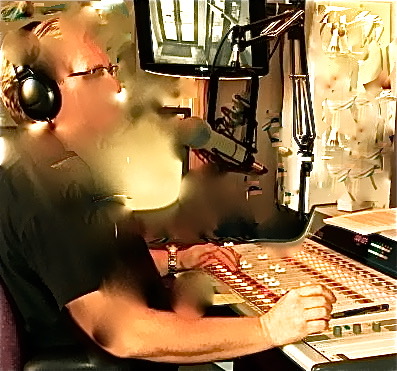
- The Magnetic Fields – “BBC Radiophonic Workshop”
from: Holiday / Merge / 1994
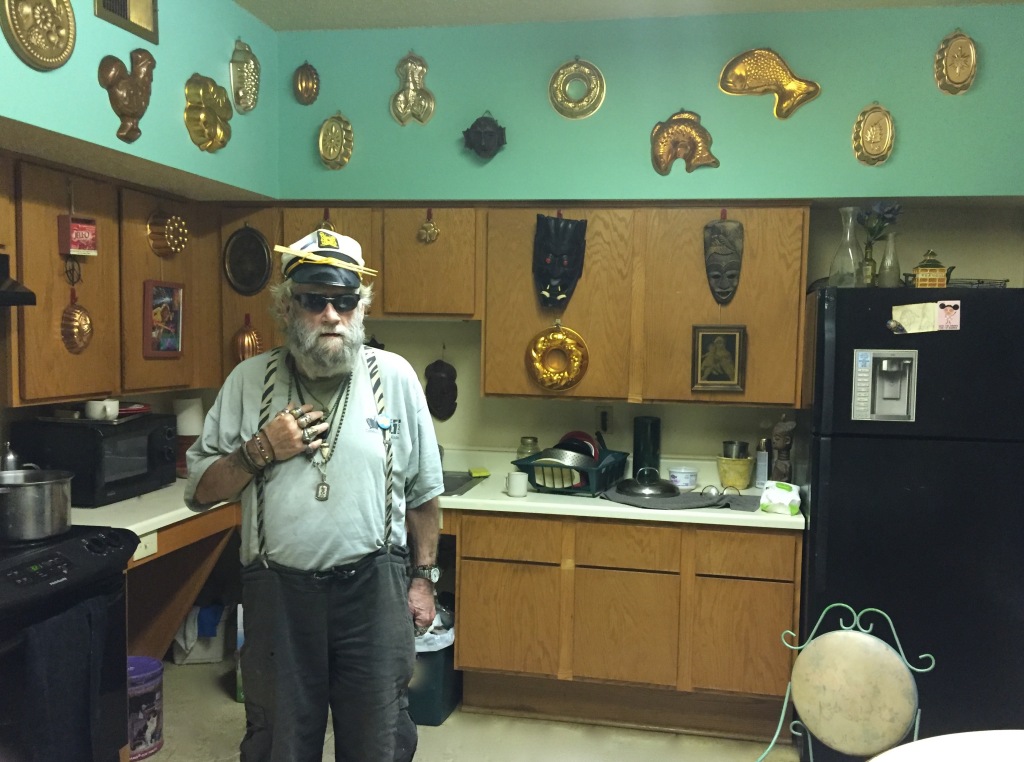
- Jim The Blind Guy- “Hello This Is The Villa Incognito”
from: Mark’s private collection of recordings

- Various Artists – “Looney Tunes”
from: All-Time Top 100 TV Themes / TVT / August 23, 2005
- Noel Coward – “The Party’s Over Now”
from: Noel Coward in New York / drg / 2003 [orig. 1957]
For WMM, I’m Mark Manning. Thanks for listening!
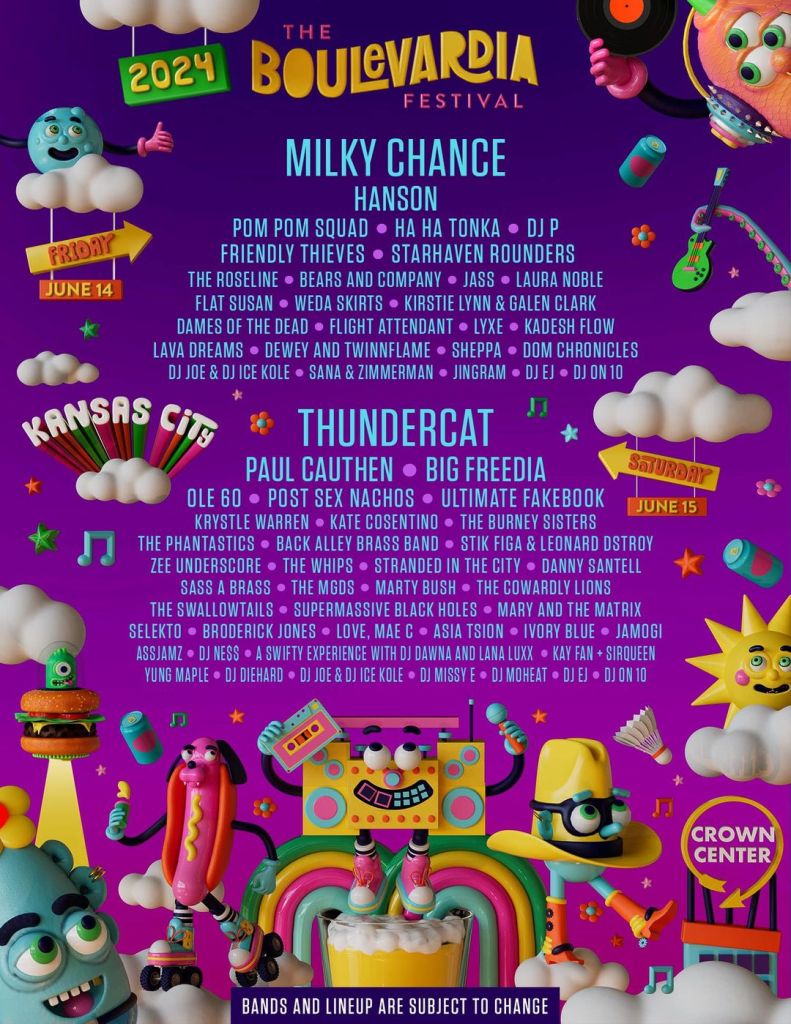
Next week on Wednesday, June 12 we welcome Chris Haghirian who joins us for the entire show to share music and information about The Boulevardia Festival happening Friday, June 14 and Saturday, June 15 at Crown Center. Also joining is next week is our friend Krystle Warren who will play Percheron Rooftop Series, on top of the Crossroads Hotel, June 13, at 8:00pm, and Krystle Warren and The Faculty also play Boulevardia, June 15 at Crown Center. Next week on WMM Krystle will play live in our 90.1 FM Studios.
THANK YOU to our incredible KKFI Staff; Director of Development & Communications – J Kelly Dougherty, Volunteer Coordinator – Darryl Oliver, Chief Operator – Chad Brothers, KKFI Accounting & Administration – Shaina Littler
This radio station is more than the individual hosts of each individual radio show. Instead it is about a collective spirit of hundreds of hardworking people, unselfishly setting aside ego, to work for the greater good of community building and the gigantic goal of keeping our airwaves free, non-commercial, and open to all! Congratulations and thank you to all programmers & volunteers who went the extra effort to keep our station alive.
Our Script/Playlist is a “cut and paste” of information.
Sources for notes: artist’s websites, bios, wikipedia.org
Wednesday MidDay Medley in on the web:
http://www.kkfi.org,
http://www.WednesdayMidDayMedley.org,
http://www.facebook.com/WednesdayMidDayMedleyon90.1FM
https://www.soundcloud.com/wednesdaymiddaymedley
http://www.bandcamp.com/wednesdaymiddaymedley
http://www.instagram.markthomasmanning
Show #1049
 Wednesday MidDay Medley