

Wednesday MidDay Medley
TEN to NOON Wednesdays – Streaming at KKFI.org
90.1 FM KKFI – Kansas City Community Radio
Produced and Hosted by Mark Manning
Wednesday, April 2, 2025
WMM welcomes Falestine (Fally) Afani as Guest Host & Producer
This is a special presentation for Arab American Heritage Month. Guest Host & Producer Fally Afani shines a light on Palestinian artists: Dam, Bashar Murad, Saint Levant, Elyanna, MC Abdul, Nemesis, Apo and The Apostles, Mohammad Assaf, zeyne, Rim Banna, Bruno Cruz, Ministry of Dub-Key, El-Funoun Palestine Popular Dance Troupe, 47SOUL, Lana Lubany, and Dana Salah.
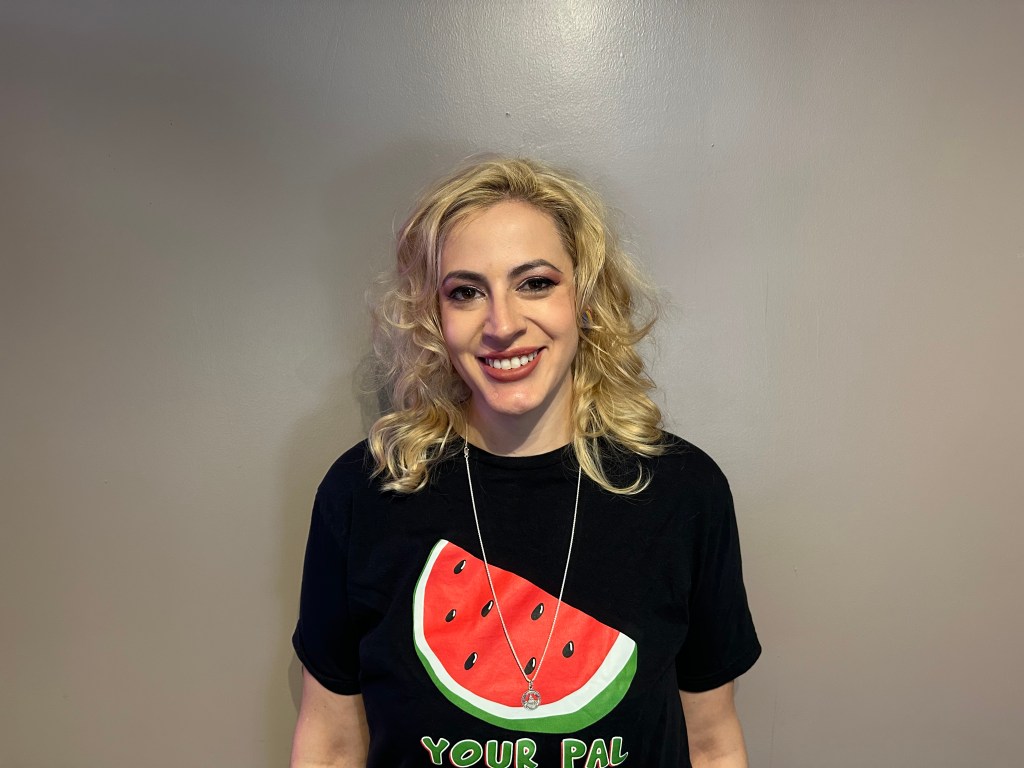
Fally Afani is a Palestinian-American award-winning journalist with a career spanning nearly three decades in media. She has worked extensively in radio, television, newspapers, magazines, and more. Fally’s work has been featured in magazines, newspapers, and television stations across Kansas. She has received several Kansas Association of Broadcasters awards as well as an Edward R. Murrow award for her online work in journalism. Fally is also a two-time recipient of the Rocket Grant Award, which helped develop live music and cultural events for her community, including a Community Dabke Dance Circle and Lawrence PRIDE. Currently, she resides in Lawrence, Kansas, where she focuses on music journalism, live events, and photography.
- “Main Title Instrumental – It’s Showtime Folks”
from: Orig. Motion Picture Soundtrack All That Jazz / Casablanca / December 20, 1979
[WMM’s Adopted Theme Song]
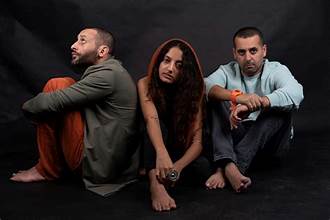
- DAM – “Emta Njawzak Yamma”
from: Ben Haana Wa Maana / DAM- Cooking Vinyl / June 7, 2019
[DAM’s third studio album. True to their name, which means “everlasting,” DAM has steadily grown and maintained a monumental status in the music world since the mid 90s. Made up of Tamer Nafar, Suhell Nafar, Mahmood Jrere, and Maysa Daw (who joined in 2015), the group drew their foundational inspiration from Tupac and the resemblance between Lydda—the neighborhood they grew up in—and the streets featured in his videos. // DAM is known for its unwavering political statements in its lyrics, which tackle everything from women’s rights to the pressure to marry, from western colonization and interference in the Middle East to the Israeli occupation. // Lead vocalist Daw reminds us, first in a resigned, exhausted tone, and then in a triumphant one, that, as a woman, moreover, as an Arab woman, “Even in the struggle I have double your responsibilities/ If you resist you hurt their Zionism/ If I resist I also hurt their masculinity.” Her lyrics highlight the intersectional oppression that Palestinian women are subjected to, and help to draw the attention of an international audience to two issues which often fall on deaf ears. // DAM is equally quick to point out, however, that misogyny is not simply a Middle Eastern issue, but a universal one, stating, in their song “Prozac” (بروزاك), “Hypocrisy, chauvinism is not a Middle Eastern but a male thing, everyone has a role/ I will deal with the honor killings and you deal with your porn industry.” // DAM fuse traditional Middle Eastern sounds, rhythm and intonation of Arabic-language rap and the unmistakably hip-hop attitude. Formed in 1999 DAM were one of the first acts to popularise rapping in Arabic (although they also rap in English and Hebrew) and have since become renowned for their unique fusion of East and West which combines Arabic percussion rhythms, Middle Eastern melodies and urban hip-hop. Their first single Min Irhabi (‘Who’s the terrorist?’) racked up over 1 million downloads and brought the group to the attention of young people across the Middle East for both their distinctive musical style and the political and humanitarian subtext.]
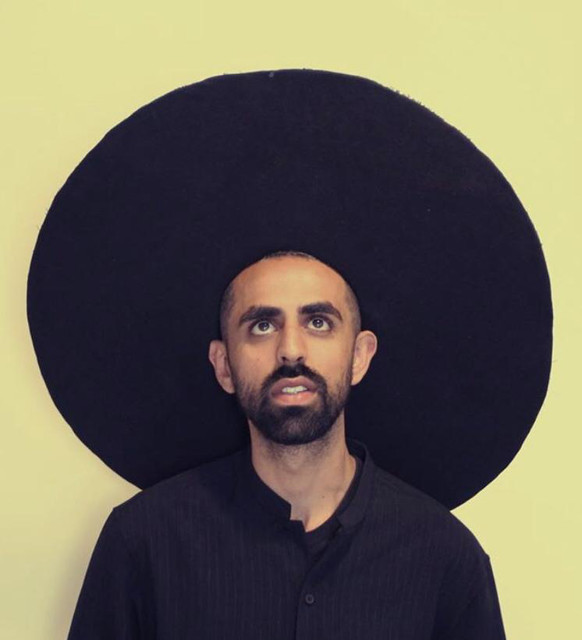
- Bashar Murad – “Intifada On The Dance Floor”
from: Mascara – EP / PopArabia / June 11, 2011
[Bashar Murad (Arabic: بشار مراد; was born February 7, 1993. Bashar is a Palestinian singer-songwriter and video artist based in East Jerusalem. His music addresses societal norms, the Israeli occupation, and gender equality in the Middle East. He is best known for his collaboration with Icelandic techno-punk band Hatari on the song “Klefi / Samed”, which was released shortly after Hatari raised banners featuring the Palestinian flag at the final of Eurovision Song Contest 2019 in Tel Aviv. Murad released his debut EP Maskhara in June 2021. // Murad was born in East Jerusalem in 1993, to parents Said Murad and Fadia Daibes. Murad’s father, Said, is the founder of the Palestinian musical group Sabreen, the first Palestinian group of its kind. Sabreen was founded in 1980, and Murad was born during the height of their career. Music helped Murad to overcome the pressure from growing up in an occupied territory. // Upon graduating from the Jerusalem American School, Murad pursued a bachelor’s degree at Bridgewater College, Virginia. In the United States, he realized that not a lot of his co-students knew much about Palestine, yet they wanted to know more about it. This made him realise that he did not want to escape politics and started covering these issues in his music. Since returning to East Jerusalem in 2014 and after publishing several singles in Arabic and English on his YouTube channel, Murad has built an online following. // Murad started his career by uploading cover versions of popular songs on his YouTube channel which he created in 2009. Later, he added a Middle Eastern touch to the songs by using traditional instruments in his covers before he started creating his own songs. He studied at Rimon School of Jazz and Contemporary Music in Israel for a year, and was the first Palestinian from the West Bank to study there. // The majority of his songs are produced by himself in the local record studios of Sabreen Association for Artistic Development. Occasionally, Murad gets grants or other support by organisations and programs, such as the Culture Resource Production Awards Program, that enabled him to produce the song “Shillet Hamal (Bunch of Bums)”. The song is about the feeling of being different and not fitting in. The music video features several people that chose alternative paths of life and can thus identify with this feeling. // For his single “Ana Zalameh (I’m a Man)”, Murad worked together with the United Nations. The UN Women’s “Men and Women for Gender Equality Regional Programme” produced the song which is about the developments of gender roles in Palestine and told from the perspective of a 10-year-old boy. // Murad’s collaboration with the Icelandic techno-punk band Hatari on the song “Klefi / Samed” helped him reach a wider audience. The song was released shortly after the Eurovision Song Contest 2019, which took place in Tel Aviv, and is about the wish for freedom and calls attention to the systematic oppression of Palestinians.[3] Hatari was the only entrant in that year’s contest who openly took a stance on the conflict. // During the Eurovision Song Contest 2019, Murad was part of the protesting artists that participated in the alternative event GlobalVision that was broadcast online during Eurovision week. // In May 2019, Murad participated in the Canadian Music Week in Toronto, Canada. // Murad released his debut EP Maskhara on 11 June 2021, which included four tracks: “Maskhara”, “Antenne” feat. Tamer Nafar, “Intifada on the Dance Floor”, and “Ana wnafsi”. Three years later, he released his second Arabic-language EP, Nafas. // In January 24, 2024, it was announced that he would be among the contestants of Söngvakeppnin 2024, the Icelandic national selection for the Eurovision Song Contest 2024. He competed with the song “Vestrið villt” / “Wild West”,[16] qualifying for the final and ultimately coming second. Amid the Gaza war and calls for Israel to be excluded from the contest, Murad’s participation was the subject of multiple controversies, both with accusations that Icelandic broadcaster RÚV was politicising the event as well as allegations that he was the victim of racism. // Murad resides in East Jerusalem with his younger brother and his father Said Murad, the founder of music group Sabreen. He is openly gay, and has characterized his artistic journey as a struggle against both homophobia in Palestinian society and the Israeli occupation.]

- Saint Levant – “Nails”
from: “Nails” – Single / MDLBEAST Records / May 25, 2023
[Marwan Abdelhamid (Arabic: مروان عبد الحميد) was born October 6, 2000). Marwan is known professionally as Saint Levant (French: [sɛ̃ ləvɑ̃]; Arabic: سانت ليفانت), is a Palestinian singer-songwriter and rapper. A multilingual artist, he is best known for his song “Very Few Friends”. // Abdelhamid was born in Jerusalem during the Second Intifada to a half-Algerian, half-French mother, Maria Mohammedi, and a half-Palestinian, half-Serbian father, Rashid Abdelhamid, who were both raised in Algeria. His father, the son of a Serbian medical doctor and a Palestinian from Safad who studied engineering in Yugoslavia following his expulsion as a child in 1948, has worked as an architect, hotel entrepreneur, DJ and film producer; his mother, the daughter of a French female pianist and former music teacher at the French lycée in Algiers, has worked for UNRWA. He has a younger brother, named Khaled. // Shortly after Abdelhamid’s birth, the family joined his paternal grandparents in the Gaza Strip, where his parents built a 22-room beachfront hotel in Rimal based on an architectural project by his father, named “Al Deira”. He spent his childhood primarily there, attending the American International School, until the 2007 Battle of Gaza, after which he and his family relocated to Amman, Jordan. He has described the time spent in Gaza as “the best years of [his] life”. // Abdelhamid took up the passion for music from his father and his maternal grandmother, studying piano and saxophone. Growing up, he communicated in French at home, English at school, and Arabic at the Palestinian refugee camp of Al-Wehdat, where he played football with the local team after school. // In 2018, aged 17, Abdelhamid moved to the United States to pursue a bachelor’s degree in International Relations at the University of California, Santa Barbara, from which he graduated in 2022. // Before taking on the name Saint Levant (a pun on “Yves Saint Laurent” and “Levant”), Abdelhamid wrote “Jerusalem Freestyle” and “Nirvana in Gaza”, both of which discussed political issues. Around the same time, Abdelhamid began posting videos on TikTok in which he discussed Palestinian history, as well as commentary on toxic masculinity in Arab culture. // In November 2022, Saint Levant released his trilingual rap track “Very Few Friends”, which was streamed approximately 2 million YouTube views in one month. The song soon became popular on TikTok and Instagram, as well as on Spotify, where it peaked at number 1 in nineteen countries and number 2 in the United States, and reached number 2 on the Global Viral 50 chart. In May 2023, Saint Levant was chosen as Dior’s first fragrance ambassador in the Middle East. The same year, he released the EP From Gaza, with Love. He was named among the 2023 “Men of the Year” by GQ Middle East. In 2024, he signed with Universal Arabic Music (UAM) and released, together with MC Abdul, “Deira”, a song in the chaabi musical style of Algiers dedicated to his father’s hotel in Gaza, which went destroyed in an Israeli bombing in January 2024 during Israel’s war on Gaza; the song featured as the title track on his debut album Deira, containing duets with other artists like Cheb Bilal and Kehlani. Saint Levant performed at Coachella 2024, using his performance to bring awareness to the ongoing war taking place in Gaza. The following 22 May, he was part of the lineup of a Palestine charity concert at Zénith Paris, whose revenue was destined to Medical Aid for Palestinians. // On February 14, 2025, on the occasion of Saint Valentine’s Day, Saint Levant released the EP Love Letters / رسائل حب, divided between a “side A” (Love Letters from Saint Levant) and a “side B” (رسائل حب من مروان, Rasāʾil ḥubb min Marwān), and featuring three unreleased tracks out of six. Three days later, he featured alongside Lourdes Leon in a promotional video for Yves Saint Laurent and Peter Park’s new omakase restaurant Sushi Park Paris. // Early in his career, Abdelhamid co-founded GrowHome, which connects Palestinian entrepreneurs with individuals who can help fund their projects. In early 2022, alongside Stephanie Moukhaiber, he started the 2048 Fellowship – a project providing financial support and mentorship for Palestinian creatives; its name, which was changed to “2048 Foundation” in 2024, references the 100th anniversary of the Nakba. Saint Levant is outspoken on the struggle in Palestine, telling Harper’s Bazaar: “Everything that I do is Israeli-focused and based on the Palestinian cause and struggle, doing a lot of contextualizing […] because I came to America, man, and I realized that a lot of people thought that […] it’s a conflict between these two equal[s who] just hate each other for some reason, [that] Palestinians just hate Israelis. And what people don’t understand is that it’s 80 years of occupation and oppression and displacement and ethnic cleansing so I think it’s very important to just push that forward always and I try to do it through the music; I try to do it through my actions, and everything that I do.” // Following the outbreak of the Israel–Hamas war, Saint Levant has stated that a sense of “survivor’s guilt” has contributed to shaping his artistic production. He identifies as a feminist. // In February 2025, pro-Israel groups and media criticized Yves Saint Laurent’s collaboration with Abdelhamid as a partnership with an “antisemite” (reportedly for “anti-Jewish statements” which included support for the attacks against Maccabi Tel Aviv fans in November 2024), and called for boycotting the brand. // Saint Levant claims inspiration from artists like Wyclef Jean, Cheb Khaled, Fairuz, Marwan Moussa, Lenny Kravitz, Michael Jackson, Stromae, Timbaland, Eminem and Mika. // Abdelhamid is a Muslim. He lives in Los Angeles, though he regularly returns to Amman. Since 2023, he has been in a relationship with French-Haitian singer Naïka.]
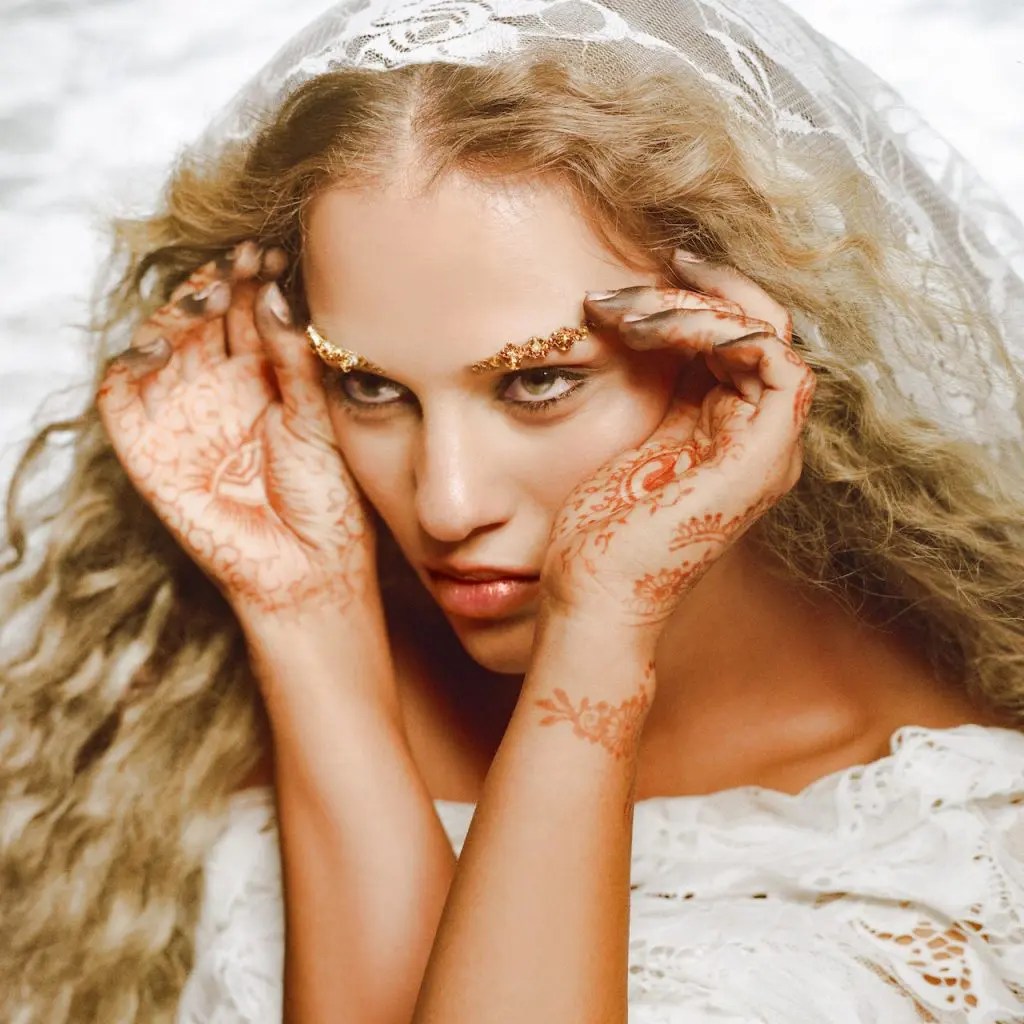
- Elyanna – “Yabn El Eh (Single Version)”
from: “Yabn El Eh (Single Version)” – Single / SALXCO UAM LLC / November 20, 2024
[Elian Amer Marjieh (sometimes credited as Margieh; Arabic: إليان عامر مرجية; born January 22, 2002), known professionally as Elyanna (إليانا), is a Palestinian and Chilean singer-songwriter, merging Arabic music with Latin rhythms to create an experimental Arab-pop sound that has captured a global audience. Born in Nazareth, her musical talents were nurtured by her family, with early influences including iconic figures like Julio Iglesias and Sabah Fakhri, Elyanna’s career took a significant turn when she was discovered at age 15 by Grammy-winner Nasri Atweh. She has released two EPs: Elyanna (2020) and Elyanna II (2022), and one studio album: Woledto (2024). She is currently signed to Universal Arabic Music. Her singles “Ana Lahale”, “Ghareeb Alay”, “Ala Bali”, and “Mama Eh” have all charted on The Official Lebanese Top 20. Elyanna is the first artist to sing in Arabic on The Late Show with Stephen Colbert. She recently sold out The Wiltern in Los Angeles and KOKO in London. // Elian Marjieh was born and raised in Nazareth and is of Palestinian descent. Her paternal grandmother is of Chilean descent. Her mother is a Palestinian poet, and her maternal grandfather is a Palestinian poet and singer who used to perform zajal at Palestinian weddings. Her paternal grandmother is a pianist from Chile, who she frequently visited as a child. // Elyanna began singing at age seven and started posting covers of songs on SoundCloud as a teenager while participating in singing and talent competitions at school. She gained popularity in her community alongside her brother, Feras, who was by her side as a pianist. Feras is now Elyanna’s pianist, producer, and creative director. Her sister, Tali, handles her styling. // In 2017, at the age of 15, she and her family moved to San Diego, California (eventually settling in Los Angeles) to further pursue her musical career after coming across Wassim “Sal” Slaiby on TV. After arriving in the United States, she began posting covers on her Instagram, where she garnered a following of around 300,000 users, and grabbing the attention of musician and producer Nasri Atweh. Nasri would later introduce Elyanna to Sal, and she would spend weekdays in San Diego while driving up to Los Angeles on weekends to work on music with Nasri and Massari.// Elyanna draws inspiration from jazz and blues alongside many household names for families in the Middle East: Dalida, Fairuz, Sabah Fakhri, Abd El Halim Hafez. In 2018, Elyanna contacted singer and producer, Nasri, who took an interest and connected her to his manager, Wassim Slaiby. She was signed to Slaiby’s management company, SALXCO, soon after the two met. She was then mentored by Nasri and fellow singer and producer, Massari. One of her first singles, “Ana Lahale,” featured guest vocals from Massari. That track was on her debut self-titled EP released in February 2020 via ElMar Music, an Empire Distribution imprint. In April 2021, Elyanna was announced as one of the first signees of the newly-formed imprint, Universal Arabic Music (UAM), which Slaiby founded in collaboration with Republic Records and the Universal Music Group. // In 2021, she performed alongside Alnajjar at his concert in Amman, Jordan the following month. In January 2022, she collaborated with Tunisian artist, Balti, on the track “Ghareeb Alay.” In March 2022, she released her second EP, Elyanna II, via UAM. The collection features the single “Al Kawn Janni Maak” (an Arabic version of “La Vie en rose”). Its music video was directed by Caroline “Chuck” Grant, the sister of Lana Del Rey, who ultimately got involved in the project by styling Elyanna. In 2023, the singer made history as the first artist to perform a set entirely in Arabic at the Coachella Valley Music and Arts Festival. // That the same year, her song “Ala Bali” was featured on Netflix comedy-drama series Mo. She also performed at the El Gouna Film Festival and paid tribute to her homeland of Palestine with her single “Olive Branch (غصن زيتون)”. In 2024, Elyanna sold out her debut North American tour and ended it with the announcement of her debut studio album, Woledto, released on April 12 alongside a music video for “Ganeni”. // Boutayna Chokrane praised the record on her review for Pitchfork, stating that it “plays with Arab pop, R&B, EDM, and jazz to express the nuances of love, loss, and longing”. She was positive of the “subtle yet poignant references to identity, displacement, and cultural resilience” as well, as those “underscore [Elyanna’s] sorrow and ferocity”. Moreover, the singer has been featured on the covers of numerous magazines worldwide, including Billboard Arabia, Vogue Arabia, Rolling Stone, Cosmopolitan ME and GQ. On 29 June 2024, she was invited by British rock band Coldplay to perform the songs “We Pray” and “Arabesque” at the 2024 Glastonbury Festival. On July 22, the singer officially announced the Woledto Tour, with concerts in North America and Europe between October and December 2024. Elyanna performed alongside Coldplay for Saturday Night Live on 5 October 2024.]

- MC Abdul – “Shouting At The Wall”
from: Shouting At The Wall / MC Abdul – Empire / June 30, 2021
[Abdel-Rahman Al-Shantti (Arabic: عبد الرحمن الشنطي; Abdel-Rahman Al-Shantti was born September 14, 2008. He is known professionally as MC Abdul or MCA Abdul is a Palestinian rapper from Gaza, Palestine. He gained popularity when he sang a rap about freedom in front of his school in Gaza which garnered hundreds of thousands of views on social media. As of December 2023, his videos for “Shouting At The Wall” and “Palestine” have received more than 2.1 million views and 1.5 million views, respectively, on YouTube. // Abdel-Rahman Al-Shantti was born in Gaza, Palestine. His mother had surgery to treat CNV bleeding in Egypt around 2007, but Al-Shantti said his mother was not able to maintain the surgery due to the blockade of Gaza by Israel. He started rapping and writing songs at age nine. He began recording cover versions of his favorite tracks and sharing them with friends and online. His family exposed him to artists such as Eminem and fellow Palestinian DJ Khaled, the former of which Abdul considers to be one of his four favourites; the others are NF, Tupac and Jay-Z. He said he would like to go on Arab Idol like fellow Palestinian Mohammed Assaf. // At the start of the 2023 Gaza war, Al-Shantti is living in Los Angeles, although his family, including his younger siblings, are still living in Gaza. // In 2020, Al-Shantti advocated on behalf of Palestinian families in Gaza who were bombed by releasing the song “Shouting at the Wall”. Following the release, he caught the attention of the record label Empire. MC Abdul spoke about the importance of rapping as a tool for coping with challenging times saying “The power that I have in my pen when I’m writing, I am unstoppable. The microphone is the only escape possible”. In 2022, he performs his first concert as part of the FIFA World Cup festivities in Qatar. // In 2024, MC Abdul featured on Saint Levant’s single “Deira” (about the destruction of Al Deira Hotel in an Israeli bombing), which has over 2.5 million streams on Spotify and over 2.9 million views on the music video on YouTube. The track is included in Saint Levant’s debut album Deira.]
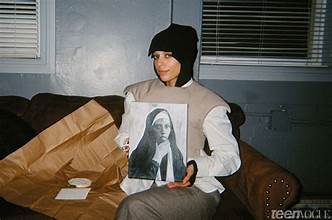
- Nemahsis – “colored concrete”
from: Verbathim / Verbaithim / September 13, 2024
[Nemah Hasan, known professionally as Nemahsis, is a Canadian singer-songwriter from Toronto, Ontario. // Nemah Hasan was born in Ontario, Canada and raised on a farm in the town of Milton. She is the daughter of a Palestinian immigrant. // Hasan began her career on TikTok, posting beauty and fashion videos aimed at Muslim women alongside occasional videos of her singing Adele covers. After being exploited by a company that hired her for an advertising campaign and then failed to pay her, in June 2021 she released her first original single and video “What If I Took It Off for You?”, about social attitudes toward Muslim women who wear the hijab. She followed up with the singles “Paper Thin” in October 2021 and “Dollar Signs” in January 2022, before releasing the EP eleven achers in March 2022. // She followed up with the new non-EP singles “Criminal” in October 2022, and “I Wanna Be Your Right Hand” in February 2023. // In May 2024, She released her first single, “Stick of Gum”, for her upcoming album. The song’s music video was shot entirely in her family’s hometown of Jericho in the occupied West Bank. The single was selected by Spotify editors as one of the best songs of 2024. // On Sept. 13, Hasan independently released her debut album Verbathim. Hasan stated the title “Verbathim is just the word verbatim except someone is grabbing my tongue” to symbolize the censorship she has faced. // On Oct. 12, 2023, soon after the Hamas-led attack on Israel on October 7, the singer shared on social media that she had been dropped by her label, stating “My label just dropped me, a Palestinian artist, for being pro-Palestine”. Her subsequent posts include a rendition of “Team”, by New Zealand artist Lorde, with images from Gaza before and after the bombardments. // The Canadian music magazine Exclaim! named eleven achers one of the 15 best Canadian EPs of 2022. // Hasan & her songwriting colleagues Brendan Grieve and Stevie Solomon were nominated for the SOCAN Songwriting Prize in 2022 for “Paper Thin”. In 2023, the Prism Prize named Nemahsis the winner of the Hi-Fidelity Award for artists using music video in innovative ways. // Verbathim won the Juno Award for alternative album of the year.]
10:32 – Underwriting
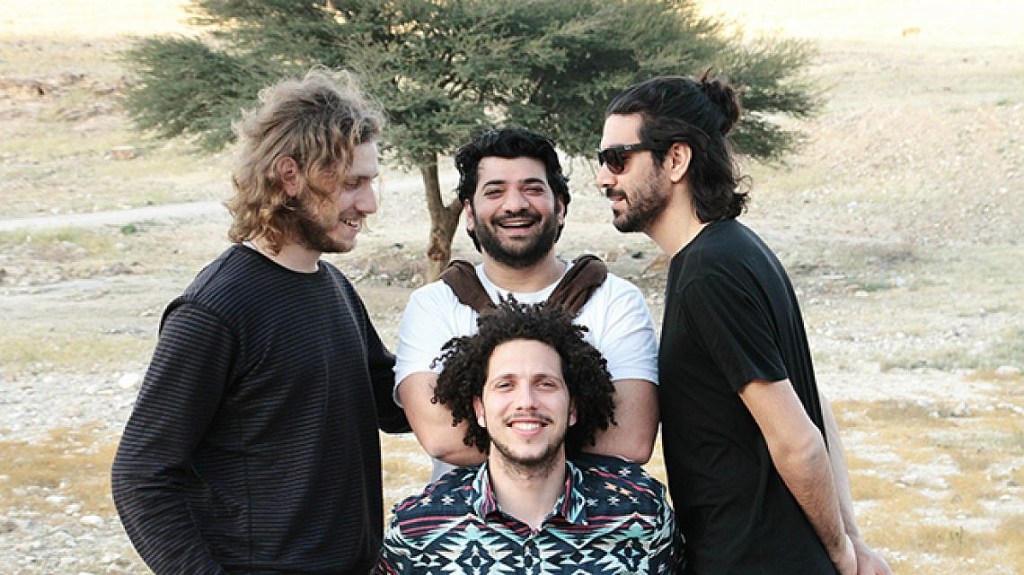
- Apo and the Apostles – “Ya Yuma Wen”
from: “Ya Yuma Wen”- Single / Levantine Music – Apo & the Apostles / November 14, 2024
[Combining the diverse backgrounds of the members, the band has stemmed a new genre in alternative folk rock with a multilingual twist and an upbeat vibe. // Apo Sahagian is the lead singer of Apo and the Apostles. Apo hails from the Armenian Quarter of Jerusalem’s Old City. // These twenty-something guys tend to sing about “bygone beloveds,” said Sahagian, so it’s not the typical froth of pop songs. // When Apo and the Apostles gather in a Bethlehem garage to rehearse and write, they think about their crowd, whether their fans can belt out the lyrics to a particular song, and if it’s energetic enough to get the crowd going. // “We’re trying to come up with a genre we call party rock,” said Sahagian. “Maybe it’s not the right music for a Tuesday night, but if you want to go out and drink and have a good night, we’re gonna show you a fun time.” // most of its members live near the separation wall around Bethlehem and struggle daily with the realities of life in Palestinian cities. // Sahagian, who is Armenian, lives in Jerusalem and has an Israeli identification card, doesn’t have the same issues. But while he would love nothing more than to perform in Jerusalem’s Yellow Submarine, a snug music club in Talpiot, Jerusalem that is a short,15-minute drive from Bethlehem, he is aware of the political sensitivities of some Palestinians regarding the venue, which is Israeli. // “I wish that I could play one day without any of this political black cloud,” he said. // That’s the reality of being a Bethlehem-Jerusalem rock band. The musicians themselves — Sahagian (vocals, guitars, piano), trumpet player Firas Harb, drummer Pierre Taweel, bass guitarist Amir Handal, guitarist Karim Morcos & bass guitarist Joel Thorpe (who played with the band until 2015) — say they are absolutely apolitical, at least when it comes to making music. // “It’s easier to play Amman or Europe than in Israel,” joked Harb, 29, who works as an accountant and financial consultant when he isn’t blowing his horn. // It’s also easier to perform in the mostly Arab East Jerusalem or in Ramallah, the nearby Palestinian city where they have a solid fan base, often drawing several hundred to a show. – This bio contains several excerpts from the band’s facebook page and an article written by Jessica Steinberg from the Feb. 3, 2016, edition of The Times of Israel]
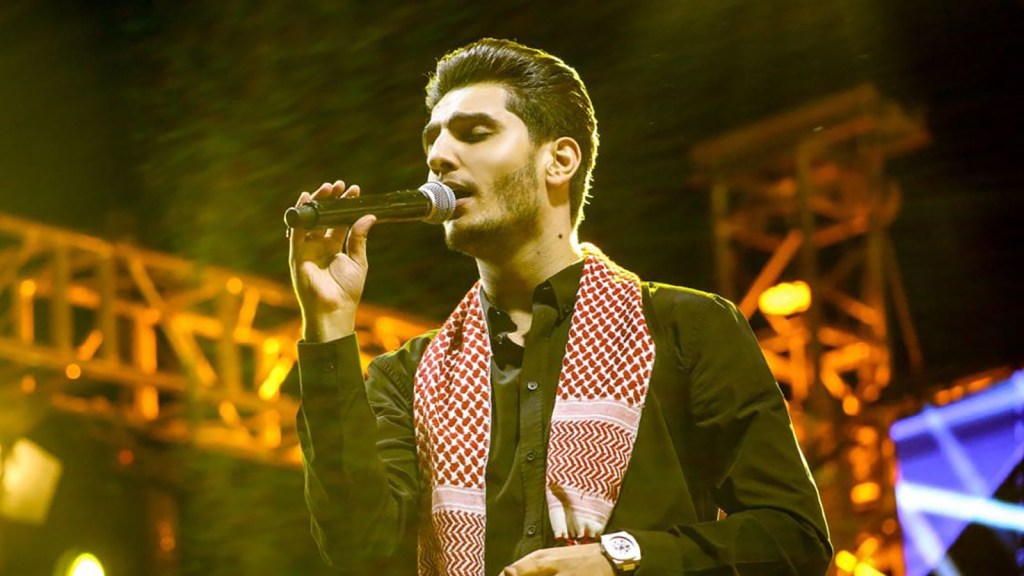
- Mohammed Assaf – “Dammi Falastini”
from: Muntasib Alqamah Amshi – EP / Mohammed Assaf / October 19, 2015
[ https://youtu.be/F9czNtvvgvA?si=LBxQWmwIPNGiBqDU Mohammad Jaber Abdul Rahman Assaf was born Sept. 1 1989, He is a Palestinian pop singer well known for being the winner of the 22nd season of Arab Idol, broadcast by the MBC network. His victory received worldwide coverage from the media and was welcomed with joy by Palestinians and the rest of the Arab world. In 2013, Assaf was named a goodwill ambassador for peace by The United Nations Relief and Works Agency for Palestine Refugees (UNRWA). He was also named ambassador of culture & arts by the Palestinian government and was offered a position with “diplomatic standing” by Palestinian President Mahmoud Abbas. Assaf’s story is the basis of the 2015 film The Idol, directed by Hany Abu-Assad. After Arab Idol, Assaf has gone on to enjoy huge popularity in the Arab World and the Arab diaspora and has released two albums and a great number of singles and collaborations. Most of his music is sung in the Iraqi and Gulf dialects. // He was born in Misrata, Libya to Palestinian parents. He lived there until he was 4 years old, when his parents moved back to Gaza, he grew up in Khan Younis refugee camp with a middle class couple where he attended UNRWA elementary school. His mother’s family hails from the village of Bayt Daras, which was captured and depopulated by the nascent IDF in 1948 and his father’s family is from Beersheba. Assaf’s parents moved to Khan Yunis Refugee Camp when he was 4 years old. He is one of six siblings, three of whom, including Assaf, have been involved in performing live music. Assaf’s mother Intisar, a mathematics teacher, has stated that Assaf began singing at the age of five and “had a voice of someone who was much, much older.” Before his role on the television show he was attending Gaza City’s Palestine University majoring in media and public relations. Assaf did not have professional training as a singer; he started his career singing at weddings and other private events. He entered the public view in 2000 during a popular local television program where he called in and sung a nationalist song to the host’s praise. Afterward, he was frequently offered contracts with local record companies. Sometime after his first performance, he sang in a local event in Gaza attended by late Palestinian president Yasser Arafat. // Mohammad Assaf travelled from Gaza Strip to Egypt to audition for Arab Idol. It took him two days to reach Egypt by car due to complications on the border. At the beginning, he had to convince the Egyptian security at the border crossing, where he was stuck for two days, to leave Gaza. Once he reached the hotel where the auditions were taking place, the doors were closed in which they did not accept anymore auditions so he jumped over the wall. After he jumped over the wall, he couldn’t get a number to audition; he sat hopelessly in the hall where other contestants were waiting for their turn. He started singing to the contestants, and a Palestinian contestant, Ramadan Abu Nahel, who was waiting to audition heard him and gave him his number saying, “I know I won’t reach the finals but you will.”// He was given the nickname Asaroukh (“The Rocket”) by Lebanese singer and Arab Idol judge Ragheb Alama. Assaf was acclaimed by the jury and the public. His voice and appearance have drawn comparisons to Egyptian singer Abdel Halim Hafez, which has garnered Assaf both fame and controversy. Fans merged part of Hafez’s name with Assaf’s, as in Assaf Hilm Falastine (“Assaf Palestine’s Dream”). Assaf’s final performance was his own song that was well known before his rise to fame “Ali al-kuffiyeh” (“Raise The Kuffiyeh”), a Palestinian song that called on Palestinians to raise their kuffiyehs (a traditional Arab headdress that has become a Palestinian nationalist symbol) and to unite, in light of the split between the two major Palestinian factions, Hamas and Fatah. Hundreds of thousands of Palestinians had tuned in to watch his performance. On June 22, Assaf was declared the winner of Arab Idol, winning the most votes and coming ahead of two other competitors, Ahmed Gamal and Farah Youssef, from Egypt and Syria, respectively. Massive celebrations by Palestinians ensued after the announcement of his victory, including festivities held on the streets of Gaza City, East Jerusalem, Nablus, Ramallah, Bethlehem, Khan Yunis, Nazareth, Lebanon and Jordan, And when his professional career as an artist began after the title of Arab Idol, he was accompanied by Awtar Band led by The Maestro Yacoub Al-Atrash in Arab and international festivals since then. // While Assaf has normally avoided politics on the show, he has stated “I can’t differentiate between my art and my patriotic attitude.” Assaf condemned the ongoing Israeli occupation of West Bank and the poor living conditions in the Gaza Strip. He also stated that Palestinian prisoner Samer Issawi’s long-term hunger strike protest had inspired him. He frequently performed donning the checkered keffiyeh popularly associated with Palestinian nationalism. // He is highly popular in the Palestinian territories, where the Washington Post notes that the “streets of Gaza empty out” when the show goes on air on Fridays and Saturdays. Throughout the West Bank and the Gaza Strip, large posters promoting Assaf have been hung on residences and shops. A source of pride, Assaf has been able to unite Palestinians’ sympathies in a way that Palestinian political factions have not been able. // Some Palestinian politicians have showed their support for the singer who has been creating a sense of unity among Palestinians, regardless of differing political beliefs. Salam Fayyad, former Prime Minister of the Palestinian National Authority, called on all Palestinians to support Assaf. Palestinian President Mahmoud Abbas had also called for Palestinians everywhere, including the diaspora, to vote for Assaf. Assaf also won support from the late Palestinian leader Yasser Arafat’s daughter, Zahwa, who encouraged viewers to vote for him. // Although prior to his participation in Arab Idol, Assaf stated he had been briefly detained by the security forces of the conservative Hamas party and paramilitary group—which maintains de facto control over Gaza—on over 20 different occasions in an effort to dissuade him from singing, the group has not suppressed Palestinian support for Assaf or viewership of the show. Signaling a shift in attitude, a Gaza-based Hamas MP, Yahya Mousa, lauded Assaf and referred to him the “ambassador for Palestinian art.”]

- zeyne – “Asli Ana”
from: “7arrir 3aqlak” / “Asli Ana” – Single / MDLBEAST – Scarab Records / Nov. 21, 2024
[From suzannezahr.com: The lyrics Zeyne’s of Asli Ana are a powerful exploration of decolonial themes. They challenge the Western concept of “civilization,” exposing how it has historically been weaponized to oppress, displace, and erase. Zeyne confronts the long-standing colonial narrative, highlighting how it justified the theft of our lands, the erasure of our culture, and the distortion of our history. // The song doesn’t stop at critique; it pushes us to question our internalized colonial norms, even in subtle aspects like dress and self-presentation. The line, “Record, I am an Arab, and I know my origin” moved me to tears. It is a poignant reminder of the resilience required to preserve our identity after decades of diaspora and displacement. // Through poetic verses, Zeyne masterfully encapsulates the struggle to maintain our heritage while navigating a world that constantly demands assimilation. // In 1977, the General Assembly called for the annual observance of November 29 as the International Day of Solidarity with the Palestinian People (resolution 32/40 B). On that day, in 1947, the Assembly adopted the resolution on the partition of Palestine (resolution 181 (II)) // In resolution 60/37 of 1 December 2005, the Assembly requested the Committee on the Exercise of the Inalienable Rights of the Palestinian People and the Division for Palestinian Rights, as part of the observance of the International Day of Solidarity with the Palestinian People on November 29, to continue to organize an annual exhibit on Palestinian rights or a cultural event in cooperation with the Permanent Observer Mission of Palestine to the UN. // The resolution on the observance of the International Day of Solidarity with the Palestinian People also encourages Member States to continue to give the widest support and publicity to the observance of the Day of Solidarity.]

- Elyanna – “Callin’ U (Tamely Maak)”
from: WOLEDTO / Universal Arabic Music / April 12, 2024
[From song tell.com: “Callin’ U (Tamally Maak)” is a captivating song by Palestinian-Chilean pop sensation Elyanna, featured on her album “WOLEDTO” released in 2023. This track is a unique mashup that combines the essence of Danish hip-hop band Outlandish’s “Callin’ U” with the classic Egyptian hit “Tamally Maak” by Amr Diab, showcasing Elyanna’s ability to bridge cultural divides through music. // The song explores themes of deep longing, emotional connection, and devotion to a loved one, emphasizing the singer’s vulnerability and the need for their presence despite physical distance. // The lyrics of “Callin’ U (Tamally Maak)” are rich with emotion and convey a powerful message of love and yearning. The song opens with a sense of urgency, as Elyanna expresses her need for the person she loves. Lines like “I’m Calling You / With all my goals / My very soul / I’m falling through / In need of you” encapsulate the depth of her feelings. Here, the act of calling is not just a physical action but a metaphor for reaching out emotionally, highlighting the singer’s vulnerability and the weight of her longing. // The repeated phrase “تملّي معاك” (Tamally Ma’ak), which translates to “always with you,” serves as a poignant reminder of the singer’s desire for a constant connection with her beloved. This phrase resonates throughout the song, reinforcing the idea that love transcends distance and time. It emphasizes the emotional reliance the singer has on her partner, suggesting that their presence is integral to her happiness and well-being. // As the song progresses, Elyanna’s dynamic vocals convey a mix of passion and melancholy. The lyrics reflect a struggle to articulate feelings, showcasing the complexities of love and the challenges of maintaining a relationship when physically apart. The emotional weight of the song is further enhanced by the blend of Arabic and English lyrics, which not only broadens its appeal but also deepens its cultural significance. // The fusion of the two songs—Outlandish’s contemporary sound and Amr Diab’s classic melody—creates a unique listening experience that resonates with a diverse audience. Elyanna’s ability to weave these elements together speaks to her innovative artistry and her commitment to celebrating her Arab heritage while appealing to global listeners. The heartfelt atmosphere of the song captures the essence of love’s struggles and triumphs, making it relatable to anyone who has experienced longing for a loved one.]

- Saint Levant, MC Abdul – “Deira”
from: DEIRA / SALXCO UAM LLC / February 23, 2024
[Deira (stylized in all caps; Arabic: ديرة) is the debut studio album by Palestinian rapper Saint Levant. The album features guest appearances from other Palestinian and international artists, namely MC Abdul, Kehlani, Cheb Bilal, TIF [fr] and Sol Band, with additional backing vocals by Zeyne and Naïka. // The album pays homage to Saint Levant’s diverse cultural background, blending contemporary music with traditional styles as well as mixing English-, French- and Arabic-language lyrics. Thematically, it revolves around the Palestinian right of return and the longing for the country’s liberation, having been described as a “tribute” or “ode to Palestine”. The title track and lead single, “Deira”, performed in the chaabi musical style of Algiers, is dedicated to Saint Levant’s family-owned hotel in Gaza, which went destroyed in an Israeli bombing in January 2024 during Israel’s war on Gaza. The opening track, “On This Land”, performed with the Gazan group Sol Band, incorporates parts of the Palestinian patriotic song and unofficial anthem “Mawtini”, and explores the theme of martyrdom; its title references a poem by Mahmoud Darwish. // The album’s release was preceded by three singles in February, April and May 2024, respectively, and was followed by a tour across Europe and North America between September 22 and December 15, 2024.]

- Apo & The Apostles – “Ansaki”
from: Rawquha / Chimichanga Records / September 4, 2020
11:00 – Station ID

- Rim Banna, Bruno Cruz, Ministry of Dub-Key – “The Sun of Love – Remix”
from: R.I.M.I.X. / Kirkelig Kulturverksted / March 24, 2019
[Rim Banna (Arabic: ريم بنا; 8 December 1966 – 24 March 2018) was a Palestinian singer and composer who was most known for her modern interpretations of traditional Palestinian songs and poetry. Banna was born in Nazareth, where she graduated from Nazareth Baptist School. She lived in Nazareth with her three children. She met her husband, Ukrainian guitarist Leonid Alexeyenko, while studying music together at the Higher Music Conservatory in Moscow and they married in 1991, and got divorced in 2010. // anna first achieved popularity in the early 1990s, after recording her own versions of traditional Palestinian children’s songs that were on the verge of being forgotten. Many such songs and rhymes sung by Palestinian families again today are said to be thanks to Banna’s work in preserving them via her recordings. // Banna composed her own songs and adds melody to Palestinian poetry. Her message was often focused on the suffering of Palestinians, particularly those of the West Bank. Her music is described as “haunting, emotional, at times bordering on kitsch.” She describes her music as a means of cultural self-assertion: A part of our work consists of collecting traditional Palestinian texts without melodies. So that the texts do not get lost, we try to compose melodies for them that are modern, yet inspired by traditional Palestinian music. // In this way, Banna did more than mimic the traditional techniques and representations of the pieces she interprets. She blends them with modern singing styles because, // Oriental singing techniques are mostly ornamental… But my voice is more two-dimensional, thicker. I try to write songs that fit my voice. I want to create something new in every respect. And that includes bringing people elsewhere closer to the music and soul of the Palestinians. She performed live in the West Bank and reached audiences in Gaza through live webcasts. She performed her first concert in Syria on 8 January 2009 and also performed in Tunisia on 25 July 2011. Her first concert in Beirut took place on 22 March 2012. // Lullabies from the Axis of Evil – Banna’s popularity in Europe began after Norwegian music producer Erik Hillestad invited her to participate on the CD Lullabies from the Axis of Evil (2003) and Norwegian singer Kari Bremnes, who also took part on this production in a duet with Rim Banna, invited her to Oslo. Banna accepted the invitation, and the two artists did a show together. // The album, dubbed “a musical antiwar message to U.S. President Bush from female singers in Palestine, Iraq, Iran, and Norway,” brings these women together with others from North Korea, Syria, Cuba, and Afghanistan, to sing traditional lullabies from their lands in duet form with English-language performers whose translation allows the songs to reach a Western audience. // Mirror of My Soul – The Mirrors of My Soul, which was dedicated to all the Palestinian and Arab political detainees in the Israeli prisons, is a stylistic departure from her previous body of work. Produced in cooperation with a Norwegian quintet, it features “Western pop styling” fused

- MC Abdul – “Can I Live”
from: “Can I Live” – Single / MC Abdul – EMPIRE / December 16, 2024
[The repeated refrain of “Can I live, can I live” expresses a sense of pleading and longing for the freedom to simply exist and pursue a fulfilling life. The singer, who identifies as a Gaza kid, is yearning for the opportunity to live on their own terms, free from the constraints and challenges that may come with their environment or circumstances. This desire for autonomy and independence is underscored by the repetition of the phrase, emphasizing the importance of being able to thrive and follow one’s dreams. // The lyrics further delve into the struggles and aspirations of the singer, who describes themselves as a young Gaza kid with a unique talent for rap. Despite facing judgment from others, particularly their friends who may view them as eccentric or unconventional, the singer remains dedicated to honing their craft and making a name for themselves in the music industry. The reference to being in a “4 door spinning like a yo-yo” suggests a whirlwind of activity and motion, perhaps symbolizing the fast-paced and unpredictable nature of their life. // As the song continues, MC Abdul paints a picture of resilience and determination in the face of adversity. The mention of having bright plans for the future, despite facing criticism and negativity from others, speaks to the artist’s unwavering optimism and belief in their own potential. The defiance in lines like “My music so loud the police showed up, then we turned it back up” conveys a rebellious spirit and a refusal to be silenced or held back by outside forces. // Ultimately, “Can I Live” serves as an anthem of empowerment and self-assertion, with MC Abdul asserting their right to pursue their ambitions and live life on their own terms. The song captures the universal desire for freedom, self-expression, and success, resonating with listeners who may also be striving to overcome obstacles and carve out their own path in the world. Through its energetic and defiant tone, the track encourages resilience, perseverance, and the belief that one can indeed live and thrive despite the challenges they may face.
MC Abdul – “Can I Live” Lyrics
Can I live, can I live
Can I live, can I live yea
Can I live, can I live
I’m just a Gaza kid u
Can I live, can I live
Can we live, can we live uh
Can I live, can I live
I’m just tryna do it big yea
Young Gaza kid and I came with the cold flow
Rap all day and my friends think I’m loco
See my outside yea they wanna take my photo
Yea I’m in 4 door spinning like a yo-yo
Yea, I got plans to grow up
My future so bright, they hating so what
My music so loud the police showed up
Then we turned it back up
We just tryna have a good time
A good life gotta get mine
MC yea I kick rhymes
Filastine yea I’m big time
Can I live, can I live
Can I live, can I live yea
Can I live, can I live
I’m just a Gaza kid uhh
Can I live, can I live
Can we live, can we live uhh
People were interested in these podcasts
Can I live, can I live
I’m just tryna do it big yea
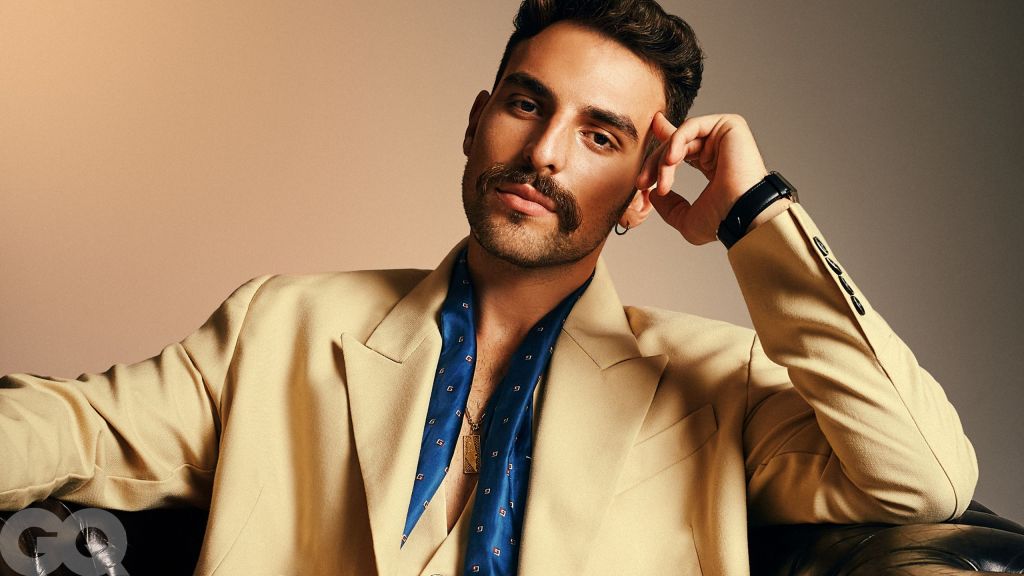
- Saint Levant – “From Gaza, With Love”
from: From Gaza, With Love / 2048 / March 6, 2023
[Dashing good looks and ample talent make a formidable combination! Saint Levant (Marwan Abdelhamid) has both. He is a musician on an upward trajectory. One of the things that makes Abdelhamid so special is his diverse background: Palestinian, French, Algerian, and Serbian. Woo! Furthermore, he raps in multiple languages: English, French, and Arabic. On his 18-minute, debut EP, From Gaza, With Love, Marwan showcases incredible potential over t“Very Few ds”. // “From Gaza, With Love” keeps things ultra-compelling. I love the middle eastern sound effects within the backdrop which are fitting given his heritage. There is a marvelous percussive component to the title track, which clocks in under two minutes. Even so, the aesthetic – the vibes – remain potent to the nth degree. Abdelhamid maintains his poise, never getting too high or too low. Once more, there are some memorable bars in the mix (“Somebody tell Bella Hadid / Let’s change that to Abdelhamid / And I don’t mean to come off too strong / Bs il asil fala7i”), and of course, Arabic and French too!]
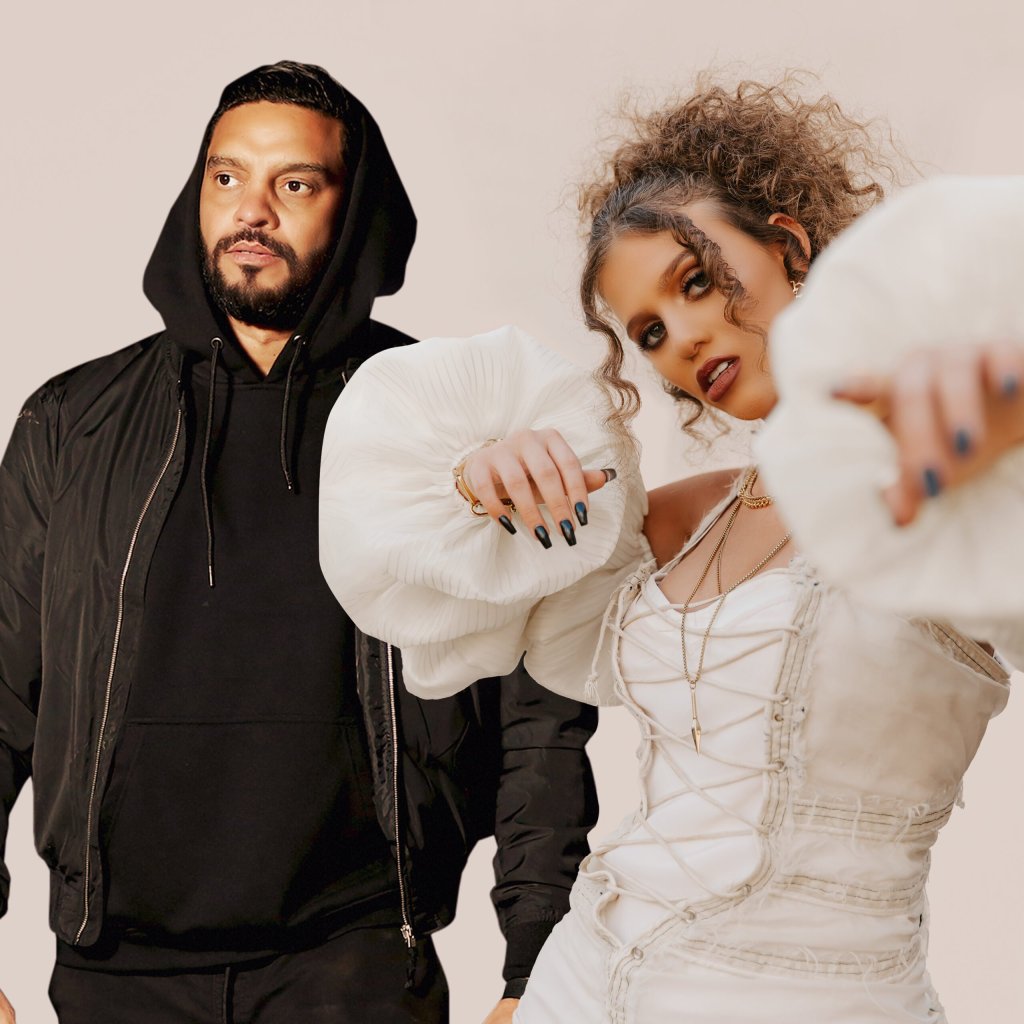
- Elyanna, Balti – “Ghareeb Aaly”
from: Elyanna 2 / Universal Arabic Music / March 4, 2022
[From songtell.com: The song “Ghareeb Alay” by Elyanna & Balti tells the story of a relationship that started when they were young and innocent. The lyrics describe how their days were sweet and free from jealousy. However, as time goes on, the singer feels that the other person has lost their sense of satisfaction and is always in a state of confusion. They also mention that others have referred to the narrator as a “superstar.” // The chorus repeats the phrase “day by day, night by night” and emphasizes the singer’s longing for the other person who has become a stranger to them. The repetition of “Ghareeb Alay” further expresses the feeling of distance and unfamiliarity. // In the second verse, Balti expresses his deep connection to the other person, stating that their hearts are close, even if physically separated. He emphasizes that their love surpasses societal expectations and boundaries, mentioning his Tunisian background and the Arab heritage of his beloved. Moreover, he highlights his unwavering commitment to the Palestinian cause. // The chorus repeats again, emphasizing the yearning and confusion between the two individuals. The lyrics mention the challenges they face in life but reassure each other of their constant presence and loyalty to one another. // The bridge emphasizes the enduring love and companionship between the narrator and their beloved. It portrays their ability to navigate both joy and hardship together. The lyrics convey the idea that the world consists of both pleasant and difficult times, and that some people can be strange and unpredictable. The narrator expresses their willingness to face any obstacles and endure hardships alongside their beloved. // Overall, “Ghareeb Alay” reflects the complexities of love and relationships over time. It conveys a sense of longing, confusion, and deep connection between two individuals who find solace in their ability to navigate life together.]

- El-Funoun Palestine Popular Dance Troupe – “Take me to Palestine”
from: Zajel / El Funoun / August 24, 2014
[El Funoun Palestinian Popular Dance Troupe (فرقة الفنون الشعبية الفلسطينية) is a Palestinian dance troupe that was established in 1979. They are also called El Funoun Palestinian Popular Dance Troupe. They currently are based in Ramallah and have a direct mission to “resist the genocide of their people and culture.” As of 2021, the dance troupe has between 50 and 230 volunteer members of men women and children. Their members are also both Muslim and Christian. El Funoun translates to ‘The Art’. // Through the choreography of their dances, they aim to represent Arab-Palestinian traditions. While they perform Dabke, a traditional folkloric dance, they also choreograph different types of dance that also encompass their mission to share their vision of Palestinian dance. Their dances have roots in traditional dances that historically were performed at celebrations and weddings and adapts them for the current context. They aim to appeal to the younger audiences as well and in doing so bring Palestinian culture into the present and let it evolve. They aim to preserve and engage with Palestinian history and traditions through dance and choreography and through performance. Their work in preserving Palestinian culture and creating spaces for Palestinians to engage with their traditional culture and dance through performances, is in opposition to Israeli suppression of Palestinian expression since the Nakba in 1948. // El Funoun’s first performance was at the Dabke Festival in Birzeit University in 1979. Since 1979, El Funoun has performed over 1,000 times at various venues and festivals, as well as produced shows that bring traditional Palestinian folkloric dance with contemporary dance. Originally, El Funoun consisted solely of male dancers, but in 1981 the group opened itself up to female dancers, which attracted some criticism due to its breaking of cultural norms. The group originally focused solely on dabke, but have since expanded to include other dance styles, as well as performances that mix traditional and contemporary choreography. // In 1986 El Funoun established the “Palestinian Folklore Day”, which is an annual celebration that happens every year on October 7 and is celebrated all over Palestine. The dance troupe was also instrumental in establishing the Popular Arts Centre (PAC) in Al-Bireh in the West Bank in 1987, which aims to raise awareness about the arts and create opportunities for community members to participate in the arts. // In the mid-1990s, the group’s mission shifted from preservation of Palestinian cultural identity to development of a contemporary Palestinian identity. // From 1992 to 1999 El Funoun dance troupe performed at the Palestine International Festival. In 1997, the dance troupe received the Palestine Award for Popular Folklore. // In 1997, the group staged Zaghareed, which followed a modern Palestinian wedding. // In 2004, the group collaborated with the Belgian group les Ballets C de la B. // In 2011, the group collaborated with choreographer Yoshiko Chuma. A performance based on the collaboration was staged in New York City in 2012, with two members of the troupe participating. // El Funoun is popular in Palestine and in previous performances would have between 1,000 and 3,000 people at their performances. During COVID-19, they did virtual dance performances. // El Funoun has performed and hosted workshops abroad, in places like Ireland, Malta, and the United Kingdom. They have toured in the United States twice, in 2006 and in 2016.]
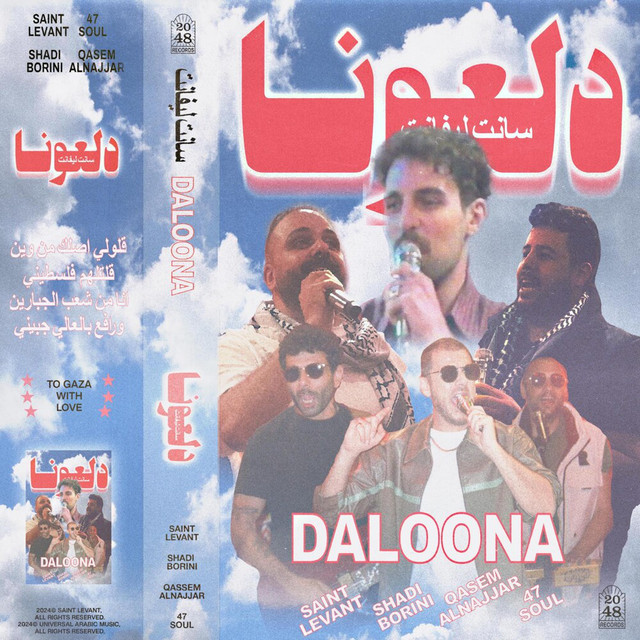
- Saint Levant, 47SOUL, Shadi Qasem AlNajjar – “DALOONA”
from: DALOONA / SALXCO UAM LLC / November 25, 2024
[From: http://www.cosmopolitanme.com by Farwah Bukhari (Nov 26, 2024) Mr Saint Levant has released a new track called Daloona, which features artists 47Soul, Shadi Borini, and more. We are also blessed with a music video directed by Gazan filmmakers Tarzan and Arab Nasser. // Daloona is an ode to his Palestinian roots and a celebration of the people’s resilience through difficult times. It’s an upbeat track that reflects the Palestinian identity through the joy experienced at a wedding. // Saint Levant said about the single: “Right now, we’re suffering immensely. And because of this, to the public and unknowing eyes, the world sees a dark, sad, and partial reality. Just like everybody else in the world, we have moments of joy. People are still getting married. People like SOL Band in GAZA are keeping this joy alive. I just want to show that we Palestinians can have joy, that this community exists, and that there is PRIDE in this identity”. // Saint-Levant, real name Marwan, has Palestinian-Algerian roots and is a multi-lingual rapper. // He was born in 2000 in Jerusalem during the second intifada and spent his childhood in the Gaza Strip until 2007 when his family relocated to Jordan. // He now lives in LA and performed at Coachella earlier this year. At Coachella, he turned his performance into a powerful tribute to Palestine.]
11:28 – Underwriting

- 47SOUL – “Don’t Care Where You From”
from: Shamstep – EP / Cooking Vinyl / June 17, 2015
[47Soul is a Palestinian Jordanian electronic music group who are one of the main forces behind the Shamstep electronic dance music movement in the Middle East. The band’s first album, Shamstep, was released in 2015. // The group formed in Jordan in 2013. Their debut album Shamstep was released in 2015. In 2017, 47Soul released their second album Balfron Promise, which takes its name from the east London tower block Balfron Tower, where the record was created. It also refers to the Balfour Declaration of 1917 through which the British government committed itself to the creation of a Jewish homeland in Palestine. The group had been residents of Balfron Tower for two years while creating their album. The album received 4 out of 5 stars in a January 2018 review in The Guardian. // The band played at festivals in 2018 like Walthamstow Garden Party, Fusion festival and Festival Med. and NYU Abu Dhabi’s Barzakh festival. // On August 26, 2019, NPR released a YouTube video of 47Soul appearing on their “Tiny Desk Concerts” series. // IIn January 2020, electric guitar player and band member Hamza Arnaout announced his departure from 47Soul citing the need to focus on creating music without the pressure to constantly perform live. // Band members: Tareq Abu Kwaik on vocals, darbuka, electronics – known independently as El Far3i; Ramzy Suleiman on vocals, synthesiser, keyboard – known independently as Z the People; Walaa Sbait on vocals, bass drums. Past member(s): Hamza Arnaout on electric guitar – known independently as El Jehaz. // 47Soul’s style, Shamstep, is based on mijwiz (a levantine folk musical style) and electronic dance. “Shamstep” is a portmanteau: ‘Sham’ refers to the levant region, which is locally referred to as “Bilad al-Sham”, and ‘step’ refers to the musical style dubstep. The band’s music is also associated with the traditional dance called Dabke.]

- DAM, Brother Ali – “Overdose”
from: Overdose from the Netflix Series Mo / Cooking Vinyl / Aug, 10 2022
[Rapper and activist Brother Ali is known for his dramatic delivery and passion for social justice, with songs rooted in everyday experience, expressions of tolerance, acceptance, and spirituality, and in critiquing racism, the excesses of political power, and everyday economic struggles. His 2003 album, Shadows on the Sun, put him on the map. In 2007, his poignant and forceful The Undisputed Truth hit the Top 200. While 2012’s Mourning in America and Dreaming in Color, addressed white privilege and the country’s longstanding wars. In 2016, Ali endorsed and performed actively for Senator Bernie Sanders, and a year later, in the aftermath of Donald Trump’s election to the presidency, he released All the Beauty in This Whole Life, recordings that actively addressed family, his role as a father, and spiritual practice. Kicking off the 2020s, he issued Secrets & Escapes, moved to Istanbul, and recorded Love & Service. // Born Jason Douglas Newman in Madison, Wisconsin, Ali spent much of his life living in various cities in Wisconsin, Minnesota, and Michigan, where he was first introduced to breakdancing and graffiti and rapping. Eventually, his demo tape, Rites of Passage, made it into the hands of the young Rhymesayers crew, who signed the MC and brought him along with them to the 2000 Scribble Jam, where Ali was a finalist. In 2003 his debut, Shadows on the Sun, produced by Atmosphere’s Ant and including a song (“Forest Whitaker”) that spoke of his albinism and blindness, came out, followed by the Champion EP in 2004. The next few years were tough for Ali, a follower of Warith Deen Mohammed, and a devout Muslim since he was 15, as he was dealing with a divorce and struggling for custody of his son. However, all of this just provided fodder for his music, and in the spring of 2007, Brother Ali’s sophomore album, The Undisputed Truth, hit shelves and became his first Billboard 200 entry. His 2009 effort Us advocated a return to true hip-hop; it was followed in 2012 by the more political-minded Mourning in America and Dreaming in Color. In 2017, following a lengthy break between releases during which he performed at Rhymesayers’ 20th anniversary concert, Ali issued the Ant-produced All the Beauty in This Whole Life, one of his deepest and most uplifting works. // In January 2020, Brother Ali released Secrets & Escapes. The set was the result of three sessions in a Venice, California garage with Evidence. The DJ/producer chopped up records on old-school samplers and ran them through a two-track compressor so they couldn’t be rearranged or mixed. He freestyled rhymes without organizing them into songs. Any time the two assembled something that they’d done before, they threw it away and started anew. Talib Kweli, Pharoahe Monch, and C.S. Armstrong all had guest spots. The opening track, “Abu Enzo,” sampled a teaching by Sheikh Habib Umar ibn Hafidh in Arabic; Hafidh is an influential Yemeni Islamic scholar from Tarim. Known for his opposition to extremism, he promotes a traditional, tolerant, inclusive brand of Islam that resonates with Brother Ali’s spiritual world view. // In 2021, Ali parted ways with longtime label Rhymesayers, moved to Istanbul, and started his own label, Travelers Media. He issued a collection of one-minute songs dubbed Brother Minutester, Vol. 1 and recorded a full-length, Love & Service, which was accompanied by an animated film of the same name. ~ Marisa Brown]

- Lana Lubany – “NAZARETH”
from: NAZARETH – Single / AWAL Recordings / September 19, 2024
[Lana Lubany is a UK-based Palestinian-American artist who is currently on the rise after her track, ‘THE SNAKE’ which is the first track she ever sang in Arabic and English. She first got into the limelight after a TikTok video where she sang the song to her mom went viral. Her mom supportively commented after hearing the song, “Finally! You See? It’s on a whole other level”. Since her song THE SNAKE burst into the mainstream, she has been making incredible strides in writing and releasing music. In this article, we take a closer look into her life, career, and lifestyle. // Lana’s journey in the world of music began in the heart of Palestine, where her childhood home resonated with the sweet melodies of her upbringing. An early bloomer in the world of songwriting, Lana started crafting her musical tales at the tender age of 11. Her parents, bless them, recognized her talent, and provided unwavering support, nurturing her gift. Her path took an interesting twist when she became a member of a peace choir, granting her the opportunity to perform in front of esteemed figures, including the former US President, Barack Obama. It was a remarkable experience that fueled her passion. // In 2013, Lana took center stage for the first time as a solo performer during the Nazareth Christmas Market event. The following year, she graced the Bethlehem Christmas Market with her own full-hour performance, cementing her presence in the local music scene. ]

- Lana Lubany – “THE SNAKE”
from: THE SNAKE / Levantine Music / February 22, 2022
[After her high school graduation in 2015, Lana embarked on a digital journey, sharing her musical talents on YouTube through cover songs. Simultaneously, she delved into her original compositions, driven by her early love for mystery and horror books and films. Her debut single, “One Of A Kind,” released in January 2017, garnered praise and a growing fanbase. Teaming up with producer “Dushii,” Lana kicked off the creation of her debut EP in April 2017. Nearly a year later, her first EP track, “Still Love U Call Me,” saw the light of day. // In pursuit of her musical dreams, Lana relocated to the United Kingdom in 2017, finding a new home in the vibrant city of London. She perceived the city as a haven for emerging artists, firmly believing that her big break was waiting in the bustling capital. // It was the release of “THE SNAKE” that marked a turning point in Lana’s career. This track, she asserts, truly encapsulates her essence as an artist. Its success propelled her into stardom, establishing her as a unique talent who effortlessly weaves Arabic and English into her music. Lana draws inspiration from luminaries like Rosalia and Billie Eilish, infusing her songs with atmospheric and visionary qualities, while imbuing her lyrics with purpose and storytelling prowess. With a knack for crafting fresh and catchy melodies, Lana’s music paints a vivid sonic landscape that captivates her audience. Similar artists to Lana include Dizzy Fae, Bloody Civilian, and Aldrch. // Lubany is 26 years old. She was born on November 3, 1996, in Jaffa, Israel. Many consider her quite young for her achievements and have claimed that she is headed in the Billie Eilish direction of being an alt-pop sensation. // Lana stands at a height of 5 feet 6 inches. She has long, dark hair and a very cute face. A true fashionista, Lubany not only keeps up with the latest fashion trends but also makes impressive fashion statements with her dress, which is at all times elegant, stylish, trendy, and exquisite. She has a model-like physique characterized by long legs, a flat tummy, and beautiful curves, which make her a sight for sore eyes..]
- Dana Salah – “Weino”
from: Weino – Single / Dana Salah / August 12, 2021
[ana Salah (Arabic: دانا صلاح, Levantine Arabic pronunciation: [ˈdæːnæː ˈsˤlˤɑːħ]; born 1989) is a Jordanian singer, songwriter and producer of Palestinian descent. // Salah was born and raised in Amman, Jordan, where she started writing music at the age of 9. As a child, she was diagnosed with ADHD. Following her education at Duke University, North Carolina, she pursued her music career in New York City. // Under the stage name King Deco, Salah started her career as a DJ in Brooklyn and as a songwriter for other artists and TV advertising, with one her songs featuring in a Maybelline commercial. She also briefly worked as a model for Bobbi Brown Cosmetics. Her 2017 single “Move That Body” garnered over 11 million streams on Spotify, reached #6 on the US iTunes Dance charts, and peaked at #25 on the Billboard Dance charts. // In 2021, during the COVID-19 pandemic and following the success of her 2019 single “Castaway”, Salah returned to Jordan and released her first Arabic single, “Weino”, under her own name, incorporating sounds of the daf and other traditional Arab instruments. It generated over 1 million views in 3 months on YouTube and was added to more than 1000 personal playlists on Spotify. In 2022 Salah became a Spotify Equal ambassador, making her the first female Jordanian artist to be featured on a billboard in Times Square. // In October 2023, in response to the Gaza genocide amid the Israel–Hamas war, 25 Middle Eastern and North African artists, including Salah, collaborated on the single “Rajieen”. She also released her single “Ya Tal3een” based on the coded Palestinian folk song “Yā Ṭāliʻīn ʻalā l-Jabal” (يا طالعين على الجبل), traditionally sung by women to men jailed in Israeli prisons.]

- Dana Salah – “Ya Tal3een”
from: Ya Tal3een – Single / Dana Salah / December 27, 2023


- Noel Coward – “The Party’s Over Now”
from: Noel Coward in New York / drg / 2003 [orig. 1957]
Next week on April 9 – We welcome Til Willis who’s band Til Willis & Erratic Cowboy who play an Album Release Show for their new album, Glass Cactus, Saturday, April 12, at 7:00PM at Lucia, 1016 Massachusetts, Lawrence, KS with Sunflower Ordnance Works.
At 11:00 we’ll talk with Heather Pontonio of Artist Thrive! and Jose Faus, and Elizabeth Bowman, and Chico Sierra who will share details about the big Artist Thrive! Conference coming to Kansas City on May 6 through May 8.
AND at 11:30 we talk with Kevin King from WHIM Theatre about Whim Productions’ annual flagship production, Alphabet Soup: Theater from Queer Voices April 4-13. an evening of six short plays written by Kansas City-area LGBTQ writers.
Big THANK YOU TO THE FABULOUS 44 PEOPLE WHO DONATED in support of Wednesday MidDay Medley for KKFI 90.1 FM’s during our On-Air Winter Fund Drive! With the help of my amazing co-hosts, we raised $2,693.00 toward our goal of $2,685.00. We achieved 100% of our goal for KKFI 90.1 FM. Thank you Betse Ellis, Rachio Head, and Mikal Shapiro and J Kelly Dougherty and all our fabulous donors and listeners!
THANK YOU to our incredible KKFI Staff; Director of Development & Communications – J Kelly Dougherty, Volunteer Coordinator – Darryl Oliver, Chief Operator – Chad Brothers and Shaina Littler – Office Manager Book Keeper
This radio station is more than the individual hosts of each individual radio show. Instead it is about a collective spirit of hundreds of hardworking people, unselfishly setting aside ego, to work for the greater good of community building and the gigantic goal of keeping our airwaves free, non-commercial, and open to all! Congratulations and thank you to all programmers & volunteers who went the extra effort to keep our station alive.
Our Script/Playlist is a “cut and paste” of information.
Sources for notes: artist’s websites, bios, wikipedia.org
Wednesday MidDay Medley in on the web:
http://www.kkfi.org,
http://www.WednesdayMidDayMedley.org,
http://www.facebook.com/WednesdayMidDayMedleyon90.1FM
On your local radio dial 90.1 FM or
STREAMING LIVE at: kkfi.org
Show #1089

 Wednesday MidDay Medley