Wednesday MidDay Medley
TEN to NOON Wednesdays – Streaming at KKFI.org
90.1 FM KKFI – Kansas City Community Radio
Produced and Hosted by Mark Manning
Wednesday, July 15, 2026
WMM Spins The Musical Universe of Rev. Dwight Frizzell – Way Beyond The Black Crack

- Various Artists – Main Title (Instrumental)“It’s Showtime Folks”
from: Motion Picture Soundtrack to All That Jazz / Universal / Dec. 20, 1979
[WMM’s theme]
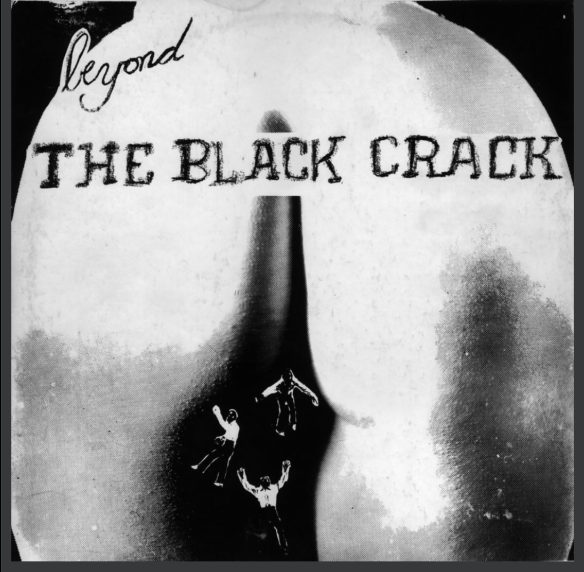
- Black Crack & the Sole Survivors – “Beyond the Black Crack Medley”
from: Beyond The Black Crack (LP, Limited Ed.) / Cavern Custom Recordings / 1976
[Frizzell was among the first composers to publish music based on the physics of black holes on his Beyond the Black Crack LP (1976).
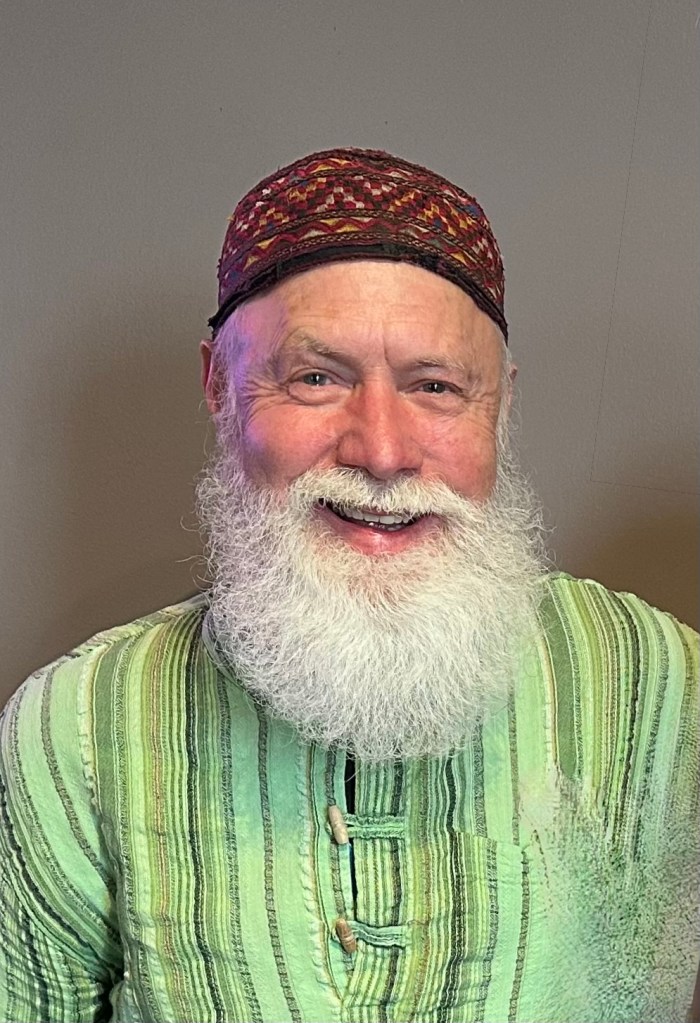
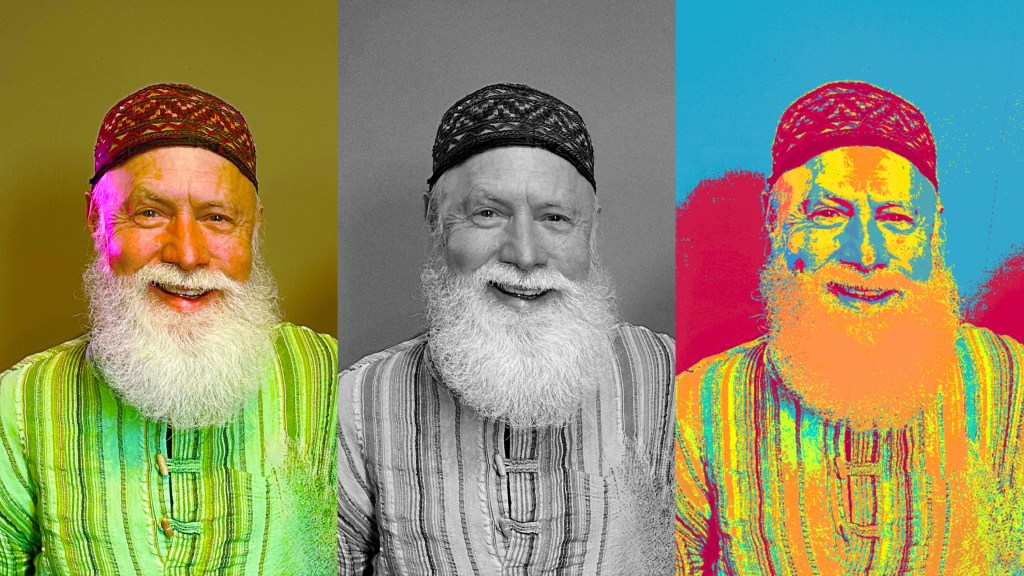
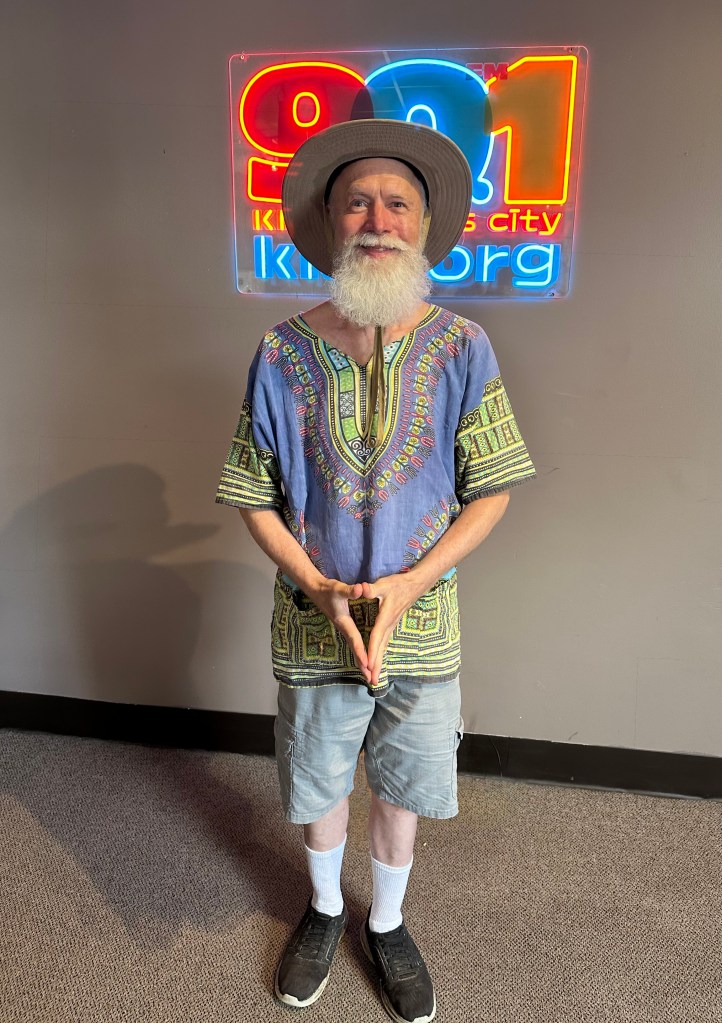
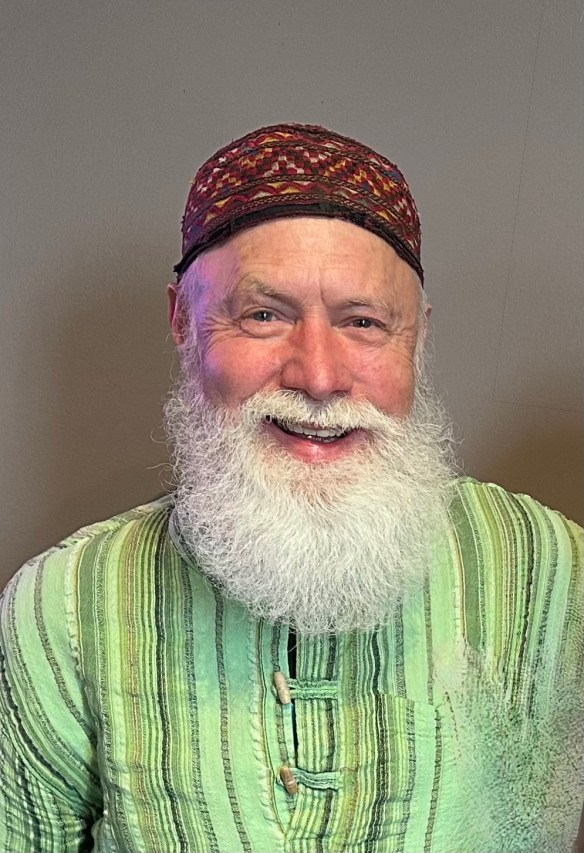
10:05 – Rev Dwight Frizzell Intro / Interview
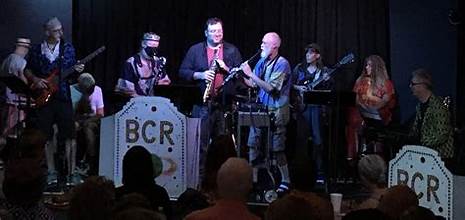
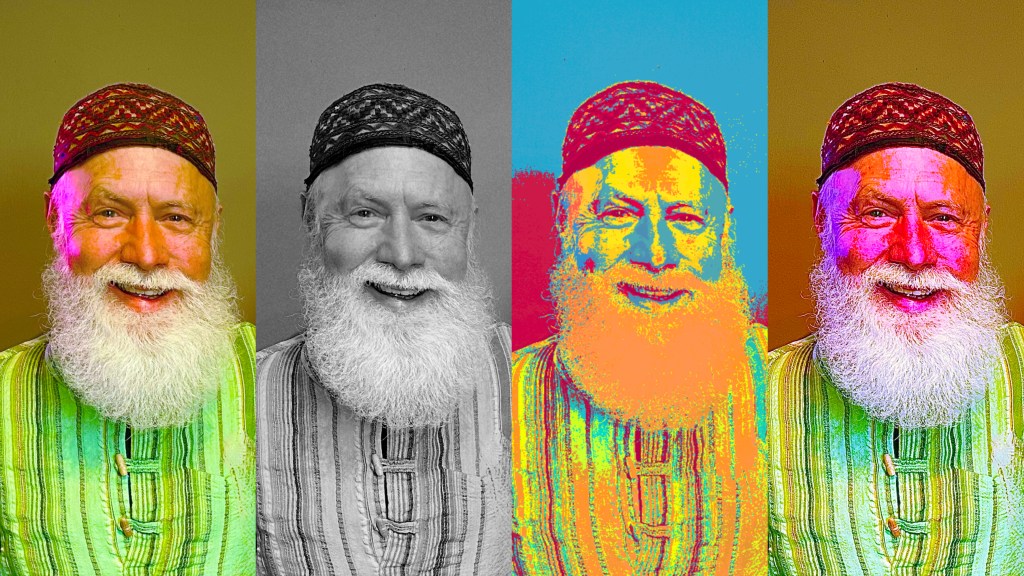
We welcome Rev. Dwight Frizzell as our special Guest Producer who shares details about his musical recordings, starting 50 years ago with his first album, BEYOND THE BLACK CRACK, released in 1976. Frizzell was among the first composers to publish music based on the physics of black holes on his Beyond the Black Crack LP. This limited edition 200 LP release inspired the formation of BCR (Black Crack Revue) in 1982. Since then the Afro-Nuclear Wavabilly Funk Swing Reggae Turska band BCR has shared the stage with media-Medusoids like Sun Ra, played live concerts with the Kronos Quartet, Ronald Shannon Jackson, Wavy Gravy, and Ziggy Marley’s band. BCR has held satellite uplinks with Don Cherry and Alvin Curran, and delighted the ears of Dementians tuning in to the Dr. Demento Radio Show. BCR has remained true to their roots in swirling black holes, time-travel of the Outer World, and the endless dance of cosmo-love. The Columbia Daily Tribune called them, “Duke Ellington meets Sun Ra.”
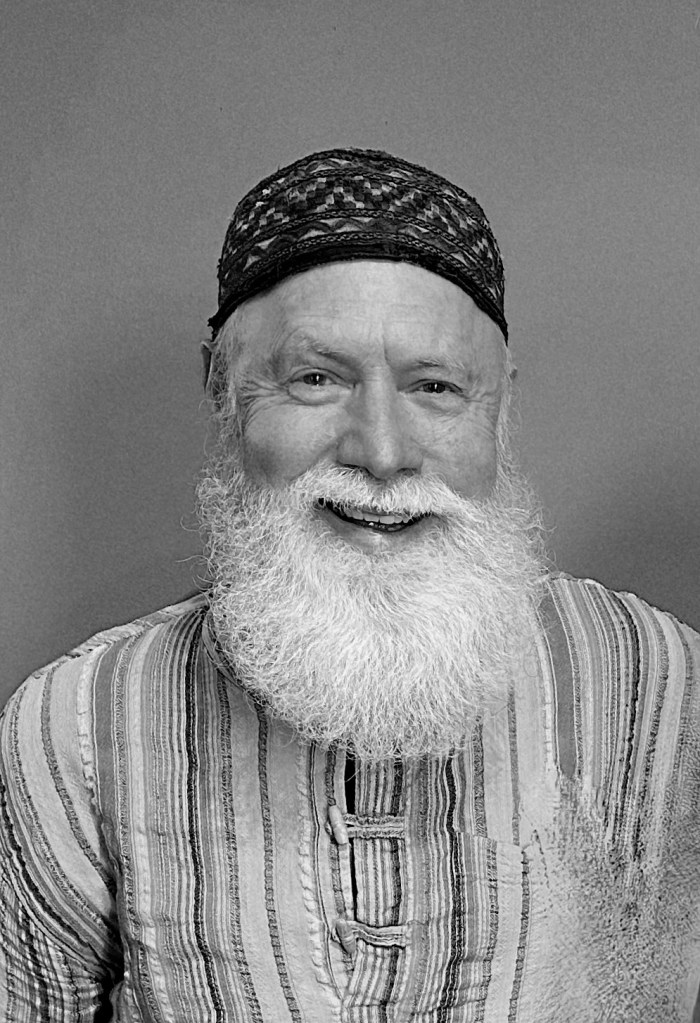
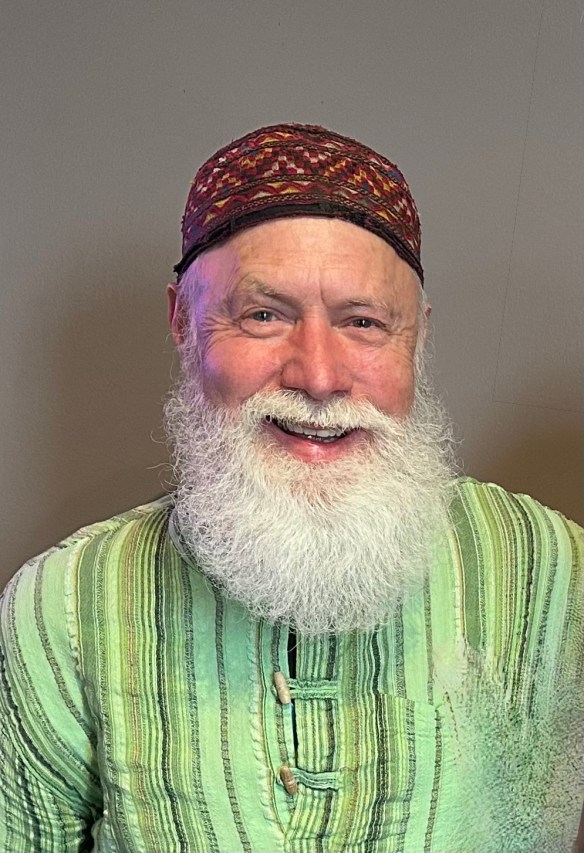
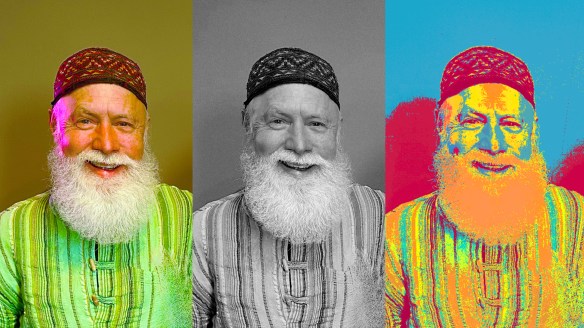
Rev Dwight Frizzell is a Professor & Sound Head, at Kansas City Art Institute, – Photography & Filmmaking Dept. with a Terminal Degree in Sound Design. Dwight is an internationally recognized artist whose work combines video, performance, installation, music, audio art, and writing. Frizzell’s work about his boyhood neighbor, Harry S. Truman, was featured in the Peabody-awarded “Lost and Found Sound” series broadcast on National Public Radio. Frizzell has produced an opera based on the life of Charles Darwin. In addition to his B.F.A. degree from KCAI, he holds a terminal fine arts degree in Sound Design from the UMKC. Dwight Frizzell, is a founder of the “groovy polyphonic jazz/dance” band, Black Crack Revue, now in their 43rd year. Dwight Frizzell is also an Arif, with Moorish Orthodox Church, and served at First Editor, The Pitch, he is a founding member of the newEar contemporary chamber ensemble, and is host & producer of “From Arc To Microchip” heard on the fifth Thursday of each month on KKFI’s Thursday Night Special at 7:00pm on 90.1 FM.
Rev. Dwight Frizzell Thanks for being with us on WMM
BLACK CRACK AND THE SOLE SURVIVORS:
Rev, Dwight Frizzell – tenor sax, clarinet, audio oscillator, chair, trash can, pins, soybeans
Mike Roach – clarinet, vocals with laughs, tenor sax, dancing
Kurt Eckhardt – mouth flute, percussion, pins, soy, alteration
featuring their special guests:
Rev Tommy Gomersall – tin cans, piano, vocals
Rush Rankin – clarinet, imagistic inspiration
Gary Jeffers – sousaphone, percussion
Bill Jones – sousaphone
Sylvia Thomas – harmonica
Bill Scanlan – percussion, tape machine
and many others
recorded live in concert at the Kansas City Art Institute Foundation Studio, November 18th, 1975, and in the KCAI Epperson Auditorium, December 4th through December, 5th, 1975
Medley includes excerpts from 4 tracks on the original LP and CD reissue—
BLACK CRACK & THE SOLE SURVIVORS (Personnel listed above)
COPULATION OF BASILEA & HYPERION
Dwight recording his US Army issued audio oscillator, making tape loops, using 3 ATRs and remixing submixes.
PRE-TRANSFORMATION OF TURTLE TO BIRD
Recorded atop the midget pyramid across from the Truman gravesite in July 1976
Rev. Dwight Frizzell – percussion and flutes
assisted by several young girls
FLY BY NIGHT
Rev. Dwight Frizzell – clarinet, electronics
This selection features children’s voices at reduced speed with live clarinet thru a wah-wah pedal
Bill Scanlan – engineer, recorded in concert atop the midget pyramid on August 20, 1976
EXTRACTS FROM THE PROGRAM NOTES FOR THE “FLY BY NIGHT” CONCERT
Just as poetry gives birth to new images in man, so do electronics extend man’s brain (which is man’s electric being) into new spaces This does not mean that electronics is an answer, it is a way Today, there are those musicians who praise electricity as the form to realize their ideals and there are those who refute electronic alteration and work only acoustically. I do neither or both. If you imagine electricity closely, it is the magical, inner, sexual, invisible and mysterious fire of a reverie that must have been born with life itself.
An imagistic, acoustical event in which a large number of frequencies and their associated pyramids of overtones are present simultaneously.
An organic succession of images (vertical events) in various places in the infinite horizontal expansion of space. Each image is a new individual spiritual event, imagistically connected into a whole, and in relation to many other images, including pre and post images (in the old time zone), and all NOW images (this is NOW MUSIC).
Images as if melted together in a fiery flight surrounded by a nocturne (the horizontal space of FLY BY NIGHT) of its own: IDENTITY -you identify the identities
Varese (the poet of sound) says his music is intellectual -for the neck up. In one way he underestimates the power of his music by making categorical distinctions (especially between mind and body). But that’s OK -he is one of the great poets of sound of our time I imagine music beyond these categorical distinctions, music that is felt by the whole body on many layers of experience, music that 1 not thought of, but music that is dreamt.
ON BLACK CRACK AND THE SOLE SURVIVORS
Once, forever, there was this continuum
(points equidistant determined by a metronome at 20 cps.)
A spark is set off in the universe and cycles are created,
The cycles define themselves.
They change in relation to a cause/effect relationship
Dust collects, you breathe. a cigarette drawn to the lips,
a smell of perfume and ashes, a flame bebop tangoes,
turtles cross the daylight sky, eyes on fire, fires burning in
the palm of a hand reflected in the black sky which is glass,
a young girl splashed a stick in the river, the river rises,
a passenger train passes by, the onlookers look on, around us the
clouds move around. and the surfaces expand and flutter across the
horizon on a bird’s wing which you see out of the corner of your eye.
Evolution occurs.
A variety of events take place. The world becomes obvious to the obvious and strange to others. On Tuesday November 18th, 1975 around 9:30 pm, the world ends (as we know it) because of a black hole 10-22 cm. in diameter sucking on the universe.
BLACK CRACK AND THE SOLE SURVIVORS escape near black holeness through a black crack and enter the real time zone, and everything else (the world) is suspended.
BLACK CRACK AND THE SOLE SURVIVORS enter a new universe where anything can happen. Sometimes suspension moves towards a reality. If so, BLACK CRACK AND THE SOLE SURVIVORS will bring havoc to a suspended world …
SPACE CREATED BY SOUND
Gaston Bachelard discusses how silence can create an infinite space (this is the infinite horizon-tal expansion) Continuing in his spirit. sound (being a vertical event) identifies its position in infinite horizontal space and also describes the detail of the universe including the immediate environment and the image of the shape from which the sound is radiating, and the shape that the sound 1s radiating with The creation of space by sound is not the mere process of evaluating the relationship between sound and space (which may be seen in a variety of ways including empty rooms, long planar surfaces. a motion of consciousness across the cosmos, air, desert and ocean) Sound creates an image of the space The listener is in this image on many different levels – one image being not being in this image The sound image resonates within us and us within it. If you were a bird your future would not be inevitable. Events are vertical surrounded by horizontal space.
I have imagined that things are real ever since I can imagine. Everything needs space “Whatever turtles think of must have to do with turtleness •• – James Pinson said something like this.]
Before The Big Bang
“At first, Nothing is.” — Sun Ra
Frizzell was among the first composers to publish music based on the physics of black holes on his Beyond the Black Crack LP (1976). Fifty years later, he is creating music inspired by the physics of the quantum void that created space-time in the nano-seconds before the Big Bang. Dedicated to Baikei Uehira, Sun Ra and Francois Bayle.
Notes by Dwight Frizzell
If there is a most mysterious mystery, the void of nothingness from which we came would be a contender—how we, along with everything else in this sprawling reality, was created from nothing.
Astro-physics is closing the gap in our understanding of nothingness by locating a void in the nano-seconds before the hot radiation we call the Big Bang. This Quantum Void of nothingness is a state of the lowest possible energy. Everything is slowed down to absolute zero. Yet this void is brimming with potential energy. Through an entirely spontaneous process due to quantum uncertainty, particles and anti-particles spontaneously pop into and out of existence.
The Quantum Void’s ground state is called a “quantum harmonic oscillator” where “non-vanishing vacuum expectation values” are created by spontaneous symmetry breaking. Our universe didn’t begin with a bang, but with a harmonic foundation of music from which sounding particles and anti-particles emerged by chance.
The piano was chosen for its one dimension strings that resonant with sympathetic overtones. In keeping with string theory and elemental energy states, a one-dimensional line can resonate into higher timbral dimensions and be temporally enfolded onto itself by creating time-pods composed of forward and backward moving timeframes.
Musique concrete techniques were also used on the piano recordings to realize the Void’s symmetry breaking process where particles and anti-particles spontaneously appear (and disappear) against the Quantum Void’s harmonic grounding. GRM’s Fusion, Grinder and Evolution software, and IRCAM’s TS was used. All sounds heard here were created from the piano.
Astro-quantum physics has developed a striking affinity with Kashmiri Tantra’s Doctrine of Vibration (Spanda). The Quantum Void, being outside our space-time, is very much like the Absolute or Universal Consciousness in Tantra, and it operates at the foundation of Reality in the same way the Quantum Void actively creates space-time.
The Doctrine of Vibration proposes that the Void is in a constant state of transformation and is full of vibration, yet from another point of view no change or movement occurs in this Absolute. Reality springs from stillness like the particles and anti-particles coming in and out of existence in the Quantum Void. Movement and rest in the Absolute presuppose one another.
The additional insight that Tantra offers to Cosmic Inflation theory has to do with consciousness being imminent in the universe. The freedom of consciousness to do what is impossible (according to reason) demonstrates, through our own experience, how the Absolute can at once be motionless yet full of activity, an astonishing realization at the fabric of reality both in quantum physics (as applied to the quantum void) and Kashmiri Tantra (as applied to the absolute and the movement of consciousness).
Stillness in consciousness is akin to the ground state of the Void– they may be one and the same. Tantra maintains the source of thought, including our understanding of past, present and future, stands outside of time. Consciousness is in an ever developing process in perpetual expansion. Our tiny part of the All, where we observe the flow of events around us and the feelings within us, is entangled with the All in the same way that the Quantum Void is entangled with the Universe. In Cosmic Inflation Theory, the Quantum Void is perpetually creating an infinity of parallel worlds.
To grasp reality in its completeness, we must go beyond thought and language which are only partial representations of reality. To experience this primordial source we pierce through the periphery of thought and plunge into the flash of thinking itself, and with it the emergence of the diversity we perceive in all the things in the world. The close contact between our senses and the Universal Consciousness revitalizes and animates our perceptions.
Unfettered awareness, free of rational thought and language, drifts from one mental object to the next. The transition between them involves a movement through a state of pure awareness outside of thought-forms and perceptions that is like the ground state of the Quantum Void.
Music ©2026 Dwight Frizzell & Brad Cox
Sound Mandala – For the summer of 2026, a 100-channel system has been constructed in the Jerome Stage at the Unicorn Theatre. New programs are being created. Shows will take place during the FIFA World Cup.
Signal & Soul is the Sound Mandala at its most adventurous — a single evening that moves from hip-hop to the cosmos, from Beatles psychedelia to the quantum void, from beatboxing to Anton Chekhov. Buckle up. ~50 Minutes
Indie Spotlight From Challenger Artists – a new kind of show: five fantastic young bands from Challenger Artists, live in our 100-loudspeaker immersive theatre — where sound moves, swirls, surrounds and envelops you in ways never before experienced. Featuring: Mini Trees, the indie-alt pop project of LA-based songwriter Lexi Vega; Brooklyn duo TOLEDO; Valley Boy, whose collaborators include Sabrina Carpenter, Dua Lipa, and Troye Sivan; Midwest four-piece Post Sex Nachos, whose track “SOS” climbed to the SiriusXM Alt Nation Top 6; and Chicago indie act Capital Soiree. The musical groups providing songs for our INDIE SPOTLIGHT are managed by Challenger Artists, the artist management division of Mammoth Live (promoter for venues in Kansas City including Uptown Theater, Grinder’s, Record Bar and more). ~60 Minutes
The Cabinet of Doctor Caligari – One of cinema’s most haunting masterpieces gets the sonic treatment it has always deserved. The nightmarish 1920 German Expressionist landmark returns with a brand-new live score by Kansas City composer Thomas Newby and psychedelic chamber pop innovators The Green Zoo. Approximately 62 minutes. Presented through all 100 loudspeakers. The line between screen and sensation dissolves completely. – 62 Minutes
Sound Mandala is a one-of-a-kind immersive audio experience where 100 independent loudspeakers surround you—sound moving around you, above you, and through you. This isn’t surround sound. It’s something altogether different, carefully crafted by sound designers who spend hours mixing each piece moving the sound around you, above you, and beneath you.
10:20
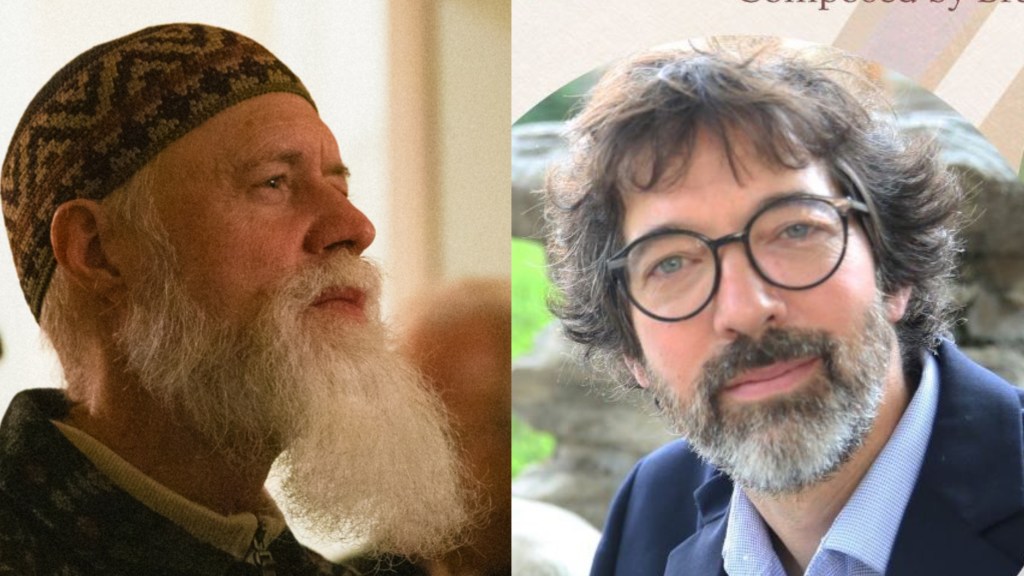
- Dwight Frizzell & Brad Cox – “Before The Big Bang (Mu 2nd Movement)”
from: Sound Mandala / Dwight Frizzell / June 10, 2026
[This music was created by Dwight Frizzell with piano solo by Brad Cox, piano longtones/overtones by Ben Choate and recording engineer Jacob Souders.]
[Sound Mandala plays The Unicorn Theatre, 3828 Main Street, KCMO opening Wednesday, June 10 and running into the KC Fringe Festival 2026, through August 1. Wednesday thru Sundays at 7:30pm]
10:25 – Underwriting
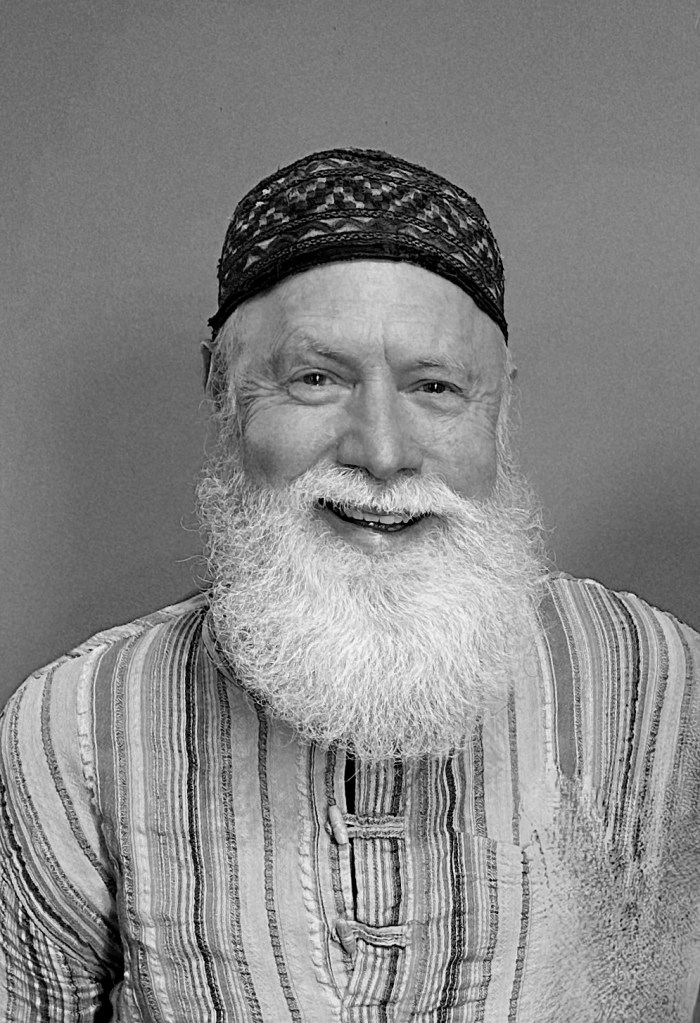
10:27 – Interview with Dwight Frizzell
“Olmec Heads”
Randy Weinstein-harmonica
Dwight Frizzell-clarinet, turtle flute, percussion
Thomas Aber-bass clarinet
Stan Kessler-trumpet
Michael Henry-French horn
Ken Beck-keyboards
Ed Herrmann-Serge synthesizer
Bill Dye-bouzouki, electric guitar, lap steel guitar
Kevin Alumbaugh-electric guitar, effects
Jeff Rendlen-electric bass
Bird Ellington Fleming-percussion
Allaudin Ottinger-Nubian tar, berambou, timpani, percussion, drums
Solos Thomas Aber-bass clarinet, Dwight Frizzell-clarinet, Stan Kessler-trumpet
Portions were originally issued on BCR’s “Which Earth are We On?” LP (Fifth Street Records CR-1078) in 1987. Composition inspired by Ivan van Sertima’s “They Came Before Columbus” and a trip Dwight Frizzell, Thomas Aber and Chuck Reynolds took to Mexico City in 1983 to confront, in person, the Olmec heads. Recorded/mixed at the BlueNote in Columbia, MO. (March 6, 1984); the Point (February 21, 1985), Chapman Recording Studios (1986), Simultaneity Studios (2006), and Harling’s Upstairs (1985) in Kansas City, Missouri. Live recordings by Steve Donofrio and Bart Biecele, studio recordings by Dave Brock and Dwight Frizzell. Mixed by Dwight Frizzell. ©1984 Dwight Frizzell

Dwight writes: I first met Sun Ra in person in Chicago 1980— and our master-adept relation evolved soon after— one area he further introduced me to was Afro-Centrism—including the Ivan van Sertima, the author if They Came Before Columbus— that proposed the Olmecs, the first major culture of Mesoamerica were Nubians who travelled from Africa in reed boats. I 1984 I travelled to Mexico City where I stood below their enormous visage with fellow traveller Thomas Aber— and the sketch for the Olmec Heads music was conceived.
10:31
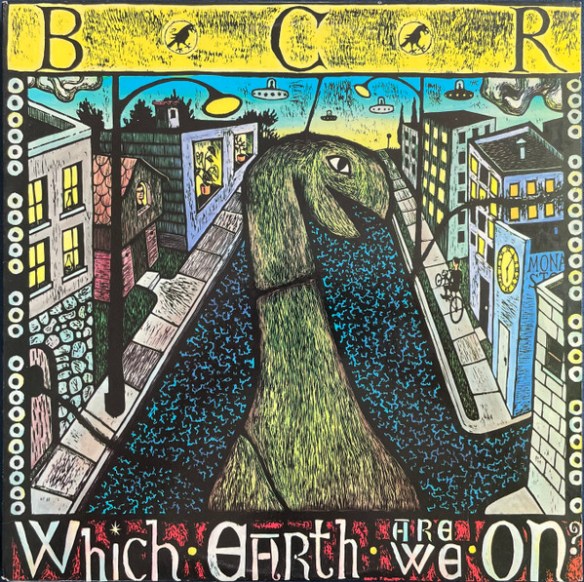
- BCR – “Olmec Heads (Dwight Frizzell – Radio Edit)”
from: Which Earth Are We On? / Fifth Street Records / 1987
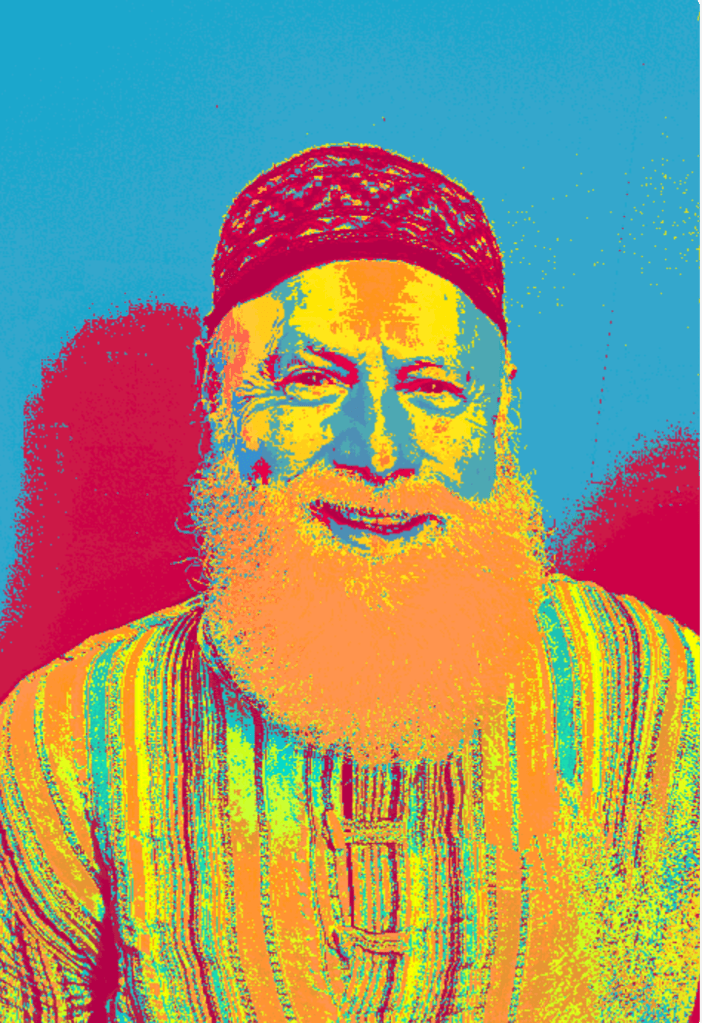
10:35 – Interview with Dwight Frizzell
“Mokele Mbembe Special”
One of the earliest BCR tunes created before we played our first gig early in 1982. It was inspired by a legendary dinosaur-like created seen at Africa’s Lake Tele in the Congo 1959.
The first section is from a multi-channel overdubbing session by Dwight Frizzell (clarinet, bass clarinet, tenor sax, animal calls) and Cliff Baldwin (tenor sax, percussion, trombone, animal calls)
The last section is from a BCR studio recording in 1986
Jeff Rendlen-bass
Randy Weinstein-harmonica,
Dwight Frizzell-tenor sax, clarinet
Thomas Aber-alto sax
Bill Dye-electric guitar
Bird Ellington Fleming-percussion
Allaudin Ottinger- drums, vocal
Released on BCR Which Earth are We On? (Fifth Street Records) 1987
10:40
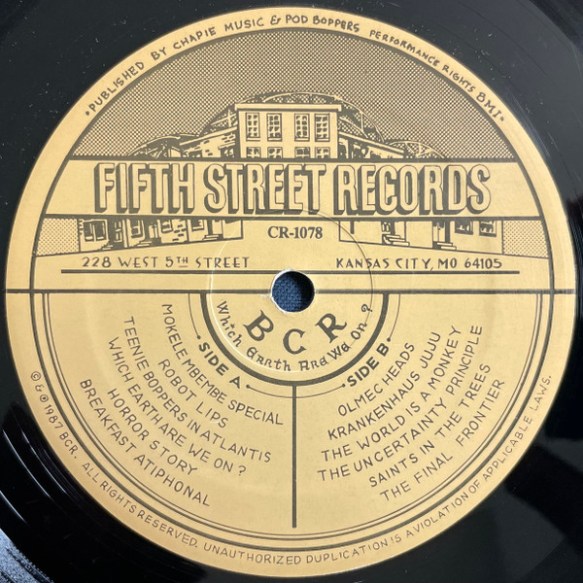
- BCR – “Mokele Mbembe Special (Baldwin-Frizzell)”
from: Which Earth Are We On? / Fifth Street Records / 1987
[Early BCR 1981-1986]
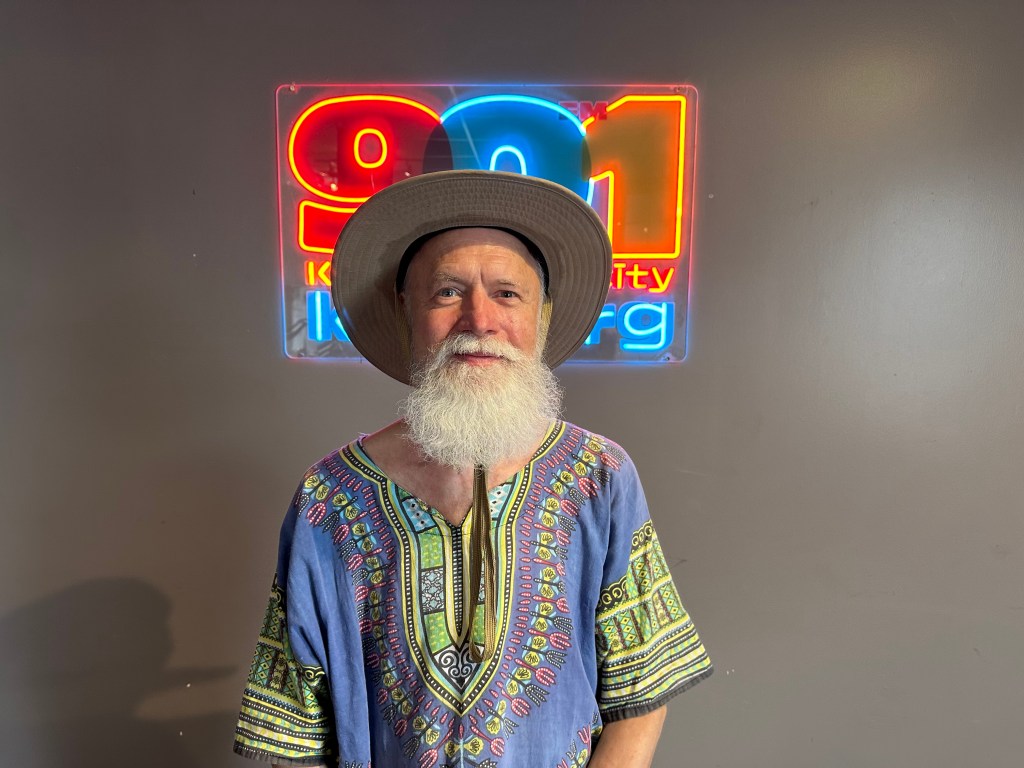
10:43 – Interview with Dwight Frizzell
“Cosmic String Theory”
COSMIC STRINGS are a remnant of the Big Bang predicted by our latest theories of Cosmogenesis. The width of these strings is less than an atomic nucleus, but their mass may be at stellar levels, as they may be millions of light years long. They exert immense gravity, and function as gravitational lenses. If they were to collide with each other, the warpage of space-time would be so extreme as to allow for time travel. The resonances in cosmic string theory offer possibilities for the kind of time-traveling music we offer here that uses time-pods composed of forward and backward moving string sound.
.
Sun Ra released his Strange Strings LP in 1967 well before astrophysicists invented String Theory in describing the universe as a grand cosmic music. Look into the heart of an electron, it would appear as a vibrating string. Pluck that string and it might turn into a neutrino or a quark. Pluck it again a bit harder, and we might create a music particular of other known (or unknown) subatomic particles. The vast array of subatomic particles are all particular harmonic notes played on a cosmic fundamental superstring.
The reach of Sun Ra’s mission and the music that supported it shifted in an ever expand-ing reach from the 1950s and into the 80s. In 1982, Sun Ra told me, “I used to speak of the Universal. Now I speak of the Omniversal. We are all part of the greater Omniverse…and we all must find our own special place in the tapestry of the great Omniversal Arkestra” “I’m not playing Space Music anymore, not in the interplanetary sense alone. I’m playing intergalactic music beyond the other idea of space music. It is of the natural infinity of the eternal universe eternal ETERNAL. It is of all the universes together that make our bigger Ominiverse.” Tam Fiofori’s 1969 Downbeat Magazine “Sun Ra’s Space Odyssey” (1969)
COSMIC STRINGS—
- Origin: Proposed by T.W.B. Kibble in the 1970s, they are analogous to cracks that form in ice as it freezes.
- Characteristics: These strings are incredibly massive; a 1.6 km segment could weigh more than the Earth. They may oscillate at near-light speed.
- Detection: Researchers look for their unique gravitational lensing effects, which can create double images of distant stars.
- Connection to Physics: While distinct from fundamental subatomic string theory, they are linked through concepts like M-theory, where they are called “cosmic superstrings”.
- Evolution: They can form loops, wiggle, radiate energy away via gravitational waves.
10:48
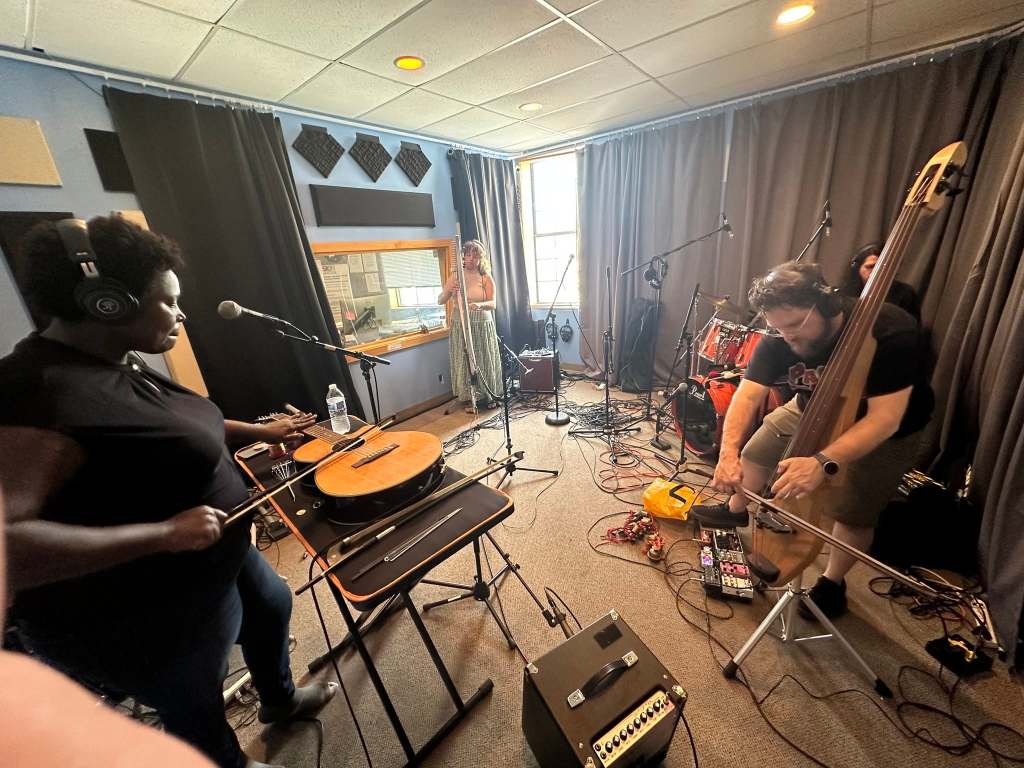
- Cosmic String Theory (tracks for ERGOSPHERE )
from Ergosphere / Dwight Frizzell & EMAS / Recorded January 11, 2026
[Aaron Osbourne – bass, electronics, Shanté Clair – expanded guitar, Seth Davis – guitar, Dwight Frizzell – WX5 strings.]
10:52 – Interview with Dwight Frizzell
“Thunder Perfect Mind”
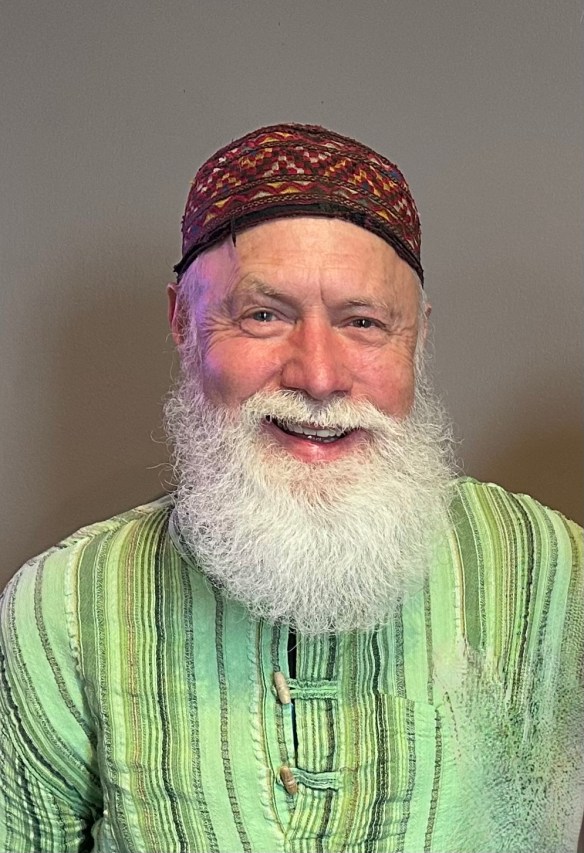
Dwight writes: Sun Ra introduced me to Gnostic texts and other Biblical arcana outside of tradition— including the Book of Jasher that contains this alternative to Genesis— “You were
created in the image of God’s infinity.” Dr. Stephan Hoeller, the Jungian doctor and
Gnostic bishop, was also a formative Gnostic teacher for me.
Bill Dye- electric guitar, Allaudin Ottinger- Drums, Bird Ellington Fleming- Percussion, Bobby Nickens- Bass, Dr. Thomas Aber- Alto saxophone, Betse Ellis- Violin, Stan Kessler- Trumpet, Cliff Baldwin- electronics, Tom Mardikes- Production
Rev. Dwight Frizzell is a Professor & Sound Head, at Kansas City Art Institute, in the Photography & Filmmaking Department with a Terminal Degree in Sound Design. Dwight Frizzell, is a founder of the “groovy polyphonic jazz/dance” band, Black Crack Revue, now in their 43rd year. Dwight Frizzell is also host & producer of “From Arc To Microchip” heard on the 5th Thursday of each month on KKFI’s Thursday Night Special at 7:00pm.
10:57
- Bill Dye, Allaudin Ottinger, Bird Ellington Fleming, Bobby Nickens, Dr. Thomas Aber, Betse Ellis, Stan Kessler, Cliff Baldwin – “Thunder Perfect Mind”
from: “Thunder Perfect Mind” / Dwight Frizzell / Recorded 1995
[Music – Twayne Williams, lyrics – writing through Nag Hammadi Gnostic texts by Dwight Frizzell]
11:00 – Station ID
11:00 – More Interview with Dwight Frizzell
“Water Breath Music”
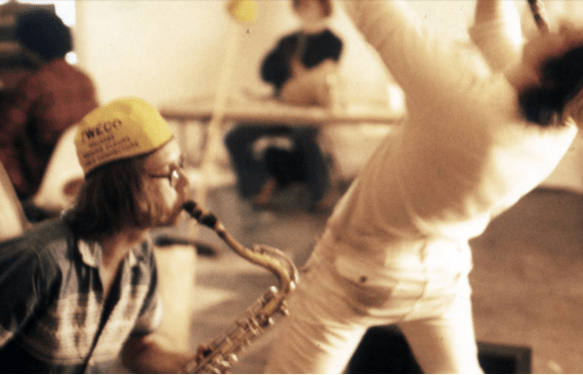
This concert was conceived and organized after hearing a multi-channel electronic tape music concert and meeting composer Peter Todd Lewis. As new and avant-garde as the music was, it seemed to me to be a most ancient music— although made from electronic sources, it seemed composed of water and breath sounds. The Water Breath concert was one of the first projects I created for a group of world class musicians that had reached out to me because of the Beyond the Black Crack LP.
11:03
- Jim Miller, Rob Beckner, Arnold Young, Jack Blackett, John Thies, Mike Temple, John Crain, Tommy Gomersal – “Water Breath Music”
From: “Water Breath Music” / Dwight Frizzell / Recorded. 1977
[Featured players: Jim Miller, Rob Beckner, Arnold Young, Jack Blackett, John Thies,
Mike Temple, John Crain, Tommy Gomersal. Recording assistant Jay Mandevillle.]
11:08 – Interview with Dwight Frizzell
“Wellspring Mother of Waters”
Wellspring Mother of the Waters was a collaboration with Marideth Sisco recorded in 2026
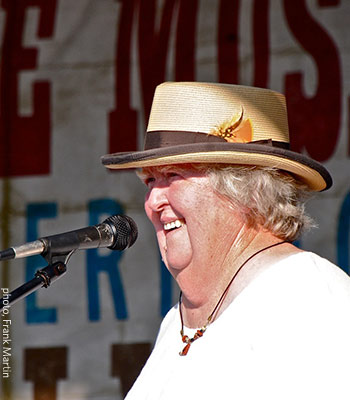
Our late and much-loved Marideth Sisco, writer/songwriter/Ozark folksinger/gardener
welcomes you to the awe-inspiring Greer Spring in her own voice recorded just a few
years ago.
Marideth Sisco suggested we collaborate on Wellspring. I would make a soundscape
for her free and open singing. It was during memorable moment between rehearsals at
a National Audio Theater production. When I followed up by sending a variety of mixes, she decided to work with the wondrous Ozark soundscape of Greer Spring, one of the most beautiful and secluded places in the Ozarks, and very near where Marideth lived. It’s fed by a gushing underground river system that acts as a wellspring for streams and sinkholes up to 45 miles to the west and northwest. It’s Missouri’s second-largest spring, discharging over 200 million gallons of cold, clear water daily, and it’s protected by the Mark Twain National Forest.
After hiking down an Ozark mountain for over a mile, the Greer Spring can be spotted
from a cliff above a narrow chasm. Its upward force creates what’s called a creek bed
boil, although the water is a crisp 55 degrees. Looking down, it appears like the deep, aqua-blue eye of the Great Goddess. An additional outlet flows from a cave about 100 feet above this stunning, light bending dome of water. The water flows from there for over a mile to its confluence with the Eleven Point River, increasing the flow and transforming the river into a coldwater stream ideal for trout and turtles.
Wellspring features Marideth singing her own Mother of the Waters, an hymn-like
spiritual to Greer Spring recorded shortly before her passing. She is be accompanied
by a lush multi-channel soundscape of the spring waters with additional music by Bill
Dye (lap steel guitar), Tony Brewer (waterphone), Steve Donofrio (singing bowls),
Norbert Herber (bass clarinet), Greg Mackender (midi-water instrument), Thomas Aber
(gaida) and composer Dwight Frizzell (Native flute and wilderness recordings). It was
supported by the National Audio Theatre Festivals, a Generative Performing Artist
Award from the Charlotte Street Foundation and an academic sabbatical from the
Kansas City Art Institute.
11:13
- Marideth Sisco & Dwight Frizzell – “Wellspring Mother of the Waters”
from: “Wellspring Mother of the Waters” (excerpt) / Dwight Frizzell/ Recorded 2026
[Marideth Ann Sisco (born June 15, 1943) is an American storyteller, folklorist, singer-songwriter, author and retired journalist. Her work largely focuses on folklore related to her native Ozark Mountains. Sisco and her music were featured in the Oscar-nominated film Winter’s Bone. In 2023 she was a featured artist at the 2023 Smithsonian Folklife Festival, where she performed both in song and as a storyteller. // Sisco was born in Missouri to Marguerite Elenor (Gentry) Sisco (1920–1966) and Paul Holtz Sisco (1923–1966). Her interest in music started when she was three and a great uncle taught and encouraged her to sing. Her family moved frequently when she was young, including time spent in Kansas, Washington state, Montana and California. As she grew older she became tired of moving around and returned to live with her grandmother in Butterfield, graduating from high school in Cassville, Missouri in 1961. //After high school, Sisco attended Missouri State University (formerly Southwest Missouri State College) in Springfield, MO, where she studied performance & orchestration. But she left before finishing a degree after being told that as a woman she would not be successful in the field and was instead encouraged to switch to music education. // In 1965, Sisco left the Ozarks and moved to California, where she hoped to break into the music business as a singer, but lack of success and a hand injury that left her unable to play guitar derailed that goal. In 1976 she left California, helping her aunt and ailing uncle return to Missouri, but with the intention of moving back west, which she never did. // After returning to Missouri, Sisco received a BFA from Missouri State University and later an MA from Antioch University. She also began a 20-year career as a journalist at the West Plains Quill in West Plains, Missouri, where she worked as an investigative and environmental writer. She also authored the “Crosspatch” gardening column. // Upon her retirement from journalism in 2005, she returned to song-writing. // Currently, Sisco hosts “These Ozark Hills,” a local culture and folklore radio program on Ozarks Public Radio at KSMU-FM, which is based out of Missouri State University. As a singer, she performs both solo and with The Blackberry Winter Band. // Through a chance encounter at a singing party, Sisco was involved in the Oscar-nominated 2010 film Winter’s Bone, based on the book by Daniel Woodrell. In the film’s production she served as a musical consultant and singer, as well as appearing in the film as a singer. Her scene in the film was written specifically to feature her singing. // She also contributed to the movie by singing “The Missouri Waltz” for its opening scenes, though she reworked it to remove racist language from the song.Following the release of the film she toured with the Blackberry Winter Band to promote the soundtrack, referring to it as Amazing Geriatric Hillbilly tour. They played in 27 cities in the U.S.A. and Canada. // In 2018, Sisco received the Quill Award for lifetime achievement from the Missouri Writers Hall of Fame and Missouri Folk Arts Program has also designated her a Missouri Master Storyteller. //Sisco is lesbian & active in LGBTQ+ causes.]
11:18 – Interview with Rev. Dwight Frizzell
VIBRATING CONTINENTS, a work organized by Dwight Frizzell for Opus, the new
music collective in Lawrence, Kansas. The seven movement mixage is a kind of requiem for the late Peter Stokely, classic scholar, megalomaniac, and hast of the Consciousness Across the Void radio program. Each terrestrial continent was assigned to a member of Opus, who had great autonomy over their choice of underscore for the prepared multi-lingual texts and non-language vocalizations. This segment, ‘Antarctica,’ features solo bassoonist Bill Oldfather_ Other participants: Allaudin Ottinger, Joanie Harrell, Greg Allen, Dr. Leon Burke III, Donna Gillham, Barry Bernstein, Dwight Frizzell
11:21

- OPUS – “Vibrating Continents: Antartica”
[Recorded live in 1979 at KOPN-FM in Columbia, Missouri with Ed Herrmann and Chris
Merrick engineers.]
11:24 – Underwriting
11:26 – Interview with Dwight Frizzell
“H for Thermonuclear Device”
“If you can develop an atomic bomb, I’m sure you can develop an alter-destiny” – Sun Ra (1979)
The music was conducted by Sarah McKoin for players Thomas Aber (clarinets), Alexander East (cello), Jan Faidley (saxophones), Johanna Lalka (horn), Tomoko Iguchi (violin), Mark Lowry (percussion), Bill McKemy (bass), Jessica Nance (viola) and Lyra Pherigo (flutes). Supported by the New Music Institute of Kansas City and Missouri Arts Council.
The Kansas City National Security Campus features a new nuclear weapons plant at Botts Road and Missouri Highway 150 in southern Kansas City. Their almost 2 billion dollar budget sup-ports the “life-extensions” of the B61 thermonuclear devices deployed at Whiteman AFB and at least five other nuclear bases around the world. The updates keep these nuclear devices fresh and deployable. They include new Boeing tail-kits that make them maneuverable “smart” bombs.
The music in this special program features data sonifications of a B61 detonation event as performed by the newEar contemporary chamber ensemble. About 50 of these weapons are believed to be stockpiled at Whiteman Air Force Base.
Composers Michael Henry and Dwight Frizzell mapped data to the scored parts using x-y graphs showing the bombs’ short and long term effects including shock waves, atmospheric impacts, electromagnetic pulse readings and biological aberrations. Produced by Dwight Frizzell for the From Ark to Microchip series.
11:29

- newEar – “H for Thermonuclear Device”
from: “H for Thermonuclear Device” / NewEar /
11:32 – Interview with Dwight Frizzell
“Appalling Heart”
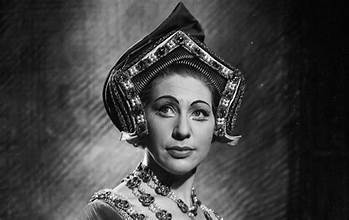
Of Baroness Else van Freytag-Loringhoven. friend and fan Marcel Duchamp asserted. “She is not a Futurist. She is the future.” Her visionary poems and post-modern attire (which included a girdle of kitchen utensils and postage-stamp face decorations) were the direct result of her experiments withith interspecies communication via persistent psychotropic plant consumption.
11:35
- Patricia Johnson – “Appalling Heart”
from: “Appalling Heart” / Dwight Frizzell / Recorded 1996 NYC and mixed at UMKC
[Recorded in 1996 in New York City and mixed at UMKC. Patricia Johnson- soprano. Tony Allard-body vocalizations. Dwight Frizzell-body-dubbed heartbeat and Galvanic skin response. Else von Freytag-loringhoven· text.]
11:39 – Interview with Dwight Frizzell
“Scarlatti Garden” – Remembering Bruce Prince-Joseph (1926-2015)
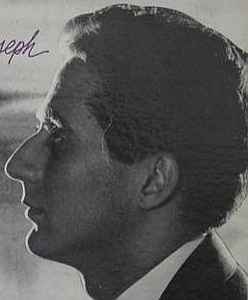
Bruce Prince-Joseph’s music was at the heart of his spirit and generosity. He volunteered to record this Scarlatti sonata on his harpsichord in his home in 1996. The musicians overdubbed their parts (each separate and sometimes in different cities) while listening to Bruce’s tracks. Thank you, Bruce. Scarlatti Garden by ENSEMBLE ARCADIA
Bruce Prince-Joseph-harpsichord
Christine Brebes-violins
Hafiza Capehart-flute
Michael Henry-French horn
Thomas Aber-bass clarinet
Dwight Frizzell-rec/mix engineer, arranger
11:42
11:47 – Interview with Dwight Frizzell
“Tree of Life”
Musical realization of Charles Darwin’s ‘Tree of Life’ chart from his “Origin of Species” by Michael Henry and Dwight Frizzell
Performed by members of newEar, the National Audio Theater Festivals and the Myth-
Science Ensemble
Thomas Aber-xun, gaida, clarinet & bass clarinet
Anne Marie Brown-violin
Peter Chun-viola
Robert Carl-shakuhachi
Patrick Conway-bassoon
Larry Figg-cello
Dwight Frizzell-clarinet, recording & mix, electro-acoustic
Michael Henry-electro-acoustics
“The affinities of all the beings of the same class have sometimes been represented by a great tree….As buds give rise to growth to fresh buds, and these, if vigorous, branch out and overtop on all sides many a feebler branch, so by generation I believe it has been with the great Tree of Life, which fills with its dead and broken branches the crust of the earth, and covers the surface with its ever branching and beautiful ramifications.”— Charles Darwin, Origin of Species, 1872 edition
Charles Darwin’s sketch of the divergence of species (as illustrated in his “Origin of Species”) presents his central organizing vision of shared descent, the idea that all species ultimately evolved from a common ancestor in the distant past. From a single starting point, genetic changes in different populations send species down evolutionary pathways. Some of these branches survive, and split off to form new branches. Other branches wither, and species become extinct.
Darwin’s metaphorical image is used to create this work (here in it’s concert version for electro-acoustic strings, live woodwind ensemble and video). Sound progresses and
develops from the time Darwin imagined life was “originally breathed into a few forms
or into one.” Instrumental parts flow through the branching lines of divergence and
extinction, increasing in complexity and diversity, representing 3.6 billion years of our evolutionary history — from simple, single-celled organisms to modern humans.
Michael Henry and Dwight Frizzell also re-orchestrated this work for multi-channel
installation in a room with an area for the audience to sit and recline, entering and
exiting as they wish. Video projection on the floor lights the space, and speakers
surround the audience. The layered environment perpetually changes with time flowing
backwards and forwards simultaneously, much in the style of a crab cannon.
Steve Gardels-live woodwinds recording engineer
Dwight Frizzell-sound design & mix.
Computer processed Tree of Live realizations by Michael Henry. Video shot & mixed by
Dwight Frizzell.
This concert version of Tree of Life can be performed with woodwind quartet, 4-
channel sound & video projection.
©2014 Michael Henry & Dwight Frizzell
Rev. Dwight Frizzell Thanks for being with us on WMM
11:52:30
- MYTH-SCIENCE ENSEMBLE – “Tree of Life”
“Tree of Life” for strings, woodwinds & electro-acoustics / Dwight Frizzell / recorded 2014
[Musical realization of Charles Darwin’s ‘Tree of Life’ chart from his “Origin of Species” by Michael Henry and Dwight Frizzell. // Performed by members of newEar, the National Audio Theater Festivals and the Myth- Science Ensemble]
Thomas Aber-xun, gaida, clarinet & bass clarinet
Anne Marie Brown-violin
Peter Chun-viola
Robert Carl-shakuhachi
Patrick Conway-bassoon
Larry Figg-cello
Dwight Frizzell-clarinet, recording & mix, electro-acoustic
Michael Henry-electro-acoustics
BCR (Black Crack Revue) plays a Dinner Matinee Show at The Ship, 1221 Union Ave, KCMO, on Saturday, August 29, from 6:00 PM – 9:00 PM
- Noel Coward – “The Party’s Over Now”
from: Noel Coward in New York / drg / 2003 [orig. 1957]
Next week, on Wednesday, July 22 Danielle Anderson share details about her new KC Fringe show The Magic of Grandmas. Katheryn Krouse who serves as Visual Arts Coordinator for KC Fringe. AND Lee Walter Redding joins us to share new releases.
You can find our playlists at: www.wednesdaymiddaymedley.org & www.kkfi.org
www.facebook.com/WednesdayMidDayMedleyon90.1FM
www.instagram.wednesday_midday_medley
Thank you to KKFI Staff: Executive Director – Bess Wallerstein-Huff, Chief Operator – Chad Brothers, Director of Development & Communications – J Kelly Dougherty, Volunteer Coordinator – Darryl Oliver, and Office Manager Book Keeper – Shaina Littler.
THANK YOU to everyone who donated to KKFI’s Summer Fund Drive during WMM we had a total of 33 people donate a total of $3513.50. THANK YOU SO MUCH!
This radio station is more than the individual hosts of each individual radio show. It is a collective spirit of hundreds of people, setting aside ego, to work for the greater good of community building and the goal of keeping our airwaves, non-commercial, and open! Thank you to programmers who create content for over 85 locally produced radio shows & volunteers who made extra effort to keep our station alive.
Our Script/Playlist is a “cut and paste” of information.
Sources for notes: artist’s websites, bios, wikipedia.org
Wednesday MidDay Medley in on the web:
http://www.kkfi.org,
http://www.WednesdayMidDayMedley.org,
http://www.facebook.com/WednesdayMidDayMedleyon90.1FM
Show #1156